Posts by chadwick.chinnery
New Publication from Mixotrophs & Mixotrophy Working Group members
Millette, N. C. et al. (2024). Recommendations for advancing mixoplankton research through empirical-model integration. Front. Mar. Sci., 05 June 2024, Sec. Marine Ecosystem Ecology, Volume 11 – 2024 | https://doi.org/10.3389/fmars.2024.1392673.…
Read MoreAn unexpected shift to a later phytoplankton bloom in the West Antarctic Peninsula
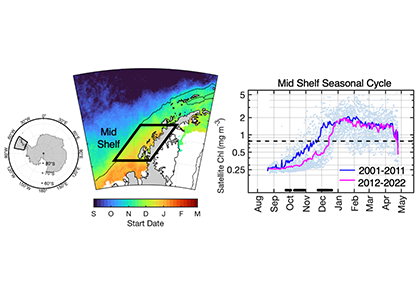
Polar regions are changing: warming, losing sea ice, and experiencing shifts in the phenology of seasonal events. Global models predict that phytoplankton blooms will start earlier in these warming polar…
Read MoreInorganic carbon outwelling as important blue carbon sink
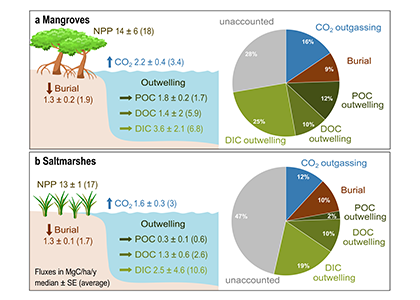
Blue carbon ecosystems—mangroves, saltmarshes, and seagrass meadows—carbon sequestration powerhouses that can help us mitigate climate change. For many years, our community has focused on studying and quantifying organic carbon storage…
Read MoreNew algorithm unclogs major bottleneck in ocean geochemical and biogeochemical modelling
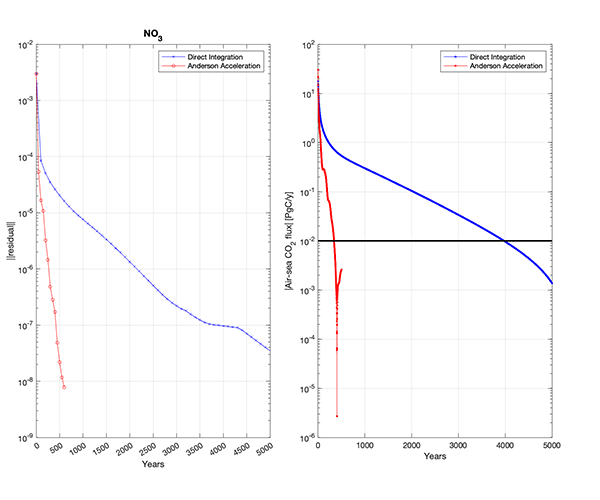
Numerical models are some of the principal tools for understanding the cycling of geochemical and biogeochemical tracers in the ocean, with the latter also being important components of the Earth…
Read MoreLooking for easy data access to high quality time-series data? SPOTS is out!
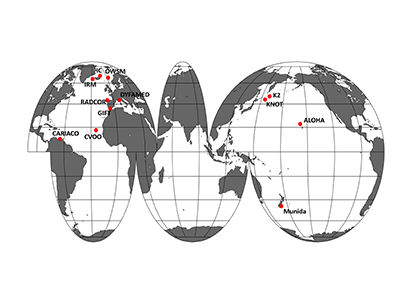
Whether we aim to disentangle anthropogenic driven trends from naturally variability or we want to assess and improve our ocean model’s capabilities to correctly display changes in time, all require…
Read MoreNASA ROSES 2024 Proposal Opportunities for SOLAS research
The OCB Ocean-Atmosphere Interactions Committee has compiled relevant NASA ROSES 2024 proposal opportunities and deadlines for air-sea research – could be your next funded project! There is plenty of inspiration…
Read MoreMixotrophs in the northern North Atlantic
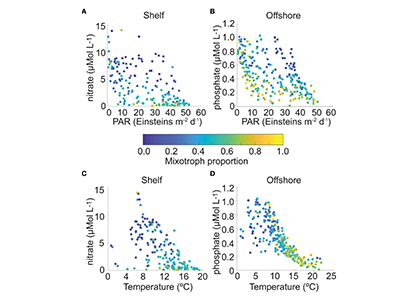
Mixotrophs (or mixoplankton) are now accepted as a third group of plankton alongside phytoplankton and zooplankton. Our knowledge of mixotrophs lags far behind that of the other two groups. We…
Read MoreCarbon sequestration by the biological pump is not exclusive to the deep ocean
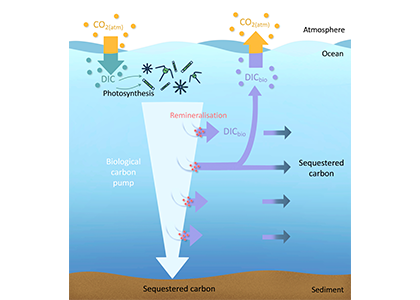
The biological carbon pump plays a key role in ocean carbon sequestration by transporting organic carbon from the upper ocean to deeper waters via three broad processes: the sinking of…
Read MoreRegister for the next GO-BGC Webinar on May 9 – High Latitude Ocean Biogeochemistry
Please join us for the quarterly GO-BGC webinar, hosted by the US Ocean Carbon and Biogeochemistry Project Office. This webinar will be focused on high-latitude ocean biogeochemistry by exploring the…
Read MoreNEW ACTIVITY: participation opportunity for metatranscriptomic intercomparison
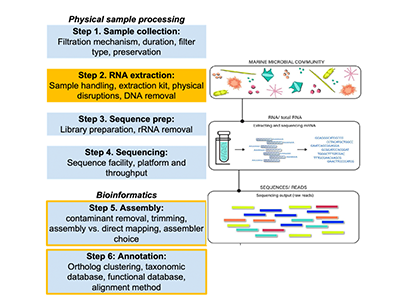
A new OCB Activity is kicking off: Intercomparison of metatranscriptomic methods for characterizing microbial eukaryote contributions to the biological carbon pump There are opportunities to speak and suggest speakers and…
Read More