Posts by chadwick.chinnery
Estuarine sediment resuspension drives non-local impacts on biogeochemistry
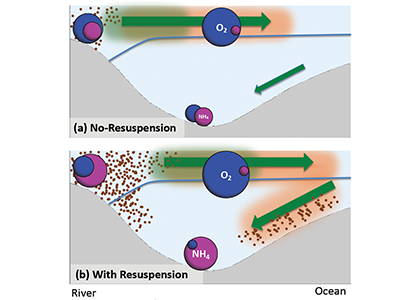
Sediment processes, including resuspension and transport, affect water quality in estuaries by altering light attenuation, primary productivity, and organic matter remineralization, which then influence oxygen and nitrogen dynamics. In a…
Read MoreThe role of nutrient trapping in promoting shelf hypoxia in the southern Benguela upwelling system
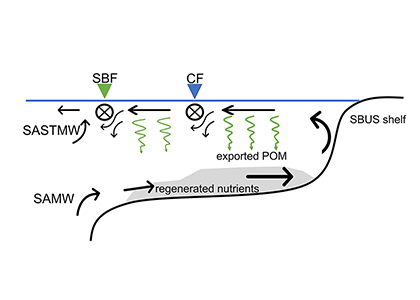
The southern Benguela upwelling system (SBUS) off southwest Africa is an exceptionally fertile ocean region that supports valuable commercial fisheries. The productivity of this system derives from the upwelling of…
Read MoreProfiling floats reveal fate of Southern Ocean phytoplankton stocks
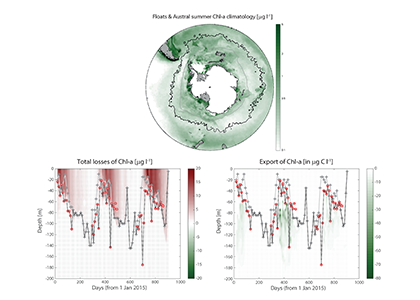
More observations are needed to constrain the relative roles of physical (advection), biogeochemical (downward export), and ecological (grazing and biological losses) processes in driving the fate of phytoplankton blooms in…
Read MoreA close-up view of biomass controls in Southern Ocean eddies
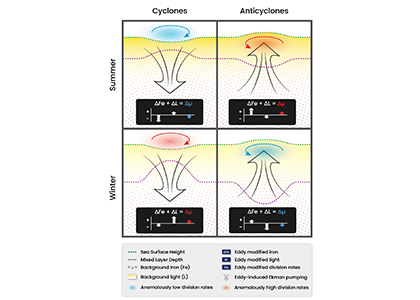
Southern Ocean biological productivity is instrumental in regulating the global carbon cycle. Previous correlative studies associated widespread mesoscale activity with anomalous chlorophyll levels. However, eddies simultaneously modify both the physical…
Read MoreMultiyear predictions of ocean acidification in the California Current System
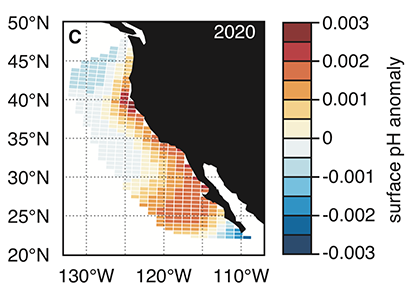
The California Current System is a highly productive coastal upwelling region that supports commercial fisheries valued at $6 billion/year. These fisheries are supported by upwelled waters, which are rich in…
Read MoreSpace-based estimates of estuarine dissolved organic carbon flux to the Mid-Atlantic Bight
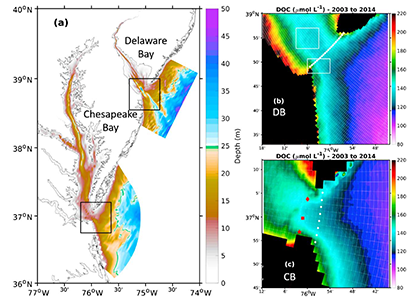
Dissolved organic carbon (DOC) is a food supplement that supports microorganism growth and plays a major role in the global carbon cycle via the microbial loop, which integrates DOC into…
Read MoreThe curious role of organic alkalinity in seawater carbonate chemistry
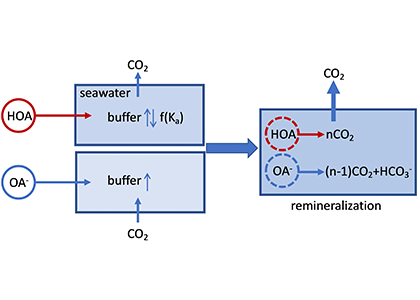
The marine chemistry community has measured organic alkalinity in coastal and estuarine waters for over two decades. While the common perception is that any unaccounted alkalinity should enhance seawater buffer…
Read MoreTurning a spotlight on grazing
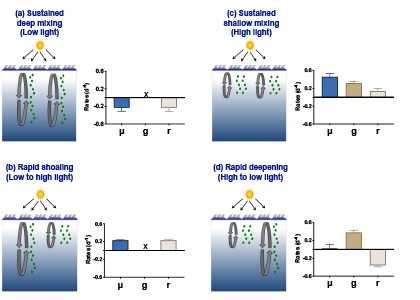
Microscopic plankton in the surface ocean make planet Earth habitable by generating oxygen and forming the basis of marine food webs, yielding harvestable protein. For over 100 years, oceanographers have…
Read MoreModern OMZ copepod dynamics provide analog for future oceans
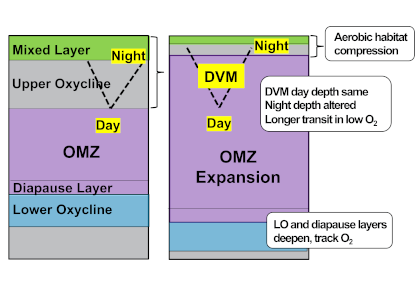
Global warming increases ocean deoxygenation and expands the oxygen minimum zone (OMZ), which has implications for major zooplankton groups like copepods. Reduced oxygen levels may impact individual copepod species abundance,…
Read MoreBlue hole in the South China Sea reveals ancient carbon
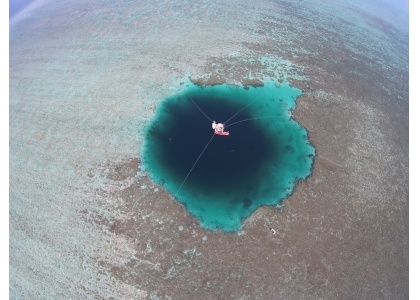
Blue holes are unique depositional environments that are formed within carbonate platforms. Due to an enclosed geomorphology that restricts water exchange, blue hole ecosystems are typically characterized by steep biogeochemical…
Read More