Posts by chadwick.chinnery
You better repeat it: Serial ocean acidification experiments on fish early life stages
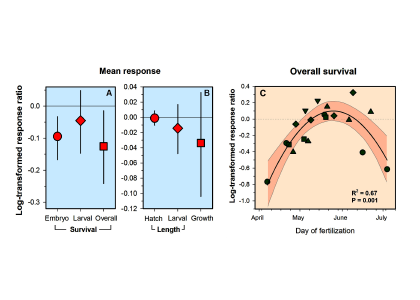
To detect potential effects of acidification on marine organisms, experimenters most commonly use within-experiment replication, but repeating the experiments themselves is rarely done. While the first approach suffices to detect major CO2 effects, other…
Read MoreGulf of Mexico: A blue carbon hotspot of mangroves, seagrass and marshes
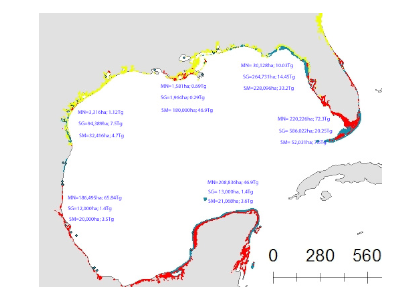
The Gulf of Mexico (GoM) is an important global hotspot that comprises over 2.1615 million hectares of blue carbon habitats, including mangroves, seagrasses, and salt marshes, which collectively store 480.5…
Read MoreRapid warming and salinity changes mask acidification in Gulf of Maine waters
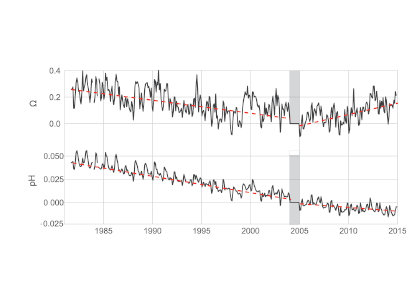
Why don’t we see ocean acidification in over a decade of high-frequency observations in the Gulf of Maine? The answer lies in a recent decade of changes that raised sea…
Read MoreBiological and physical controls on estuarine nitrous oxide emissions
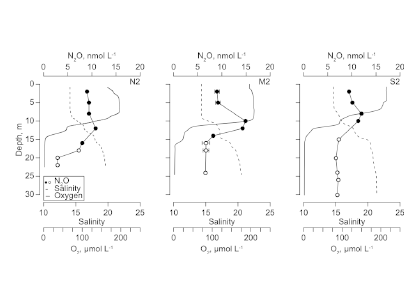
Nitrous oxide (N2O) is a potent greenhouse gas with rising atmospheric concentrations. Atmospheric emissions of N2O are predicted to increase with continued anthropogenic perturbation of the nitrogen cycle, yet the…
Read MoreEvidence against an Arctic Ocean methane bomb
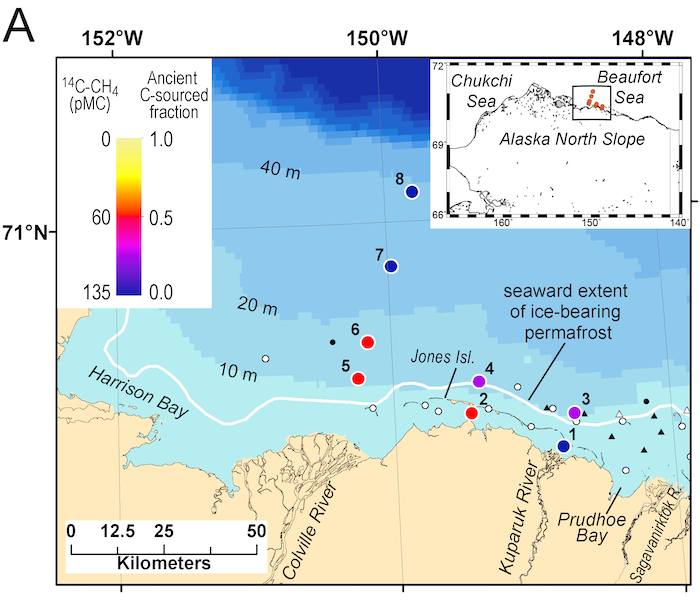
Gas hydrates are an ice-like storehouse of the greenhouse gas methane found in continental margins of the world ocean. Warming waters can cause hydrates to decompose and release ancient methane…
Read MoreDust-borne iron in the Southern Ocean was more bioavailable during glacial periods
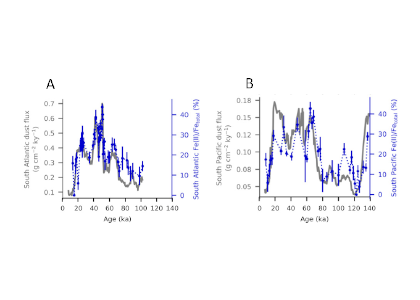
The Southern Ocean is iron (Fe)-limited, and increased fluxes of dust-borne Fe to the Southern Ocean during the Last Glacial Maximum (LGM) have been associated with phytoplankton growth and CO2…
Read MoreThe past, present, and future of artificial ocean iron fertilization experiments
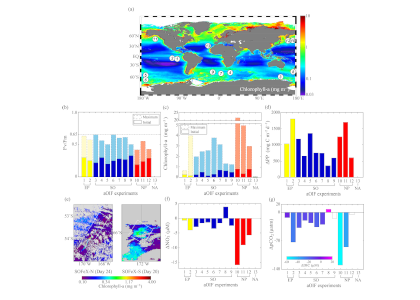
Since the beginning of the industrial revolution, human activities have greatly increased atmospheric CO2 concentrations, leading to global warming and indicating an urgent need to reduce global greenhouse gas emissions.…
Read MoreConstraints on glacial overturning circulation and export production lead to answers about the carbon cycle
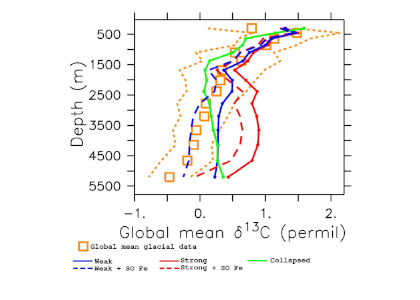
One of the biggest unsolved mysteries in climate science concerns the dynamics and feedbacks of the ice age carbon dioxide (CO2) cycle. At the height of the Pleistocene ice ages,…
Read More234Th-based estimates show contrasting patterns of carbon attenuation through oxygen minimum and deficient zones
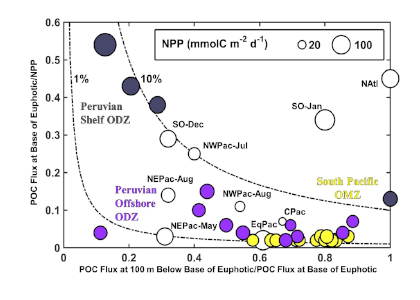
Oxygen minimum zones (OMZs) are thought to be regions of the global ocean where a greater percentage of the organic carbon associated with particles makes it to depth. Currently covering…
Read MoreNew BioGEOTRACES data sets: Connecting pieces of the microbial biogeochemical puzzle
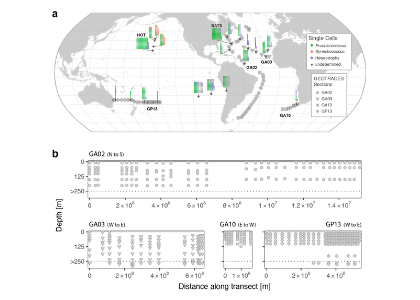
Microorganisms play a central role in the transfer of matter and energy in the marine food web. Microbes depend on micronutrients (e.g. iron, cobalt, zinc, and a host of other…
Read More