SciHigh Slider-Home
New over-determined CO2 system solver QUODcarb
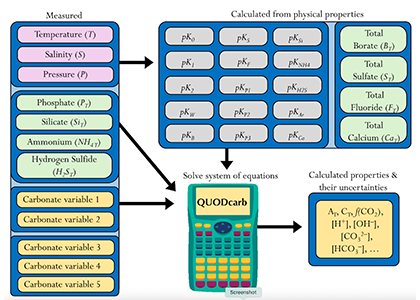
Do you work with over-determined datasets of seawater carbon dioxide system chemistry? QUODcarb (Quantifying Uncertainty in an Over-Determined marine carbonate system), a new over-determined CO2-system solver is described in the…
Read MorePhotoacclimation by phytoplankton under clouds
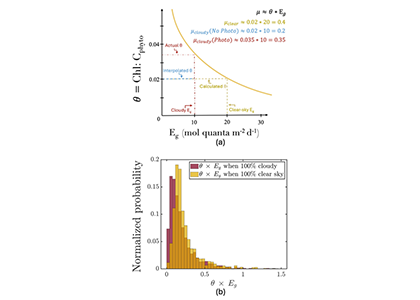
Unlike most remote sensing products, Net Primary Production (NPP) is computed under clouds. Since satellites can’t see through clouds, NPP models rely on clear-sky observations, interpolate model inputs, and assume…
Read MoreMicrobial Iron limitation in the ocean’s twilight zone
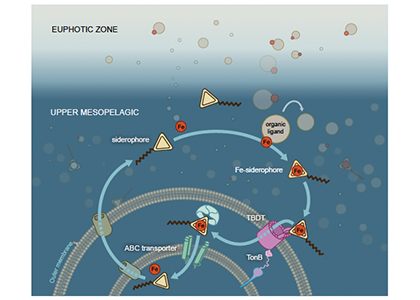
How deep in the ocean do microbes feel the effects of nutrient limitation? Microbial production in one third of the surface ocean is limited by the essential micronutrient iron (Fe).…
Read MoreHow do ocean microbes share the job of denitrification?
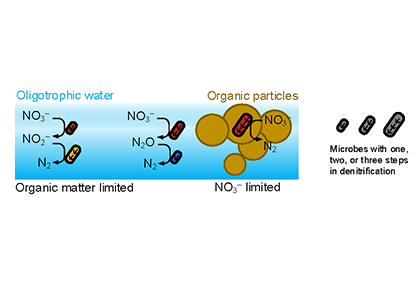
Denitrification is a crucial multi-step process for ecosystem productivity and sustainability because some of its steps can result in the loss of the essential nutrient nitrogen or the production of…
Read MoreThe ocean is shifting toward phosphorus limitation
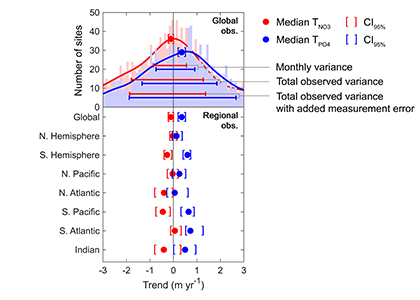
Biogeochemical models predict that ocean warming is weakening the vertical transport of nutrients to the upper ocean, with severe implications for marine productivity. However, nutrient concentrations across the ocean surface…
Read MorePersistent bottom trawling impairs seafloor carbon sequestration
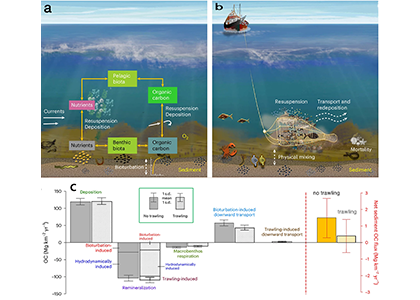
Bottom trawling, a fishing method that uses heavy nets to catch animals that live on and in the seafloor, could release a large amount of organic carbon from seafloor into…
Read MoreRain increases the global carbon sink
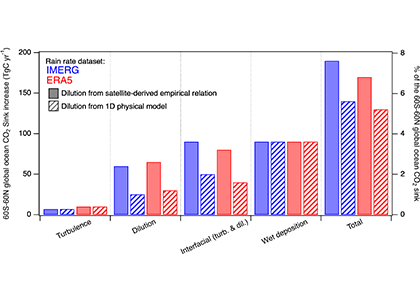
The global ocean dampens the anthropic CO2 increase in the atmosphere by absorbing around 25% of the carbon emitted each year. Of the processes involved in exchanges of energy and…
Read MoreDeep dive into carbon transport: How bacteria feast and compete on lipids in sinking particles
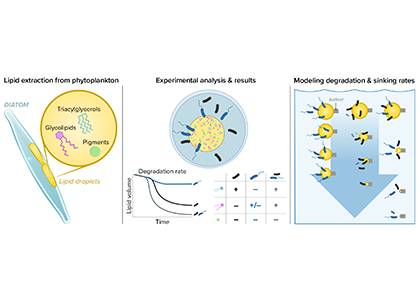
What drives carbon from the atmosphere to the deep ocean? The journey of phytoplankton-derived carbon is critical in the global carbon cycle, yet the influence of interacting bacteria in degrading…
Read MoreOA could boost carbon export by appendicularia
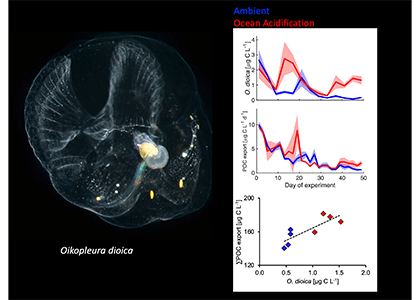
Gelatinous zooplankton comprise a widespread group of animals that are increasingly recognized as important components of pelagic ecosystems. Historically understudied, we have little knowledge of how much key taxa contribute…
Read MoreQuantifying uncertainties in future projections of Chesapeake Bay Hypoxia
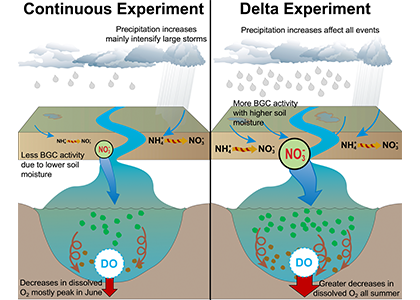
Climate change is expected to especially impact coastal zones, worsening deoxygenation in the Chesapeake Bay by reducing oxygen solubility and increasing remineralization rates of organic matter. However, simulated responses of…
Read More