Ocean Carbon & Biogeochemistry
Studying marine ecosystems and biogeochemical cycles in the face of environmental change
  • Home
  • About OCB
    • About Us
    • Scientific Breadth
      • Biological Pump
      • Changing Marine Ecosystems
      • Changing Ocean Chemistry
      • Estuarine and Coastal Carbon Fluxes
      • Ocean Carbon Uptake and Storage
      • Ocean Observatories
    • Code of Conduct
    • Get Involved
    • Project Office
    • Scientific Steering Committee
    • OCB committees
      • OCSIF – Ocean Carbonate System Intercomparison
      • Ocean-Atmosphere Interaction
      • Ocean Time-series
      • US Biogeochemical-Argo
  • Activities
    • 20 years of OCB Symposium – 18 November 2026
    • OCB Webinars
    • Summer Workshop
    • Guidelines for OCB Workshops & Activities
    • Topical Workshops
      • 7th DMS(P) Symposium
      • Marine Virus Workshop
      • Completed
        • CMIP6 Models Workshop
        • Coastal BGS Obs with Fisheries
        • C-saw extreme events workshop
        • Expansion of BGC-Argo and Profiling Floats
        • Fish, fisheries and carbon
        • Future BioGeoSCAPES program
        • GO-BCG Scoping Workshop
        • Lateral Carbon Flux in Tidal Wetlands
        • Leaky Deltas Workshop
        • Marine CDR Workshop
        • Ocean Nucleic Acids ‘Omics
        • Pathways Connecting Climate Changes to the Deep Ocean
    • Small Group Activities
      • BECS Benthic Ecosystem and Carbon Synthesis WG
      • Metabarcoding intercal WG
      • Meta-eukomics WG
      • Metaproteomic Intercomparison
      • SedMIP
      • Recently completed
        • Aquatic Continuum OCB-NACP Focus Group
        • Arctic-COLORS Data Synthesis
        • Carbon Isotopes in the Ocean Workshop
        • CMIP6 WG
        • Filling the gaps air–sea carbon fluxes WG
        • Fish Carbon WG
        • mCDR
        • Mixotrophs & Mixotrophy WG
        • N-Fixation WG
        • Ocean Carbonate System Intercomparison Forum
        • Ocean Carbon Uptake WG
        • OOI BGC sensor WG
        • Operational Phytoplankton Observations WG
        • Phytoplankton Taxonomy WG
    • Other Workshops
    • Science Planning
      • Coastal CARbon Synthesis (CCARS)
      • North Atlantic-Arctic
    • Ocean Acidification PI Meetings
    • Training Activities
      • PACE Hackweek 2025
      • PACE Hackweek 2024
      • PACE Training Activity 2022
  • Science Support
    • OCB Activity Proposal Solicitation
    • Guidelines for OCB Workshops & Activities
    • Data management and archival
    • Early Career
    • Funding Sources
    • Jobs & Postdocs
    • Meeting List
    • OCB Topical Websites
      • Ocean Fertilization
      • Trace gases
      • US IIOE-2
    • Outreach & Education
    • Promoting your science
    • Student Opportunities
    • Travel Support
  • Publications
    • OCB Workshop Reports
    • Science Planning and Policy
    • Newsletter Archive
  • Science Highlights
  • News

Archive for Uncategorized – Page 2

International FAIR Data Workshop POSTPONED

Posted by mmaheigan 
· Tuesday, October 10th, 2023 

International Workshop: FAIR Data Practices for Ship-based Ocean Time Series

DATES POSTPONED

OVERVIEW: Sustained ocean time series measurements are fundamental to distinguish between natural and human-induced variability in ecosystems and processes required to advance ecological forecasting. The last international ship-based ocean time series workshop, held in November 2012 (Bermuda), focused on recommendations to improve data comparability. Over the past decade (see Fig.) the ocean observing community has contributed to numerous efforts and activities in support of building a global network of ocean time series with the aims of:

  • Elevating the visibility and utility of these observing assets for understanding climate-ecosystem links
  • Improving coordination, communication, and scientific synthesis products across ocean time series programs/sites
  • Building consensus on foundational components such as methods and FAIR data practices
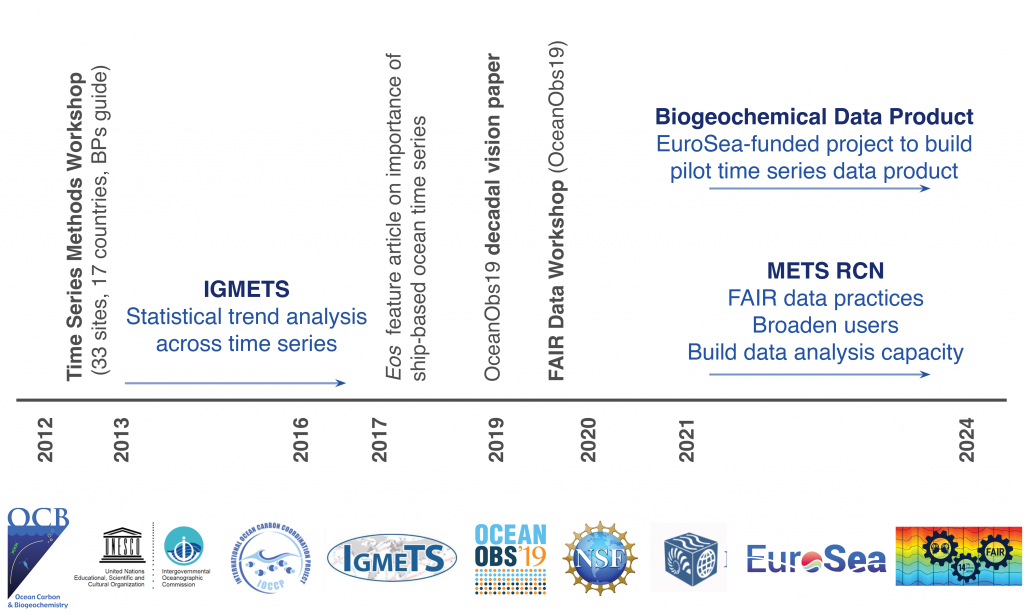
This workshop on FAIR Data Practices for Ship-based Ocean Time Series will bring together globally distributed ship-based ocean time series representatives who are interested and committed to FAIR data practices with data managers and experts in semantic web technologies with the following objectives:

  • Share and vet newly drafted biogeochemical and biological use cases for adoption by the broader METS community
  • Work with participating time series representatives to implement these use cases for their time series programs
  • Co-develop best practices for responsible use of ocean time series datasets (as a contribution to the Ocean Best Practices System repository)
  • Share new findings and update recommendations on sampling and analytical protocols from the 2012 Bermuda Time Series Methods Workshop
  • Explore mechanisms (and identify champions!) for engaging broader stakeholders (managers, educators, etc.) in the use of ocean time series data sets
  • Start planning (and identify champions!) for an Ocean HackWeek for ocean time series data
OCB supports ECR participation in 2023 Cornell Satellite Remote Sensing course

Posted by mmaheigan 
· Tuesday, August 15th, 2023 

OCB supports ECR participation in 2023 Cornell Satellite Remote Sensing course

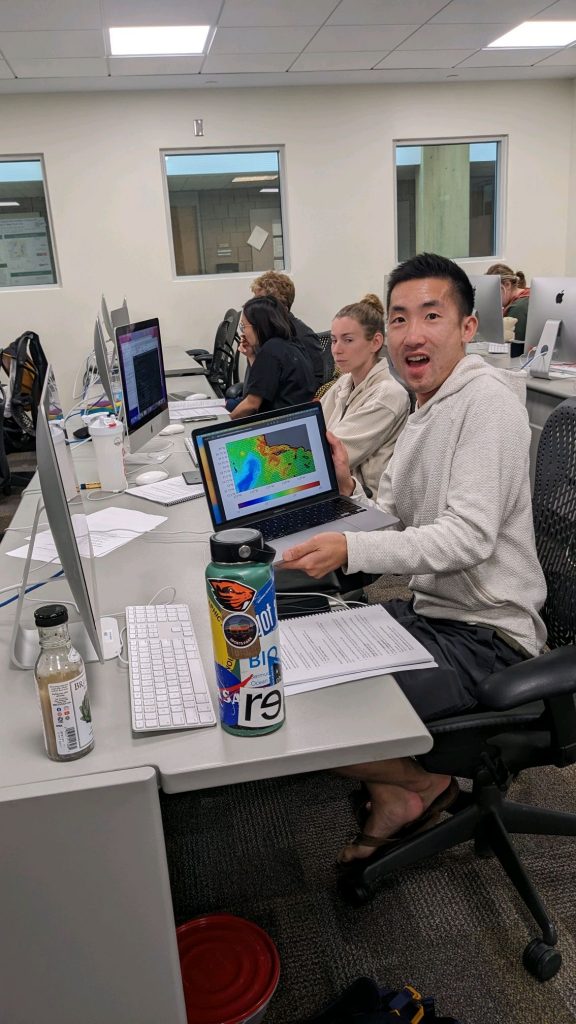
The Cornell Satellite Remote Sensing course, an intensive 2-week summer training course took place June 5-16 in Ithaca, NY. The goal of the course was to teach participants the basic skills needed to work independently to acquire, analyze and visualize data sets derived from a variety of satellite sensors. The course also covered image analysis methods to work with satellite imagery of 1) sea surface temperature, 2) ocean wind speed, and 3) sea surface height.

OCB supported six students to attend the 2023 course. Read about the students and their experiences below:

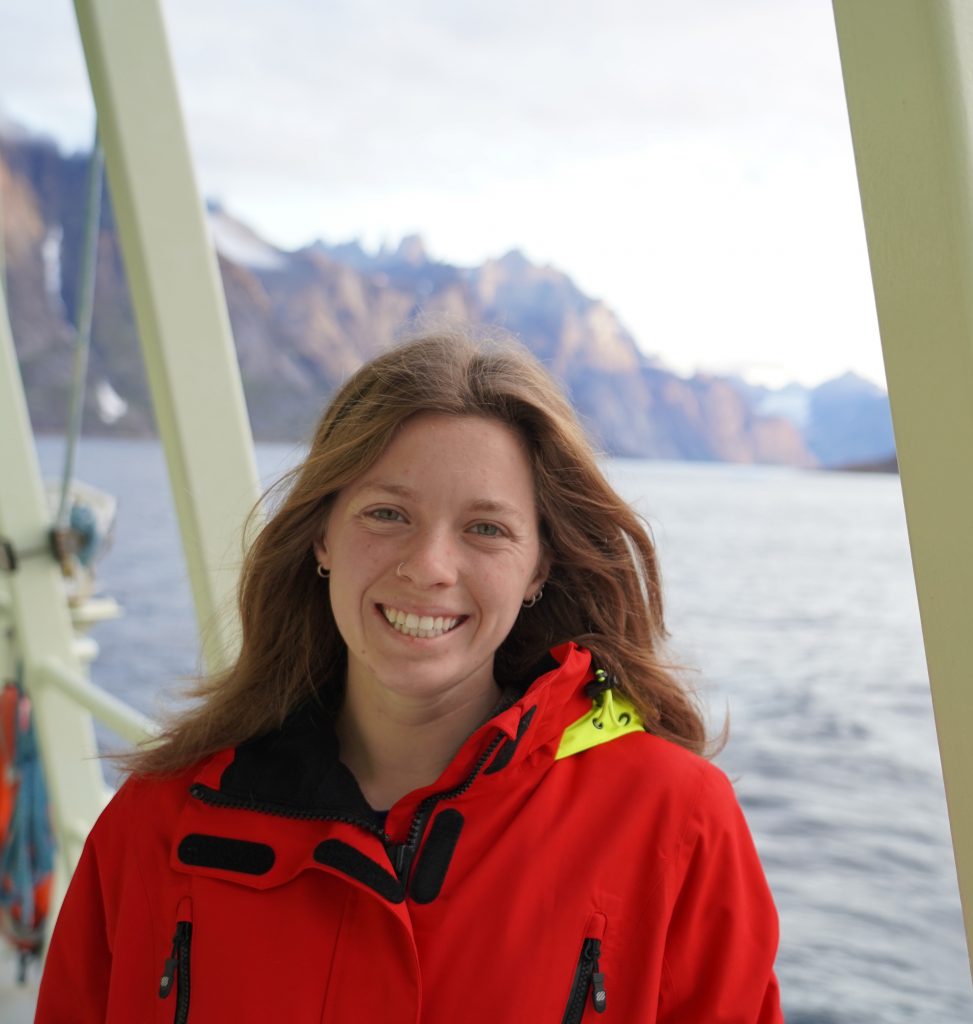
Rizal-ardian

Ardian Rizal’s research interest is in the area of physical oceanography process and how it explains the interconnected system of the Earth. After graduation from his bachelor’s study in Bandung Institute of Technology, Indonesia, he became an academic assistant at the same institution. His work was to describe the wind-wave climate characteristics and its potential as a renewable energy in the Indonesian Seas. He utilized numerical simulation along with the observation from buoy and altimetry satellites to assess the model’s fidelity. Currently, he is in the 2nd year of his master’s study in the division of Marine Science at the University of Southern Mississippi. He is examining the tidal influences on the mechanism of circulation in the west Mississippi Sound as his theses project under the supervision of Dr. Jerry Wiggert.

On the course: It was a blast! The program serves as a comprehensive foundation for the acquisition, data analysis, and visualization of the imagery and altimetry satellite geophysical product. The course was delivered with a perfect balance of lectures and practical activities. I feel I can independently navigate myself to do my own project after the program. Outside of the course, there are a lot of fantastic things to do with amazing participants such as exploring the gorgeous gorges, visiting the renowned ornithology lab of Cornell, and many more. I am full of gratitude to Dr. Bruce for the amazing stories and guidance, the helpful and patient teaching assistants: Danielle and Nour, and OCB for the wonderful opportunity to participate in this course. This program is highly recommended to any marine scientists who want to do remote sensing studies or learn useful tools of Python and SeaDAS through UNIX environment for ocean studies.

yoder-meg

Meg Yoder is a 4th year PhD student at Boston College. Her research focuses on the biological, chemical, and physical processes that govern the flux of carbon between the surface ocean, deep ocean, and atmosphere in the subpolar North Atlantic. Her current research in the Irminger Sea uses autonomous sensor data from Ocean Observatories Initiative including pH, pCO2, oxygen, and chlorophyll, as well as lab measurements.

On the course: The Cornell Ocean Satellite Remote Sensing course opened the door to satellite data for me, and not just for ocean color but sea surface temperature, wind, and altimetry data as well. I’m excited to integrate these new data sources and compare them to the in situ data I’m currently working with. The course was extremely well structured and well taught, I can’t thank Bruce, the TAs, and OCB for their support in participating enough!

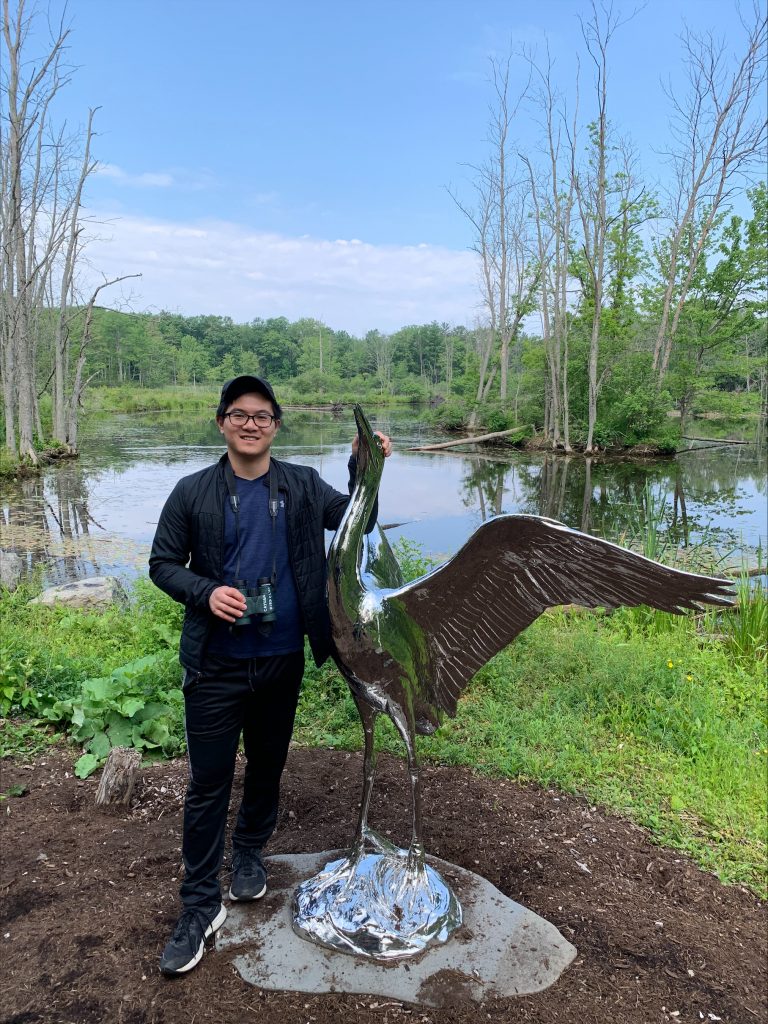
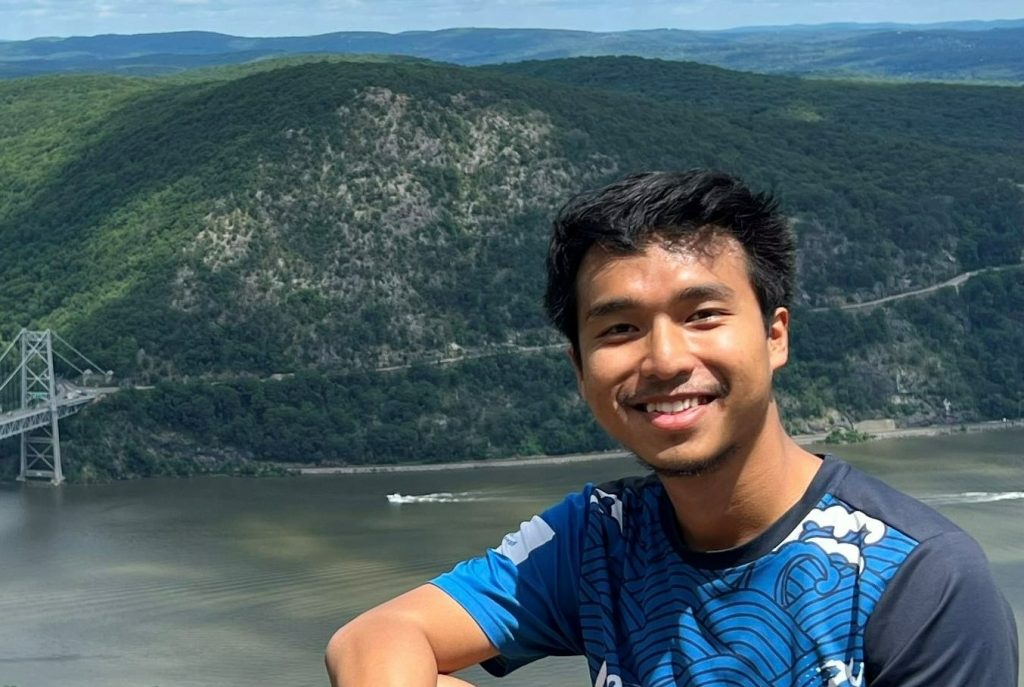
James Lin photo

James Lin is a second-year Ph.D. student in the Ocean Processes and Analysis Laboratory at the University of New Hampshire. Advised by Dr. Robert Letscher, his current project focuses on constraining the production, age, and biochemical fate of dissolved organic carbon (DOC) based on its sources (allochthonous vs autochthonous) and sinks (abiotic vs biotic) using isotope 13C and radiocarbon (14C) in the ocean biogeochemistry component (Marine Biogeochemistry Library- MARBL) of the Community Earth System Model V2 (CESM).

On the course: I am very happy to have taken the Cornell Satellite Remote Sensing 2023 workshop. A huge thank you to Dr. Bruce Monger and the supporting staff and TAs for their mentorship and patience in learning satellite imagery with Python. Learning how to access and process satellite data, such as sea surface temperature, altimetry, chlorophyll, and wind speed, is immensely valuable in my current carbon modeling research to provide long-term observations throughout the global ocean. I also appreciate meeting and getting to know other participants from different parts of the world working on Satellite-derived observations. This training workshop is a must to become a part of the Satellite Remote Sensing community. Thank you again to Dr. Bruce Monger, the Cornell workshop staff and participants, and Ocean Carbon & Biogeochemistry (OCB) for making this workshop experience unforgettable.

Mitch Torkelson pic

Mitch Torkelson is a 2nd year master’s student in Marine Science at the University of North Carolina-Wilmington. Under the guidance of Dr. Phil Bresnahan, his research primarily centers around assessing the accuracy of the SeaHawk CubeSat in measuring key oceanic water column constituents such as chlorophyll a and CDOM. His research interests lie in the field of water quality, where he utilizes bio-optical modeling and remote sensing techniques to conduct statistical analyses on the optically-detectable particles and sediments observed in satellite imagery captured near the Masonboro inlet, situated along the North Carolina coast.

On the course: I cannot praise the Ocean Color training program led by Bruce Monger enough. Prior to enrolling in the course, my knowledge of programming and ocean color satellite analysis was basic at best. However, after completing the 2 weeks, I emerged equipped with an entire new arsenal of skills and tools that not only will aid in the completion of my thesis research but also position me for success in my future endeavors!

Jessie Wynne pic

Jessie Wynne is a 2nd year Master of Marine Science Student at the University of North Carolina Wilmington and is advised by Dr. Phil Bresnahan. Her research is focused on the development of low-cost water quality sensors as well as satellite water quality analysis. Jessie will be working with SeaHawk/HawkEye imagery and chlorophyll coastal analysis.

On the course: The Cornell Satellite Remote Sensing course was a fantastic experience. It provided me with so many tools to process satellite imagery, especially ocean dolor data. This course also equipped me with python programming skills. Dr. Bruce Monger was an excellent instructor, providing thorough explanations of satellite imagery analysis algorithms while being very patient with all questions directed his way. I really enjoyed this course and would recommend it to anyone pursuing satellite remote sensing and ocean color analysis. I would like to say thank you to Dr. Bruce Monger and OCB for this amazing experience!

Baetge pic

Nick Baetge is a postdoctoral scholar in the laboratories of Dr. Michael Behrenfeld and Dr. Kimberly Halsey at Oregon State University. He has been examining variability in phytoplankton physiology and bio-optical properties over the day-night cycle using cultivation-based experiments and from publicly archived in situ data. He will soon be investigating the physiological and diversity-based responses of marine phytoplankton and bacterioplankton to wildfire ash deposition off the U.S. West Coast.

On the course: It can be hard for new ocean color data users to know how to approach remote sensing analyses, including coding in a different programming language. Dr. Monger breaks down the process and provides several resources that makes it less daunting for new users to start, giving them the confidence to use Python, retrieve level 1 satellite data, process it to level 3, and generate composite imagery from individual scenes. I left the Cornell Remote Sensing workshop with not only a new set of tools that I can continue to refine and use to view the oceans, but also some wonderful new colleagues and friends. Thank you so much to Dr. Monger, OCB, and all the course participants for the opportunity to connect and learn!

mCDR Workshop September 27-30, 2022

Posted by mmaheigan 
· Wednesday, September 21st, 2022 

Marine Carbon Dioxide Removal: Essential Science and Problem Solving for Measurement, Reporting, and Verification Workshop

September 27-30, 2022 (The University of Rhode Island)

The central goal of this workshop is to build the OCB community's capacity to conduct research to support the Measurement, Reporting and Verification (MRV) of marine CDR by identifying priorities, pathways and best practices in this relatively new area.

Application deadline was August 1, 10am ET.

Learn more about the dual activity, and the workshop.

USCCSP-NACP CDR Workshop August 1, 2, 4 – sign up!

Posted by mmaheigan 
· Tuesday, June 14th, 2022 

The US Carbon Cycle Science Program and the North American Carbon Program are in the midst of planning a workshop on research opportunities, partnerships and investments of Carbon Dioxide Removal (CDR). The intended workshop participants include funders, scientists, policy-makers and practitioners with expertise, resources and/or capabilities to inform federal CDR research opportunities, partnerships and investments related to air, land, coasts and societal dimensions of CDR.

This virtual workshop will be conducted on Monday August 1, 2022; Tuesday August 2, 2022; and Thursday August 4, 2022. (Friday August 12, 2022 – hold for work sessions if needed).

If you are interested in participating, and/or would like to provide input into the workshop planning, please complete this Expression of Interest Form.

Implementation of the Global Ocean Biogeochemistry (GO-BGC) Array: Request for Community Engagement

Posted by mmaheigan 
· Thursday, November 5th, 2020 

GO-BGC Executive Team*

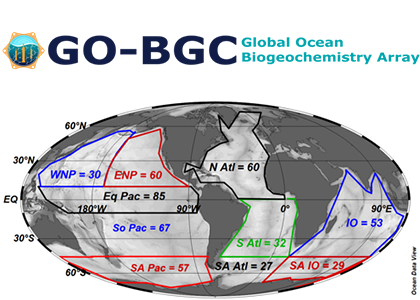
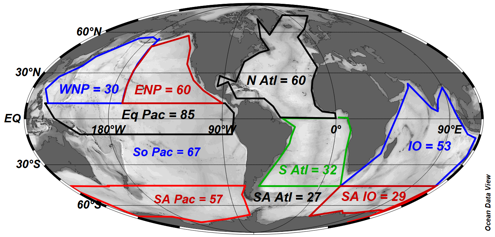
On October 29, 2020 the National Science Foundation (NSF) approved a $53 million Mid-Scale Research Infrastructure (MSRI) grant to implement the Global Ocean Biogeochemistry (GO-BGC) Array – a sustained robotic network of profiling floats carrying chemical and biological sensors that will revolutionize our understanding of ocean biogeochemical cycles, carbon uptake, acidification, deoxygenation, and ecosystem health. Scientists at the Monterey Bay Aquarium Research Institute, University of Washington, Scripps Institution of Oceanography, Woods Hole Oceanographic Institution, and Princeton University will use this grant to build and deploy 500 biogeochemical (BGC) floats around the globe (Figure 1).

Figure 1. Float deployment numbers by ocean basin for an approximately even distribution of the 500 U.S. floats. Actual float deployment locations will depend on close collaboration with international partners in effort to achieve an even distribution of the total 1,000 international BGC floats.

An extension of the Argo network for temperature and salinity, GO-BGC floats will be equipped with nitrate, oxygen, pH, backscatter, chlorophyll fluorescence, and, when possible, irradiance sensors and will be distributed globally in open ocean waters deeper than 2,000 m. Floats will “park” at 1,000 m depth for nine days before profiling from 2,000 m to the sea surface, which is consistent with the Argo protocol. Data will be posted to the Argo Data Assembly Centers, as well as the GO-BGC website, within 24 hours of satellite telemetry of each float profile. These real-time data will be of research quality and freely available. As many floats as possible will be deployed in conjunction with ship-based validation measurements in order to support continuing improvements in data processing and sensor performance, as well as to quantify the accuracy of the float data.

The 500 floats in GO-BGC will represent half the desired global number of 1,000 floats proposed in the Biogeochemical Argo Science and Implementation Plan (BAPG, 2016) for a global BGC observing system. As occurs in the Core-Argo program, we anticipate that an additional 500 floats will be deployed by international partners in the coming years, and many efforts are already underway.

The NSF MSRI grant focuses solely on the implementation of GO-BGC infrastructure and does not include funding for research. Successful use of the array will depend on community engagement via proposal pressure to conduct research. We, therefore, strongly encourage community members to begin planning to submit proposals to utilize profiling float data. As the GO-BGC project is just beginning, no floats have reached the water yet. However, there is a quality controlled set of data from the Southern Ocean Carbon and Climate Observations and Modeling (SOCCOM) project, as well as a variety of other Biogeochemical-Argo data sets that are available now.  These data sets have been used in numerous studies and they are available to the community as an initial asset and as a guide for future planning.

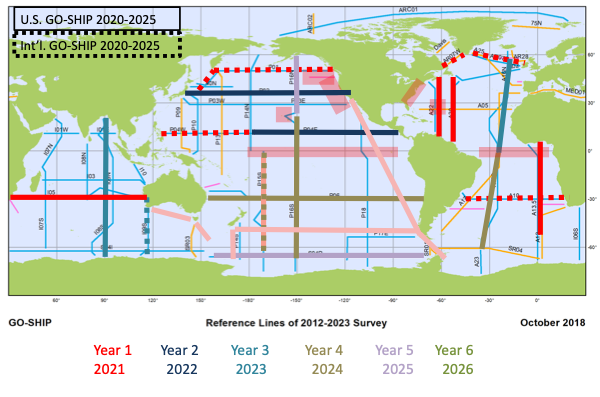
The GO-BGC array will be implemented in phases. Critical logistical partnerships in this endeavor include those with regional field programs and the International Global Ocean Ship-Based Hydrographic Investigation Program (GO-SHIP), from which many of the floats will be deployed. While research cruises have been impacted significantly by the recent 2020 COVID-19 pandemic, planning is still underway and information about where GO-BGC floats are likely to be deployed in the coming years will be critical in guiding research proposal efforts (Figure 2).

Figure 2. Known deployment opportunities from GO-SHIP cruises in the next five years (US GO-SHIP solid; international GO-SHIP dashed). Pink lines show additional Year 1 opportunities from cruises outside of GO-SHIP, some of which occur annually.

We will disseminate more information and answer questions from the community about the project and implementation plans during a virtual Town Hall at the AGU Fall Meeting in December, 2020.


*GO-BGC Executive Team:
Kenneth Johnson, MBARI
Stephen Riser, UW
Jorge Sarmiento, Princeton
Lynne Talley, Scripps
Susan Wijffels, WHOI
Heidi Cullen, MBARI
Andrea Fassbender, MBARI
George Matsumoto, MBARI
Yui Takeshita, MBARI
Alison Gray, UW
Sarah Purkey, Scripps
Todd Martz, Scripps
David Nicholson, WHOI

Science Highlight guidelines

Posted by mmaheigan 
· Friday, May 25th, 2018 

Your science highlight should use a narrative style and active voice to engage the reader (no verbatim sentences from your abstract or paper).

Your target audience is a broad scientific readership. You may submit one figure that conveys the key point of the paper, with a succinct caption. The figure (separate high res file) must be modified slightly from its published version to avoid copyright issues.

The text should include the following:

- A catchy title to draw in your reader

- Opening statement highlighting an unknown or a question (1-2 sentences)

- Key results/findings and approaches (with link to article) (3-4 sentences)

- What are the broader implications of this work? Why should federal/state/local gov't, funding agencies, citizens, stakeholders, educators, etc. care?  (1-2 sentences)

- Author name(s) and affiliation(s) - Style: Sam Smyth (University of Carbon)

- Social media handles of authors and/or labs/institutions

Short backstories are welcome!

We schedule highlights as received and go through one round of editing before publication. Generally it's 2-3 months between sending a highlight and the next open publication date due to current volume. We look forward to receiving your piece! Questions?

A Report from the 2016 OCB Summer Workshop July 25-28, 2016 (Woods Hole, MA)

Posted by mmaheigan 
· Wednesday, October 19th, 2016 

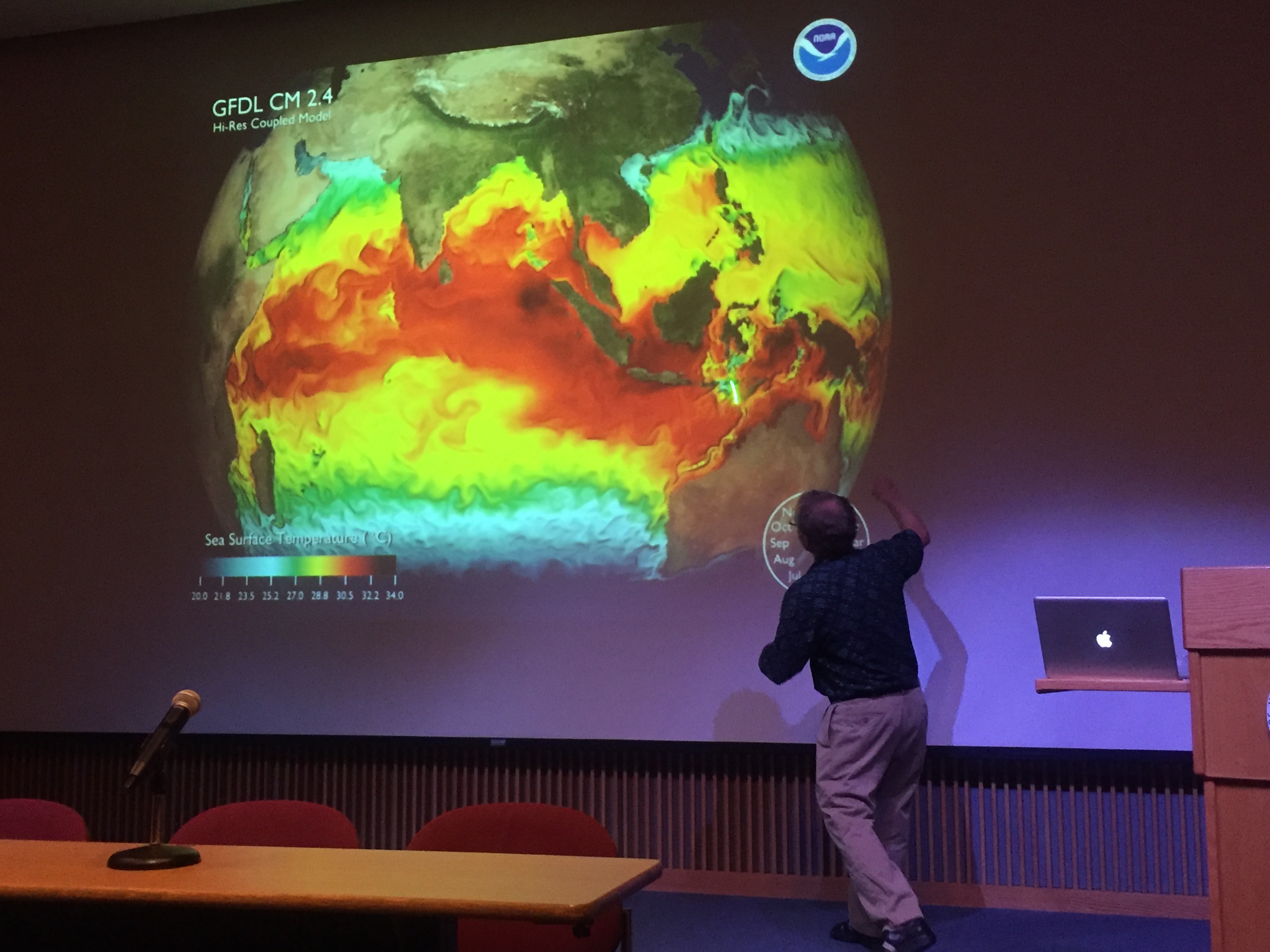
The 11th annual Ocean Carbon & Biogeochemistry summer workshop, sponsored by NSF and NASA, convened 186 participants from July 25-28, 2016 at the Woods Hole Oceanographic Institution in Woods Hole, MA.

This year’s summer workshop featured the following six plenary sessions:

Plenary 1. EXport Processes in the Ocean from RemoTe Sensing (EXPORTS)
Plenary 2. The biology of carbon export – New processes and approaches
Plenary 3. Recent advances in quantifying ocean carbon uptake
Plenary 4. Quantifying ocean carbon, oxygen, and nutrient cycles
Plenary 5. The Indian Ocean – Monsoon-driven biogeochemical processes
Plenary 6. Marine ecosystem thresholds and regime shifts

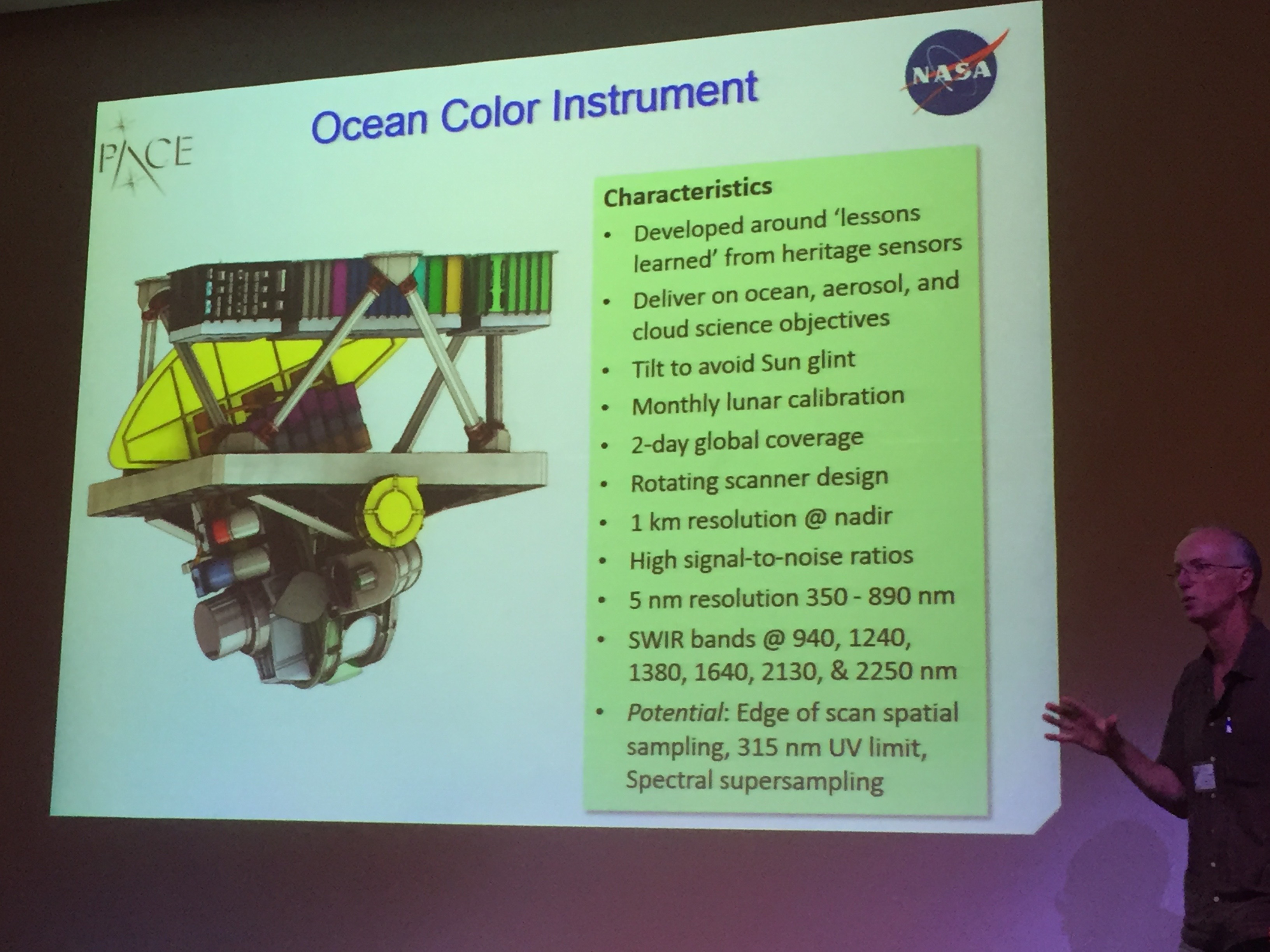
Day 1 kicked off with a presentation on the projected instrumentation and scientific capabilities of the NASA Plankton, Aerosol, Cloud, and ocean Ecosystems (PACE) Mission, which segued into the first plenary session on the proposed NASA EXport Processes in the Ocean from RemoTe Sensing (EXPORTS) field campaign. Speakers in this session provided an overview of both the EXPORTS Science Plan and the Implementation Plan. The session also featured three scientific overview talks on the EXPORTS science questions, the first of which highlighted the influence of ecosystem characteristics such as plankton community structure on organic matter export from the euphotic zone. The second talk focused on key processes in the mesopelagic zone that affect vertical transfer of organic matter to depth.

The third talk focused on how data generated by EXPORTS will reduce uncertainties in current and future estimates of export, including an overview of current modeling capabilities for different export pathways. The second plenary session of Day 1 was convened by  organizers of a recent NSF workshop and white paper on novel biological processes and pathways regulating organic matter export and degradation. Speakers in this session explored potential contributions of mixotrophs, marine microgels, and episodic events (e.g., jelly falls) to biological pump function, and provided an overview of our current observational capacity to quantify carbon export and monitor changes in the biological pump over a range of temporal and spatial scales. The plenary session closed with a community-sharing presentation describing the Carbon Flux Explorer, an autonomous float that can quantify and photograph particulate carbon fluxes. After the plenary sessions, graduate students provided short presentations about their research interests and then all participants convened for a welcome reception and poster session.

Day 2 opened with agency updates from NSF, NASA, and NOAA representatives. Speakers in plenary session 3 then described data- and model-based approaches for studying internal variability (interannual to decadal) and anthropogenic change in ocean carbon uptake, and explored the role of physical processes (e.g., subduction, mesoscale and submesoscale processes, etc.) in modulating ocean carbon uptake. A presentation on the Coupled Model Intercomparison Project (CMIP) provided an overview of CMIP5 simulations of the ocean carbon cycle and how well these simulations reproduce anthropogenic CO2 uptake and natural variability in ocean CO2 associated with  the biological pump. To provide a broader range of spatial and temporal perspectives, the session included talks on land-ocean exchanges of dissolved carbon across coastal, estuarine, wetland, and riverine systems and differences in ocean carbon storage during the last ice age, as constrained by paleo-proxies of ocean ventilation and deep-sea oxygen concentrations. This session concluded with a community-sharing presentation on Carbon Hot Spot, a nascent process study to characterize biophysical interactions and quantify ocean carbon uptake in Western Boundary Current regions such as the Kuroshio Extension.

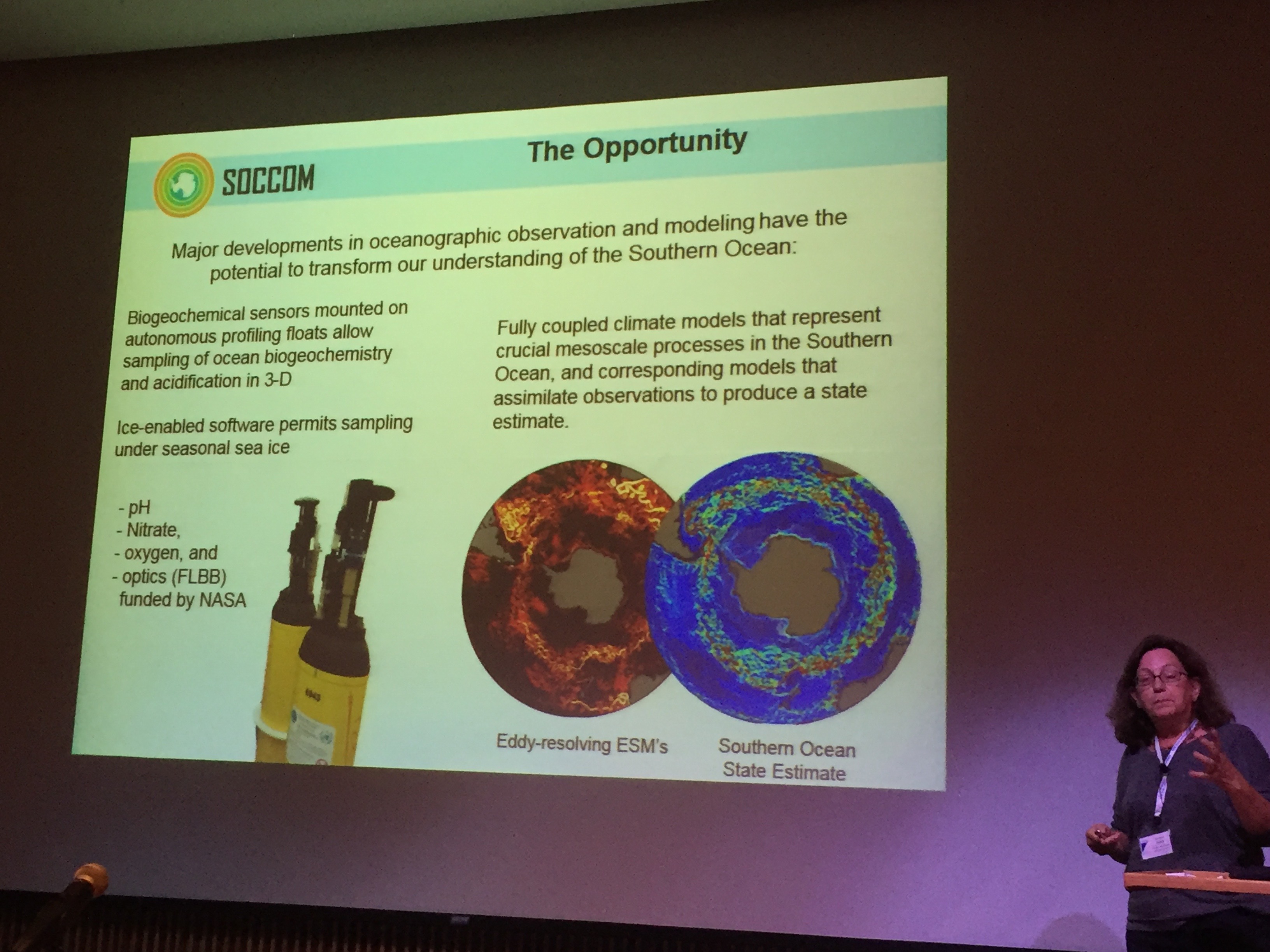
During the afternoon of day 2, speakers in plenary session 4 provided an overview of the Southern Ocean Carbon and Climate Observations and Modeling (SOCCOM) project and newly emerging seasonally resolved ocean carbon data sets from biogeochemical sensor-equipped Argo floats, which are providing unprecedented constraints on wintertime air-sea CO2 dynamics in the Southern Ocean. The session concluded with a presentation on the rationale and plan for a global biogeochemical observing network based on Argo floats equipped with biogeochemical sensors to more effectively monitor changing ocean conditions. Immediately following the plenary session, communication professionals from COMPASS led interactive communication training workshops to help participants share their science across a broad range of audiences using various tools, outlets, and communication strategies. Participants reconvened in the evening hours for the inaugural OCB ocean festival, featuring recent documentaries on the Palmer LTER in Antarctica and the CARIACO time-series.

After a morning poster session on day 3, participants enjoyed a presentation and Q&A session on the 2015 UN Climate Conference in Paris. Then speakers in plenary session 5 delivered a series of talks on the complex physical oceanographic and climatic drivers that influence biogeochemistry and biological processes in the Indian Ocean, where scientists are amidst planning for the second International Indian Ocean Expedition (IIOE2). The session opened with an overview presentation on key physical oceanographic features and observing resources in the Indian Ocean. Speakers then addressed links between physics, climate, and biogeochemical processes such as dissolved organic carbon (DOC) distribution and dynamics, iron limitation, trace metal cycling and measurements from GEOTRACES, nitrogen fixation, and oxygen deficiency in different parts of the basin and associated effects on biology. The final presentation of the session focused on seasonally variable Indian Ocean boundary currents and their impacts on local ecology and biogeochemistry. Day 3 wrapped up with a presentation by the new US SOLAS (Surface Ocean Lower Atmosphere Study) representative to initiate discussion and brainstorm ideas to facilitate scientific exchanges and new collaborations on topical areas of interest to both OCB and SOLAS.
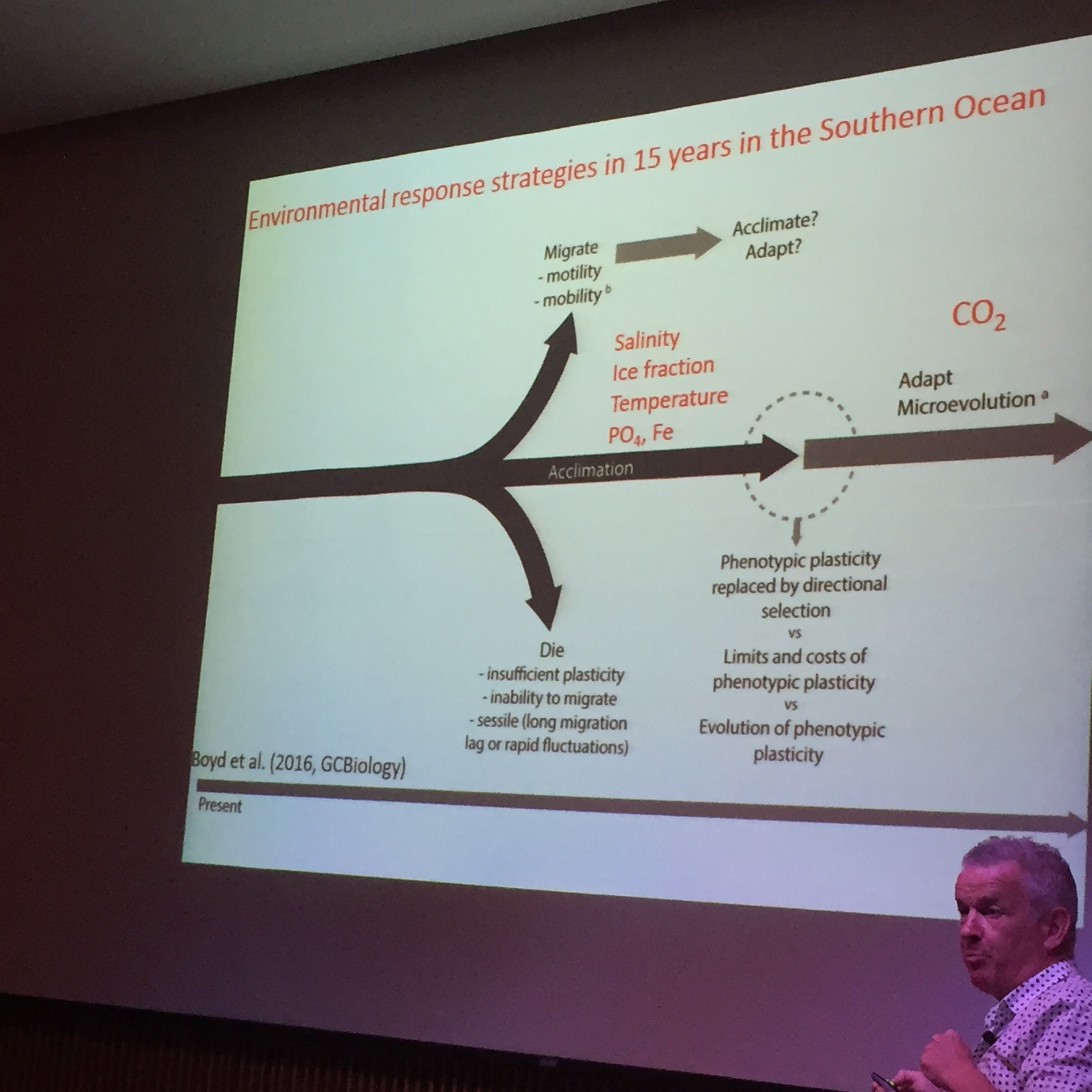
The final day of the workshop opened with a presentation on the proposed NASA field campaign Arctic-COLORS. The Arctic-COLORS science plan is undergoing revisions, so authors were seeking input from the OCB community. The final plenary session of the workshop, plenary 6, featured a series of talks on marine ecosystem thresholds and regime shifts. In this session, speakers explored phytoplankton response to natural climate variability and anthropogenic climate change (phenology, biogeography, community composition, etc.), implications of climate-driven changes in bloom phenology for higher trophic levels, ecological changes and associated shifts in benthic communities of the Pacific Arctic, and the development of tools such as early warning systems to identify and predict nonlinear shifts in ocean ecosystems. A separate 1.5-day meeting on Arctic-COLORS immediately following the OCB workshop provided an opportunity for more in-depth discussions and opportunities to gather feedback.

For more information, including links to plenary talks and webcast footage, please visit the workshop archive page or contact Heather Benway.

Biogeochemical Cycling of Trace Elements Within the Ocean: A Synthesis Workshop

Posted by mmaheigan 
· Sunday, September 18th, 2016 


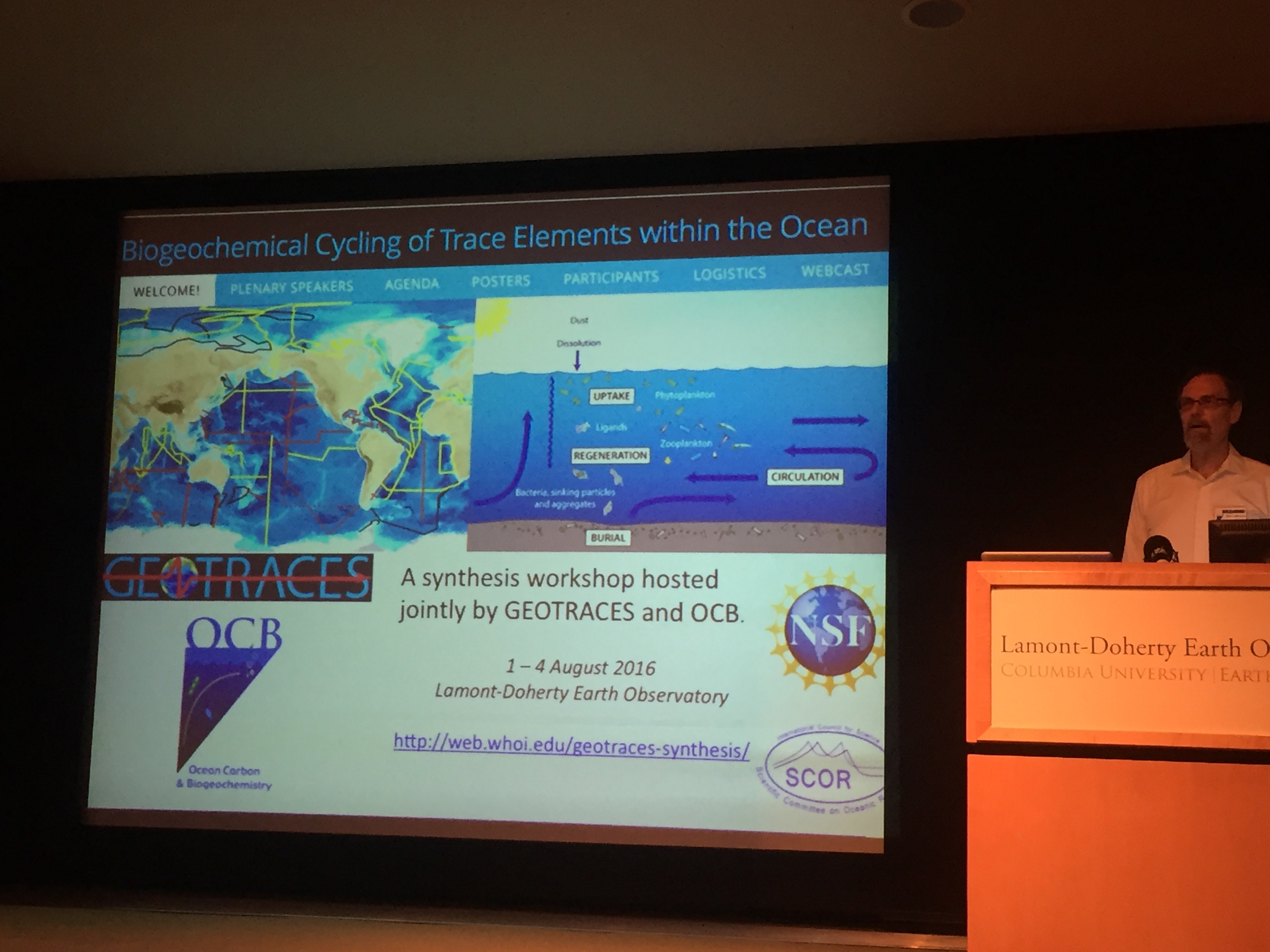
Over 100 scientists from 12 nations met at the Lamont-Doherty Earth Observatory in Palisades New York, USA, on 1 – 4 August 2016 for a synthesis workshop on the Biogeochemical Cycling of Trace Elements within the Ocean. The workshop focused on setting priorities for utilizing GEOTRACES trace element and isotope (TEI) data sets to advance scientific objectives at the interface of marine biogeochemistry and ecology, and was jointly sponsored by the GEOTRACES and OCB Programs.

Workshop activities were organized around three scientific themes:
1. Biological uptake and trace element bioavailability,
2. Abiotic cycling and scavenging, including particulate and dissolved speciation, and
3. Export, recycling and regeneration

Following a series of plenary talks designed to stimulate discussion on these topics, participants spent the remainder of the workshop in smaller group discussions to identify knowledge gaps and develop ideas for synthesis activities and products that combine GEOTRACES TEI data with other biogeochemical and biological data sets.

Tentative activities and products include:
• estimating bioavailability of iron (Fe)
• testing hypothesis for Fe and light co-limitation in the deep chlorophyll maxima;
• exploring Redfieldian concepts using GEOTRACES data and ocean models;
• calculating community trace metal demand vs. supply;
• developing a synthesis paper on existing methods and current state of knowledge on ligand composition and cycling;
• comparing radionuclide-based tracer methods for estimating downward flux of carbon, nutrients and trace metals;
• combining TEI distributions with AOU and preformed TEI concentrations to differentiate biotic (e.g., respiration) and abiotic (e.g., scavenging, physical transport) removal processes;
• estimating elemental scavenging using partition coefficients (Kd);
• combining particulate TEI and beam transmission data to develop algorithms for particle distributions that affect TEI scavenging; and
• developing synthesis paper on TEIs in nepheloid layers.

To learn more about and/or contribute to these activities, please contact Heather Benway (OCB) or Bob Anderson (LDEO). For more information, visit the workshop website or view the plenary presentations.

Marine and Human Systems: Addressing Multiple Scales and Multiple Stressors

Posted by mmaheigan 
· Sunday, April 3rd, 2016 

Eileen Hofmann (Old Dominion University, Norfolk, VA, USA)
Lisa Maddison (IMBER IPO, Institute of Marine Research, Bergen, Norway)
Ingrid van Putten (CSIRO, Hobart, Tasmania, Australia)
Javier Arístegui (Universidad de Las Palmas de Gran Canaria, Islas Canarias, Spain)

The Integrated Marine Biogeochemistry and Ecosystem Research Project (IMBER) is developed around four research themes, which include: Key interactions in marine ecosystems; sensitivity to global change; feedbacks to the Earth system; and responses of society. When IMBER was initiated in 2005, the responses of society theme represented a new direction for global environmental change programs because it explicitly acknowledged the role of humans as both drivers and recipients of change in marine ecosystems. IMBER project-wide activities, regional programs and working groups have advanced the science associated  with each research theme. However, the strength of these activities has been in the identification of theoretical and methodological overlap among the themes, facilitating integration of ideas and synthesis of research outcomes, and highlighting new research directions.

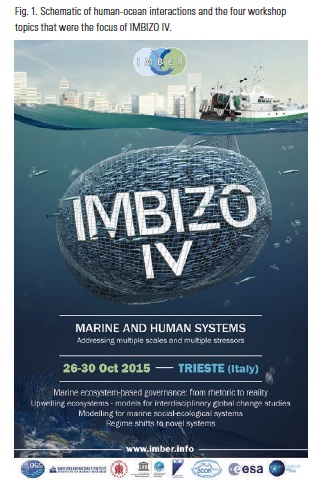
The biennial IMBIZO (Zulu word for a gathering) is an important IMBER-wide activity for assessing current understanding of theoretical and empirical research at the local, regional and global scale, and pointing to future research needs. IMBIZO IV, held in October 2015 in Trieste, Italy, addressed linkages between marine ecosystems and human systems (Fig. 1). In particular, emphasis was on current systems understanding and approaches to predict the effects of multiple stressors, at multiple scales, on marine ecosystems and dependent human populations. A novel aspect of this IMBIZO was the focus on exposing the need for human systems to respond to changes and for governance systems to adequately guide these responses.

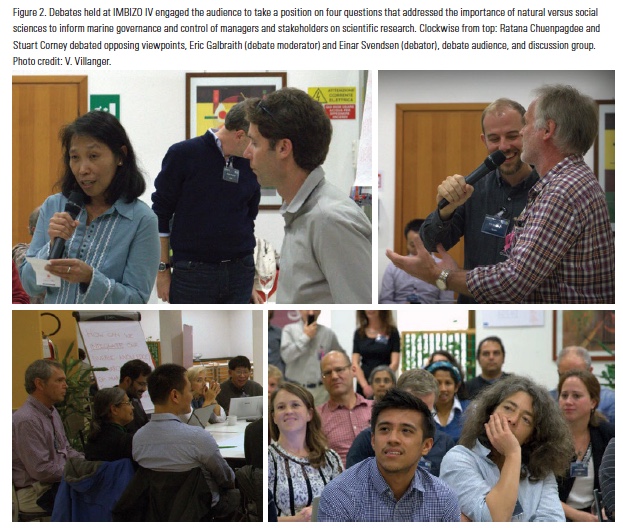
IMBIZO IV was developed around four workshops (Fig. 1) that addressed i) marine ecosystem-based governance, ii) upwelling systems as models for interdisciplinary global change studies, iii) integrated modeling to support marine socio-ecological systems under global change, and iv) regime shifts and their socio-ecological implications. Although each workshop had distinct objectives, all addressed aspects of climate, ecosystems and societies with a view towards integrating and synthesizing current understanding and highlighting approaches for developing innovative societal responses to changing marine ecosystems. The workshops were supplemented with plenary presentations that provided overviews of the state of understanding and research needs and joint sessions and debates that allowed cross-workshop interactions (Fig. 2).

Within the context of each workshop, questions were addressed that considered the challenges of multiple stressors, pressures, and drivers,  existing knowledge gaps, and the type of expertise needed to move forward. Some workshops also evaluated the need for paradigm shifts to adequately address particular research questions. The overall goal of each workshop was to determine how integration of the diverse array of knowledge and different  research outcomes for marine systems could be done to provide useful advice for policy and management.

The results of the individual workshops are being summarized in a variety of ways including white papers, synthesis papers, short communications, and special issues. However, the workshop results have common components with perhaps the clearest message being the need for continued conversations and exchange of information between scientists from different disciplinary backgrounds. To enable this dialogue to take place collaboratively and ultimately to develop workable solutions will mean that a common understanding of language will need to be developed and that jargon be avoided. Facilitating cross-disciplinary communication by domain experts will also help crucially important communication to management authorities and decision makers.

Aside from the need for good communication between scientists that straddle the physical, ecological and human domains, the different workshops considered the linkages and interactions between the driving forces (pressures-state-impacts-responses, DPSIR) and how these are understood and represented. For most marine systems, the system state, how much of what is present and where, can be described with differing degrees of certainty depending on location and factors such as monitoring intensity and accessibility. The connectivity and linkages between marine system components and driving forces are known from a theoretical perspective and for many systems these have been described quantitatively using different modeling approaches. However, there is considerable empirical uncertainty about how marine systems might respond to continued and cumulative anthropogenic stresses and how in turn, this may feed back to the human domain and affect, for instance, future food security.

Marine systems may not be generalizable, sometimes cannot be simply scaled up, or may not respond linearly to anthropogenic stressors. Regime shifts may occur that are not easily (or not at all) reversible, thus requiring adaptation by resource users. The governance system is crucially important in this context as it provides links to management, policy and regulatory systems that influence use of and access to marine resources. Governance institutions are ultimately responsible for the sustainable management of marine resources and any necessary reduction in the pressure exerted on the resources. These governance systems in essence close the loop between the natural and human systems. Natural, socio-economic, and governance systems need to be central to continued research efforts and inform all levels of decision making to ensure informed steps are taken.

Global environmental change is happening and will continue to affect ecosystems and alter the ecosystem services provided to humanity. The need for timely detection and attribution of these changes remains, especially where change is irreversible. Human systems and society at large are both creators of the many stressors that drive change in marine ecosystems as well as recipients of these changes. Human systems can drive positive changes through good governance aimed at reducing vulnerability, and enhancing adaptive capacity and resilience. It is clear that many knowledge gaps remain, in particular the way in which multiple drivers and stressors interact. Much work also remains to be done in further detailing and modeling the crucial dependencies between human and ocean systems. All of these uncertainties place limitations on the predictability of governance outcomes and risk unintended consequences and maladaptation if not addressed adequately. Outcomes from IMBIZO IV will provide guidance for these important research efforts for the next decade of IMBER research.

IMBER gratefully acknowledges the support provided by the OCB Program for IMBIZO IV and its ongoing support of IMBER activities.

« Previous Page

FilterbyKeyword

abundance acidification additionality advection africa air-sea air-sea interactions albedo algae alkalinity allometry amendments ammonium AMO AMOC anoxic Antarctic Antarctica anthro impacts anthropogenic carbon anthropogenic impacts appendicularia aquaculture aquatic continuum aragonite saturation arctic Argo argon arsenic artificial seawater assumptions AT Atlantic atmospheric CO2 atmospheric nitrogen deposition authigenic carbonates autonomous platforms AUVs awb bacteria bathypelagic BATS BCG Argo benthic bgc argo bias bio-go-ship bio-optical bioavailability biogeochemical biogeochemical cycles biogeochemical models biogeochemistry Biological Essential Ocean Variables biological pump biomass biophysics bloom blue carbon bottom water boundary layer buffer capacity C14 CaCO3 calcification calcite carbon carbon-climate feedback carbon-sulfur coupling carbon 14 carbonate carbonate chemistry carbonate chemistry OAE carbonate system carbon budget carbon cycle carbon cycling carbon dioxide carbon export carbon fluxes carbon removal carbon sequestration carbon storage Caribbean CCA CCS changing marine chemistry changing marine ecosystems changing marine environments changing ocean chemistry chemical oceanographic data chemical speciation chemoautotroph chesapeake bay chl a chlorophyll circulation climate clouds CO2 CO3 coastal and estuarine coastal darkening coastal ocean cobalt Coccolithophores commercial community community composition competition conservation cooling effect copepod copepods coral reefs cruise CTD currents cyclone daily cycles data data access data assimilation database data management data product data sets Data standards DCM dead zone decadal trends decomposers decomposition deep convection deep ocean deep sea coral deep water deepwater horizon denitrification dense water deoxygenation depth diatoms DIC diel migration diffusion dimethylsulfide dinoflagellate dinoflagellates discrete measurements disequilibrium distribution DOC DOM domoic acid DOP dust DVM earth system ecological feedbacks ecology economics ecosystem management ecosystems eddy Education EEZ Ekman transport emissions ENSO enzyme equatorial current equatorial regions ESM estuarine and coastal carbon fluxes estuary euphotic zone eutrophication evolution export export fluxes export production extreme events faecal pellets fecal pellets filter feeders filtration rates fire fish Fish carbon fisheries fishing float floats fluid dynamics fluorescence food webs forage fish forams framework freshening freshwater frontal zone fronts functional role future oceans gelatinous zooplankton gene transfer geochemistry geoengineering geologic time GEOTRACES glaciers gliders global carbon budget global oceam global ocean global ocean models global overturning circulation global warming go-ship gradient grazing greenhouse gas greenhouse gases Greenland ground truthing groundwater Gulf of Maine Gulf of Mexico Gulf Stream gyre harmful algal bloom heat waves high latitude human food human impact human well-being hurricane hydrogen hydrothermal hypoxia ice age iceberg ice cores ice cover industrial onset inland waters in situ inverse circulation ions iron iron fertilization iron limitation isotopes jellies katabatic winds kelvin waves krill kuroshio lab vs field lagoon land land-ocean continuum larvaceans lateral transport LGM lidar ligands light light attenuation lineage lipids low nutrient machine learning mangroves marine carbon cycle marine heatwave marine particles marine snow marine snowfall marshes mCDR mechanisms Mediterranean meltwater mesocosm mesopelagic mesoscale mesoscale processes metagenome metals methane methods microbes microlayer microorganisms microplankton microplastics microscale microzooplankton midwater migration minerals mitigation mixed layer mixed layers mixing mixotrophs mixotrophy model modeling modeling atmosphere model validation mode water molecular diffusion MPT MRV multi-decade N2 n2o NAAMES NCP nearshore net community production net primary productivity new ocean state new technology Niskin bottle nitrate nitrogen nitrogen cycle nitrogen fixation nitrous oxide north atlantic north pacific North Sea NPP nuclear war nutricline nutrient budget nutrient cycles nutrient cycling nutrient limitation nutrients OA observations ocean-atmosphere ocean acidification ocean acidification data ocean alkalinity enhancement ocean carbon uptake & storage ocean carbon uptake and storage ocean color ocean interior ocean modeling ocean observatories ocean warming ODZ oil oligotrophic omics OMZ open ocean optics organic carbon organic particles oscillation outwelling overturning circulation oxidizing oxygen oxygen-deficient pacific paleoceanography PAR parameter optimization parasite particle flux particles partnerships pCO2 PDO peat pelagic perturbation PETM pH phenology phosphate phosphorus photosynthesis physical processes physiology phytoplankton PIC piezophilic piezotolerant plankton POC polar polar regions policy pollutants precipitation predation predator-prey predators prediction pressure primary productivity Prochlorococcus productivity prokaryotes proteins pteropods pycnocline python radioisotopes redox remineralization remote sensing repeat hydrography residence time resource management respiration resuspension rivers rocky shore Rossby waves Ross Sea ROV salinity salt marsh satellite scale seafloor seagrass sea ice sea level rise seasonal seasonal effects seasonality seasonal patterns seasonal trends sea spray sea surface seawater collection seaweed secchi sediments sensor sensors sequestration shelf ocean shelf system shells ship-based obs ship-based observations shorelines siderophore silica silicate silicon cycle sink sinking sinking particles size SOCCOM soil carbon solubility pump southern ocean south pacific spatial covariations speciation spring mixing SST state estimation stoichiometry stratification subduction submesoscale subpolar subtropical sulfate surf surface surface ocean surface water surface waters Synechococcus technology teleconnections temperate temperature temporal covariations thermocline thermodynamics thermohaline thorium tidal time time-series time of emergence titration top predators total alkalinity trace elements trace metals trait-based transfer efficiency transient features trawling Tris trophic interactions trophic transfer tropical turbulence twilight zone upper ocean upper water column upwelling US CLIVAR validation velocity gradient ventilation vertical flux vertical migration vertical transport viruses warming water clarity water column water mass water quality waves weathering western boundary currents wetlands winter mixing zooplankton

Copyright © 2026 - OCB Project Office, Woods Hole Oceanographic Institution, 266 Woods Hole Rd, MS #25, Woods Hole, MA 02543 USA Phone: 508-289-2838  •  Fax: 508-457-2193  •  Email: ocb_news@us-ocb.org

link to nsflink to noaalink to WHOI

Funding for the Ocean Carbon & Biogeochemistry Project Office is provided by the National Science Foundation (NSF) and the National Aeronautics and Space Administration (NASA). The OCB Project Office is housed at the Woods Hole Oceanographic Institution.