The BioGeoSCAPES Community has reached an exciting milestone: the official program launch and endorsement by the Scientific Committee on Oceanic Research (SCOR) and the publication of the Science Plan [https://doi.org/10.5281/zenodo.23465636]. With this approval, BioGeoSCAPES is now a SCOR Program. BioGeoSCAPES remains an open and welcoming community of interdisciplinary scientists, and we encourage the community to […]
Read MoreDear colleagues, We’re in touch to bring your attention to an AGU workshop on alkalinity exports to sea from blue carbon ecosystems, occurring on the Sunday prior to the upcoming fall meeting in San Francisco, California. Science and policy around alkalinity and carbon exports from salt marshes and mangroves have progressed significantly toward representation as […]
Read MoreSouthern Ocean Ocean Acidification (SO-OA) Hub is trying to identify the main scientific challenges and knowledge gaps in Southern Ocean ocean acidification over the coming decade, and would really value input from the wider OCB community, particularly those working on carbonate chemistry, biogeochemistry, air–sea CO₂ exchange, observations, modelling and ecosystem responses. The survey simply asks […]
Read MoreColby Dernis is an incoming M.S. student in the Jarvis Coastal Plant Ecology Lab at the University of North Carolina Wilmington. His research focuses on integrating satellite remote sensing with ecological field methods to better understand and monitor vulnerable coastal and marine ecosystems. As an undergraduate at the University of Florida, he conducted research on […]
Read More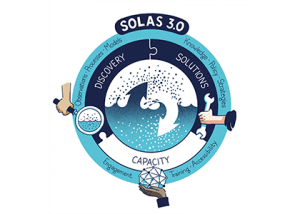
Entering its third decade, SOLAS stands at the intersection of science and society. With its expertise in air–sea processes, SOLAS is in an exceptional position to integrate the oceanographic and atmospheric communities and advise on essential mitigation and adaptation strategies. Built from strong community input and assembled by over 40 co-authors, the plan is designed […]
Read More
OCB to co-host community dialogs on ocean observing to encourage many community response submissions The U.S. National Science Foundation (NSF) is requesting perspectives on what ocean observation capabilities it should provide. The agency recently issued a Dear Colleague Letter (DCL) seeking public input on priorities, strategies, and technologies for future ocean observing systems that effectively support scientific needs […]
Read More
OCB is seeking nominations for new Scientific Steering Committee (SSC) members. The term begins January 1, 2027. The following SSC members are scheduled to rotate off at the end of 2026: Kristen Krumhardt (NCAR) – ocean ecosystem modeling, Southern Ocean ecosystem dynamics Kanchan Maiti (Louisiana State Univ.) – biogeochemical cycling along aquatic continuum, deep ocean […]
Read More
OCB WORKSHOP From single cells to ecosystems: Quantifying the role of marine viruses in carbon transport models February 8-10, Grand Galvez Hotel, Galveston, Texas (hybrid) Viruses are a ubiquitous and integral component of Earth’s ecosystems, including marine microbial communities. Virally mediated mechanisms play a central role in carbon cycling and export processes. Despite their known […]
Read More
The Ocean Carbon and Biogeochemistry (OCB) Program is soliciting proposals for OCB activities that will take place or begin during the 2027 calendar year. In the coming year, we are able to support 1 topical workshop (to take place in summer or fall 2027) and 2-3 hub and/or small group activities. We seek proposals for OCB-relevant workshops and […]
Read More
OCB2027: June 22-25, 2027 (Woods Hole, MA) Please submit your plenary session ideas by October 5!
Read More
Since the early to mid-20th century, shipboard marine ecological time series (METS), or sustained repeat measurements of physical, biogeochemical, and biological processes, have documented changes in ocean biogeochemistry and marine ecosystems. To date, numerous disconnected databases and interfaces for accessing data have made it difficult for prospective users to find and use these datasets. Limited […]
Read More
The global climate science community mourns the passing of Dr. Jorge Sarmiento in May 2026. In addition to co-authoring the first decadal U.S. Carbon Cycle Science Plan (Sarmiento and Wofsy, 1999) and leading the historic push to develop the U.S. Carbon Cycle Science Program and its carbon science coordination entities, OCB and NACP, Jorge stood […]
Read More
On behalf of the GLODAP Reference Group and hundreds of seagoing oceanographers who have tirelessly collected data all over the ocean for several decades, it is our pleasure to announce the release of the new Global Ocean Data Analysis Project version 3, GLODAPv3! Use this link for direct access: GLODAPv3 OCADS landing page and check […]
Read More
AGU2026 is taking place December 7-11, 2026 in San Francisco, CA. Abstract submissions are due August 5. Check out our list of OCB-relevant sessions. If you are convening a session you think is of interest to the OCB community and it isn’t already listed, please submit it!
Read More
2026 marks 20 years since the OCB Project Office began in 2006 to support science, community, and connection across a globally distributed network of scientists! To celebrate all the accomplishments of the community across these two decades, OCB is convening a one-day virtual symposium on November 18, 2026. The symposium will highlight scientific discoveries, game-changing […]
Read More