Posts by chadwick.chinnery
NOAA OAP proposal call – due March 17
The NOAA Ocean Acidification Program (OAP), in partnership with the Global Ocean Monitoring and Observing (GOMO) Program is soliciting proposals to optimize sampling strategies that improve carbonate chemistry observing systems co-developed with an…
Read MoreOCB at OSM24
OCB will have a booth at the OSM24 exhibitor hall – come see us there during open hours. SSC members and Project Office staff will be at the booth to…
Read MoreOCB mCDR Updates

OCB Principles of Engagement on mCDR Given the broad and thriving mCDR landscape, the OCB SSC recently developed a Principles of Engagement document to help guide new research activities, collaborations,…
Read MoreOAIC Publication
Stanley, R, T Bell, Y Gao, C Gaston, D Ho, D Kieber, K Mackey, N Meskhidze, B Miller, H Potter, P Vlahos, P Yager, B Alexander, S Beaupre, S Craig,…
Read MoreWebinar Recording: The ABC’s of the sea surface microlayer: Aerosols, Bubbles, and Composition
January 2023: OAIC-hosted SOLAS Seminar IV: The ABC’s of the sea surface microlayer: Aerosols, Bubbles, and Composition Watch the recording (for more related content see more SOLAS Seminars)
Read MoreJoin us at AGU Dec 14
December 14, 2023 at 6:30 pm OAIC Networking event during Fall AGU immediately following poster session Surface Ocean-Lower Atmosphere Study (SOLAS): 20 Years of Progress and Developments in Ocean-Atmosphere Science…
Read MoreFishing Vessel Ocean Observing Network (FVON) reimagines the global data collection paradigm
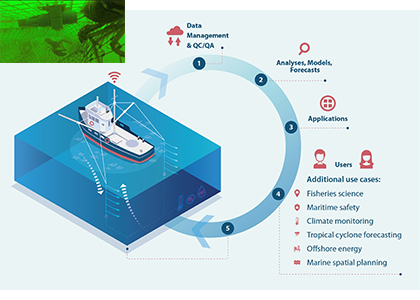
With an increasingly wide variety of technology and innovations, from buoys to satellites, we now understand the open ocea n better than ever. Yet, existing technologies cannot cost-effectively provide accurate, up-to-date…
Read MoreWant to improve the spatiotemporal coverage of coastal water clarity? This approach combines high-resolution satellite data with low-cost in situ methods
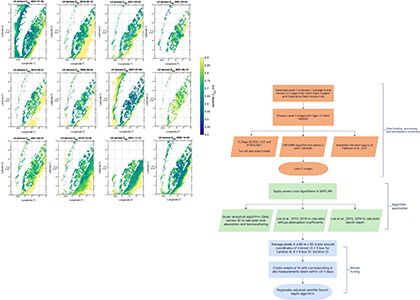
To maintain marine ecosystem health and human well-being, it is important to understand coastal water quality changes. Water clarity is a key component of water quality, which can be measured…
Read MoreNew evidence suggests that tiny zooplankton might be the biggest problem with carbon cycling in IPCC climate models
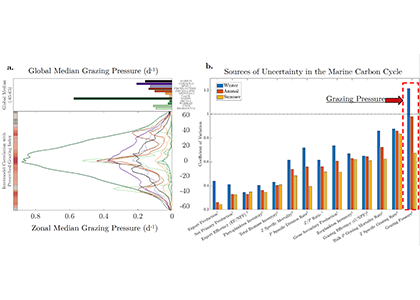
The ocean is the most important sink of anthropogenic emissions and is being considered as a medium to manipulate to draw down even more. Essential in the ocean’s role as…
Read MoreSize does matter: larger krill leads to more POC export in the West Antarctic Peninsula
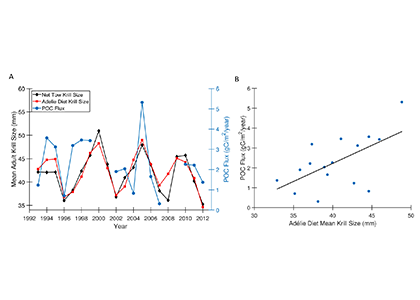
Despite the importance of particulate organic carbon (POC) export on carbon sequestration and marine ecology, there have been few multi-decade studies in the world’s oceans. A new analysis published in…
Read More