Posts by chadwick.chinnery
When it comes to carbon export, the mesoscale matters
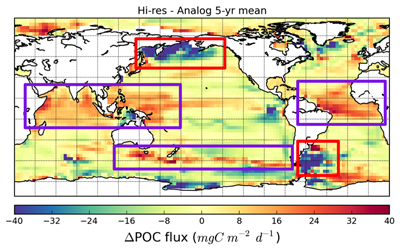
Most Earth System models (ESMs) that are used to study global climate and the carbon cycle do not resolve the most energetic scales in the ocean, the mesoscale (10-100 km),…
Read MoreElusive protists transport large quantities of silica into the ocean interior
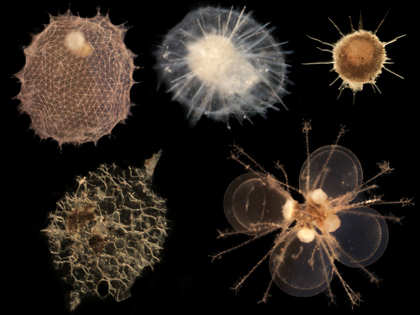
Phaeodaria are single-celled eukaryotes (a.k.a. protists) belonging to the supergroup Rhizaria. Like diatoms, phaeodarians build up skeletons made of opaline silica, but unlike their emblematic relatives, phaeodarians have been largely…
Read MoreOcean’s heat cycle shows that atmospheric carbon may be headed elsewhere
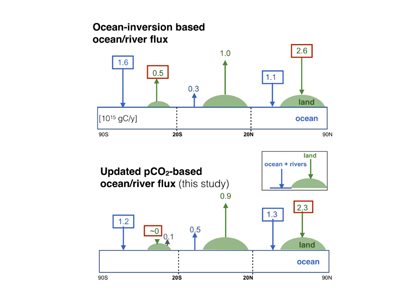
Studies over the past 25 years have supported the existence of a large net land biosphere CO2 sink of 0.5–2 PgC yr-1. Significant uncertainties remain, however, regarding the long-term partitioning between northern,…
Read MoreShelf-wide pCO2 increase across the South Atlantic Bight
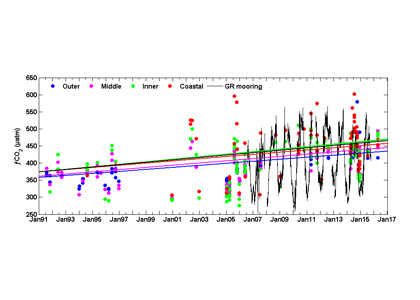
Relative to their surface area, coastal regions represent some of the largest carbon fluxes in the global ocean, driven by numerous physical, chemical and biological processes. Coastal systems also experience…
Read MoreMarine Snowfall at the Equator
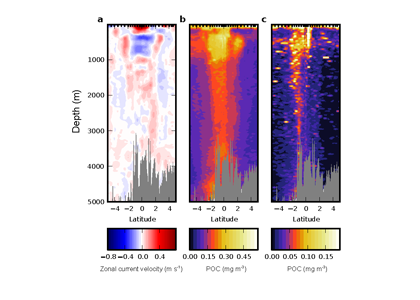
The continual flow of organic particles such as dead organisms and fecal material towards the deep sea is called “marine snow,” and it plays an important role in the ocean…
Read MoreLong-term coastal data sets reveal unifying relationship between oxygen and pH fluctuations
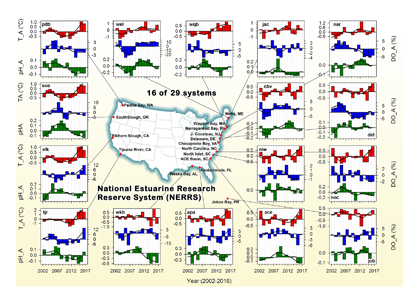
Coastal habitats are critically important to humans, but without consistent and reliable observations we cannot understand the direction and magnitude of unfolding changes in these habitats. Environmental monitoring is therefore…
Read MoreScience Highlight guidelines
Your science highlight should use a narrative style and active voice to engage the reader (no verbatim sentences from your abstract or paper). Your target audience is a broad scientific…
Read MoreUnexpected acidification of deep waters in the Sea of Japan due to global warming
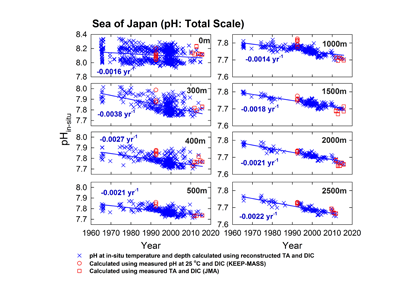
Oceans worldwide are warming up, and thermohaline circulation is expected to slow down. At the same time, ocean acidity is increasing due to the influx of anthropogenic carbon dioxide (CO2)…
Read MoreSensitivity of future ocean acidification to carbon-climate feedbacks
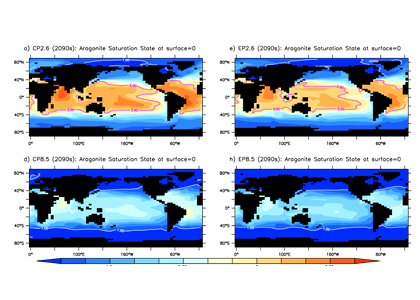
There are vast unknowns about the future oceans, from what species or habitats may be most under threat to the continuity of earth system processes that maintain global climate. Modeling…
Read MoreHotspots of biological production: Submesoscale changes in respiration and production
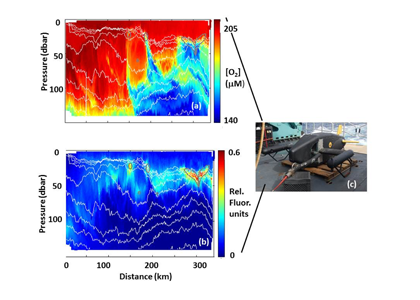
The biological pump is complex and variable. To better understand it, scientists have often focused on variations in biological parameters such as fluorescence and community structure, and have less often…
Read More