Skip to content

Ocean Carbon & Biogeochemistry

Studying marine ecosystems and biogeochemical cycles in the face of environmental change

  • Home
  • About OCB
    • About Us
    • Scientific Breadth
      • Biological Pump
      • Changing Marine Ecosystems
      • Changing Ocean Chemistry
      • Estuarine and Coastal Carbon Fluxes
      • Ocean Carbon Uptake and Storage
      • Ocean Observatories
    • Code of Conduct
    • Get Involved
    • Project Office
    • Scientific Steering Committee
    • OCB committees
      • OCSIF – Ocean Carbonate System Intercomparison
      • Ocean-Atmosphere Interaction Committee
      • Ocean Time-series
      • US Biogeochemical-Argo
  • Activities
    • 20 years of OCB Symposium – 18 November 2026
    • OCB Webinars
    • Summer Workshop
    • Guidelines for OCB Workshops & Activities
    • Topical Workshops
      • 7th DMS(P) Symposium
      • Marine Virus Workshop
      • Completed
        • CMIP6 Models Workshop
        • Coastal BGS Obs with Fisheries
        • C-saw extreme events workshop
        • Expansion of BGC-Argo and Profiling Floats
        • Fish, fisheries and carbon
        • Future BioGeoSCAPES program
        • GO-BCG Scoping Workshop
        • Lateral Carbon Flux in Tidal Wetlands
        • Leaky Deltas Workshop
        • Marine CDR Workshop
        • Ocean Nucleic Acids ‘Omics
        • Pathways Connecting Climate Changes to the Deep Ocean
    • Small Group Activities
      • BECS Benthic Ecosystem and Carbon Synthesis WG
      • Metabarcoding intercal WG
      • Meta-eukomics WG
      • Metaproteomic Intercomparison
      • SedMIP
      • Recently completed
        • Aquatic Continuum OCB-NACP Focus Group
        • Arctic-COLORS Data Synthesis
        • Carbon Isotopes in the Ocean Workshop
        • CMIP6 WG
        • Filling the gaps air–sea carbon fluxes WG
        • Fish Carbon WG
        • mCDR
        • Mixotrophs & Mixotrophy WG
        • N-Fixation WG
        • Ocean Carbonate System Intercomparison Forum
        • Ocean Carbon Uptake WG
        • OOI BGC sensor WG
        • Operational Phytoplankton Observations WG
        • Phytoplankton Taxonomy WG
    • Other Workshops
    • Science Planning
      • Coastal CARbon Synthesis (CCARS)
      • North Atlantic-Arctic
    • Ocean Acidification PI Meetings
    • Training Activities
      • PACE Hackweek 2025
      • PACE Hackweek 2024
      • PACE Training Activity 2022
  • Science Support
    • OCB Activity Proposal Solicitations
    • Guidelines for OCB Workshops & Activities
    • Data management and archival
    • Early Career
    • Funding Sources
    • Jobs & Postdocs
    • Meeting List
    • OCB topical websites
      • Ocean Fertilization
      • Trace gases
      • US IIOE-2
    • Outreach & Education
    • Promoting your science
    • Student Opportunities
    • Travel Support
  • Publications
    • OCB Workshop Reports
    • Science Planning and Policy
    • Newsletter Archive
  • Science Highlights
  • News

Posts by chadwick.chinnery

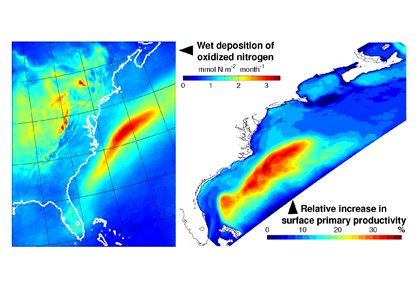
Feedbacks mitigate the impacts of atmospheric nitrogen deposition in the western North Atlantic
By chadwick.chinnery | April 12, 2018

How do phytoplankton respond to atmospheric nitrogen deposition in the western North Atlantic, an area downwind of large agricultural and industrial centers? The biogeochemical impacts of this ‘fertilization’ remain unclear,…

Read More

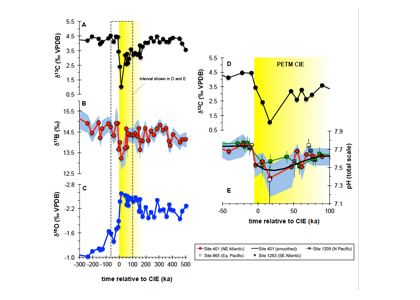
Volcanic carbon dioxide drove ancient global warming event
By chadwick.chinnery | March 29, 2018

A study recently published in Nature suggests that an extreme global warming event 56 million years ago known as the Palaeocene-Eocene Thermal Maximum (PETM) was driven by massive CO2 emissions…

Read More

Early career support for Ocean Optics XXIV
By chadwick.chinnery | March 29, 2018

OCB is providing early career support for the Ocean Optics XXIV Conference,  October 7-12, 2018 in Dubrovnik, Croatia. Are you an early career scientist looking for a perfect place to present your…

Read More

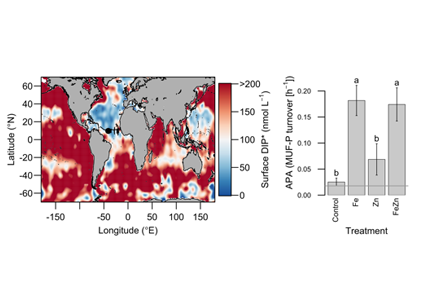
Widespread nutrient co-limitation discovered in the South Atlantic
By chadwick.chinnery | March 15, 2018

Unicellular photosynthetic microbes—phytoplankton—are responsible for virtually all oceanic primary production, which fuels marine food webs and plays a fundamental role in the global carbon cycle. Experiments to date have suggested…

Read More

Seagrass carbon dynamics: Gulf of Mexico
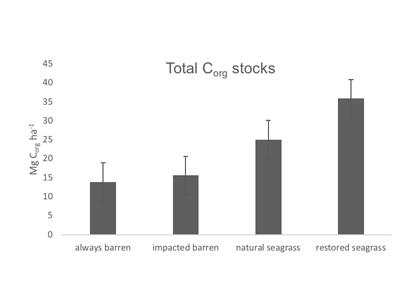
By chadwick.chinnery | March 1, 2018

Seagrasses have died-off in great numbers, resulting in the release of stored carbon. Seagrasses represent a substantive and relatively unconstrained North American and Caribbean Sea blue carbon sink in the…

Read More

Increased temperatures suggest reduced capacity for carbon
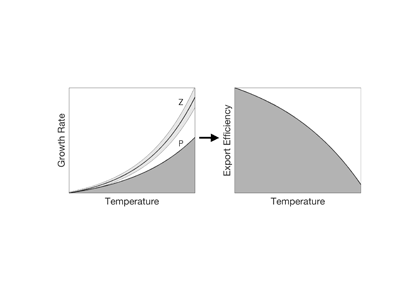
By chadwick.chinnery | January 18, 2018

The ocean’s biological pump works to draw down atmospheric carbon dioxide (CO2) by exporting carbon from the surface ocean. This process is less efficient at higher temperatures, implying a possible…

Read More

Lasers shed light on giant larvacean filtration impact on the ocean’s biological pump
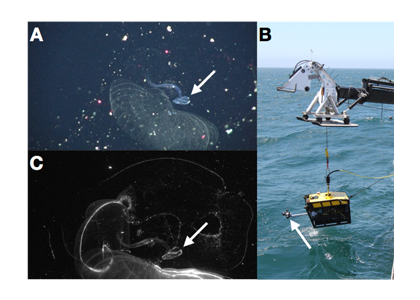
By chadwick.chinnery | January 4, 2018

To accurately assess the impacts of climate change, we need to understand how atmospheric carbon is transported from surface waters to the deep sea. Grazers and filter feeders drive the…

Read More

Zooplankton play a key and diverse role in the ocean carbon cycle
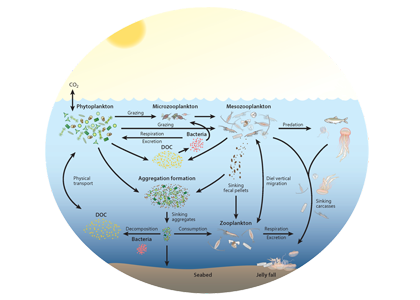
By chadwick.chinnery | December 7, 2017

How does the enormous diversity of zooplankton species, life cycles, size, feeding ecology, and physiology affect their role in ocean food webs and cycling of carbon? In the 2017 issue…

Read More

The sea surface microlayer in a future ocean
By chadwick.chinnery | November 28, 2017

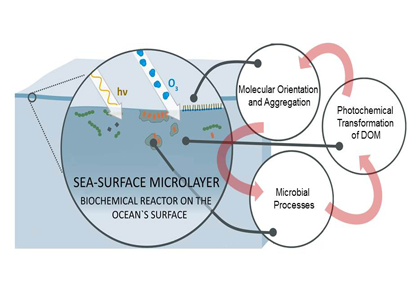
The sea surface microlayer (SML) is the boundary interface between the atmosphere and ocean, spanning the uppermost ~1 mm of the ocean. Covering 70% of the Earth’s surface, the SML…

Read More

WBC Series: Observing air-sea interaction in the western boundary currents and their extension regions: Considerations for OceanObs 2019
By chadwick.chinnery | November 11, 2017

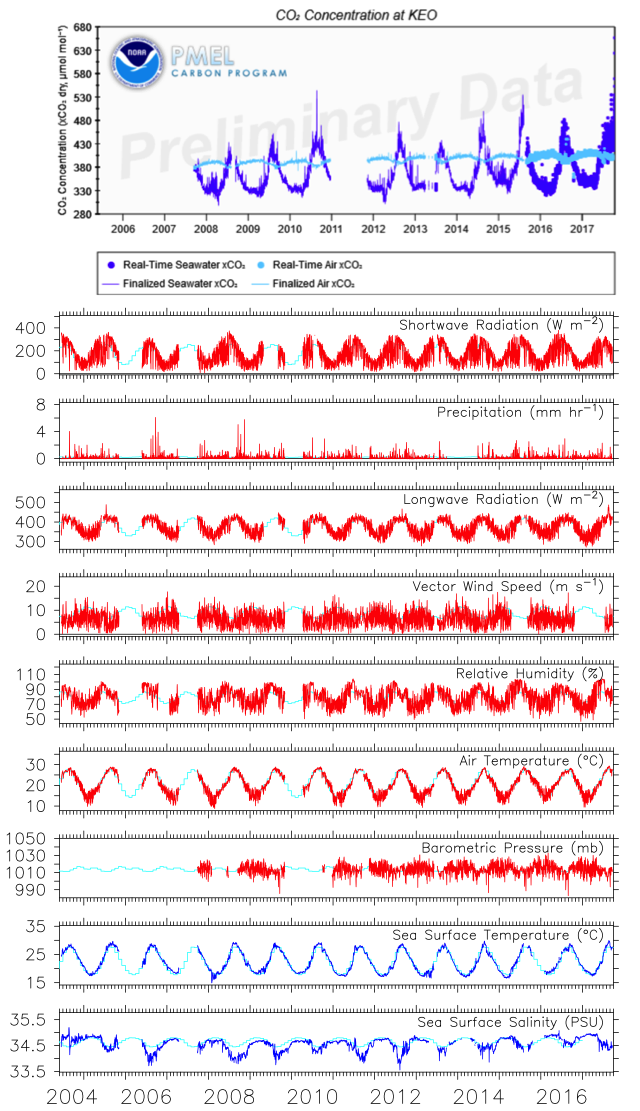
Dongxiao Zhang1,2, Meghan F. Cronin2, Xiaopei Lin3, Ryuichiro Inoue4, Andrea J. Fassbender5, Stuart P. Bishop6, Adrienne Sutton2 1. University of Washington 2. NOAA Pacific Marine Environmental Laboratory 3. Ocean University…

Read More
« Newer Posts
Older Posts »

Recent Posts

  • Celebrating 20 years of OCB + OCB2027 dates
  • 2026 Call for OCB Scientific Steering Committee (SSC) nominations 
  • Join us for these upcoming OCB webinars
  • Surprise giant phytoplankton revealed by in situ imaging
  • Fresh organic particles take a shortcut to the deep ocean

Copyright © 2026 - OCB Project Office, Woods Hole Oceanographic Institution, 266 Woods Hole Rd, MS #25, Woods Hole, MA 02543 USA Phone: 508-289-2838  •  Fax: 508-457-2193  •  Email: ocb_news@us-ocb.org


Funding for the Ocean Carbon & Biogeochemistry Project Office is provided by the National Science Foundation (NSF) and the National Aeronautics and Space Administration (NASA). The OCB Project Office is housed at the Woods Hole Oceanographic Institution.

Manage Consent
To provide the best experiences, we use technologies like cookies to store and/or access device information. Consenting to these technologies will allow us to process data such as browsing behavior or unique IDs on this site. Not consenting or withdrawing consent, may adversely affect certain features and functions.
Functional Always active
The technical storage or access is strictly necessary for the legitimate purpose of enabling the use of a specific service explicitly requested by the subscriber or user, or for the sole purpose of carrying out the transmission of a communication over an electronic communications network.
Preferences
The technical storage or access is necessary for the legitimate purpose of storing preferences that are not requested by the subscriber or user.
Statistics
The technical storage or access that is used exclusively for statistical purposes. The technical storage or access that is used exclusively for anonymous statistical purposes. Without a subpoena, voluntary compliance on the part of your Internet Service Provider, or additional records from a third party, information stored or retrieved for this purpose alone cannot usually be used to identify you.
Marketing
The technical storage or access is required to create user profiles to send advertising, or to track the user on a website or across several websites for similar marketing purposes.
  • Manage options
  • Manage services
  • Manage {vendor_count} vendors
  • Read more about these purposes
View preferences
  • {title}
  • {title}
  • {title}