Skip to content

Ocean Carbon & Biogeochemistry

Studying marine ecosystems and biogeochemical cycles in the face of environmental change

  • Home
  • About OCB
    • About Us
    • Scientific Breadth
      • Biological Pump
      • Changing Marine Ecosystems
      • Changing Ocean Chemistry
      • Estuarine and Coastal Carbon Fluxes
      • Ocean Carbon Uptake and Storage
      • Ocean Observatories
    • Code of Conduct
    • Get Involved
    • Project Office
    • Scientific Steering Committee
    • OCB committees
      • OCSIF – Ocean Carbonate System Intercomparison
      • Ocean-Atmosphere Interaction Committee
      • Ocean Time-series
      • US Biogeochemical-Argo
  • Activities
    • 20 years of OCB Symposium – 18 November 2026
    • OCB Webinars
    • Summer Workshop
    • Guidelines for OCB Workshops & Activities
    • Topical Workshops
      • 7th DMS(P) Symposium
      • Marine Virus Workshop
      • Completed
        • CMIP6 Models Workshop
        • Coastal BGS Obs with Fisheries
        • C-saw extreme events workshop
        • Expansion of BGC-Argo and Profiling Floats
        • Fish, fisheries and carbon
        • Future BioGeoSCAPES program
        • GO-BCG Scoping Workshop
        • Lateral Carbon Flux in Tidal Wetlands
        • Leaky Deltas Workshop
        • Marine CDR Workshop
        • Ocean Nucleic Acids ‘Omics
        • Pathways Connecting Climate Changes to the Deep Ocean
    • Small Group Activities
      • BECS Benthic Ecosystem and Carbon Synthesis WG
      • Metabarcoding intercal WG
      • Meta-eukomics WG
      • Metaproteomic Intercomparison
      • SedMIP
      • Recently completed
        • Aquatic Continuum OCB-NACP Focus Group
        • Arctic-COLORS Data Synthesis
        • Carbon Isotopes in the Ocean Workshop
        • CMIP6 WG
        • Filling the gaps air–sea carbon fluxes WG
        • Fish Carbon WG
        • mCDR
        • Mixotrophs & Mixotrophy WG
        • N-Fixation WG
        • Ocean Carbonate System Intercomparison Forum
        • Ocean Carbon Uptake WG
        • OOI BGC sensor WG
        • Operational Phytoplankton Observations WG
        • Phytoplankton Taxonomy WG
    • Other Workshops
    • Science Planning
      • Coastal CARbon Synthesis (CCARS)
      • North Atlantic-Arctic
    • Ocean Acidification PI Meetings
    • Training Activities
      • PACE Hackweek 2025
      • PACE Hackweek 2024
      • PACE Training Activity 2022
  • Science Support
    • OCB Activity Proposal Solicitations
    • Guidelines for OCB Workshops & Activities
    • Data management and archival
    • Early Career
    • Funding Sources
    • Jobs & Postdocs
    • Meeting List
    • OCB topical websites
      • Ocean Fertilization
      • Trace gases
      • US IIOE-2
    • Outreach & Education
    • Promoting your science
    • Student Opportunities
    • Travel Support
  • Publications
    • OCB Workshop Reports
    • Science Planning and Policy
    • Newsletter Archive
  • Science Highlights
  • News

Posts by chadwick.chinnery

WBC Series: The role of western boundary current regions in the global carbon cycle
By chadwick.chinnery | November 11, 2017

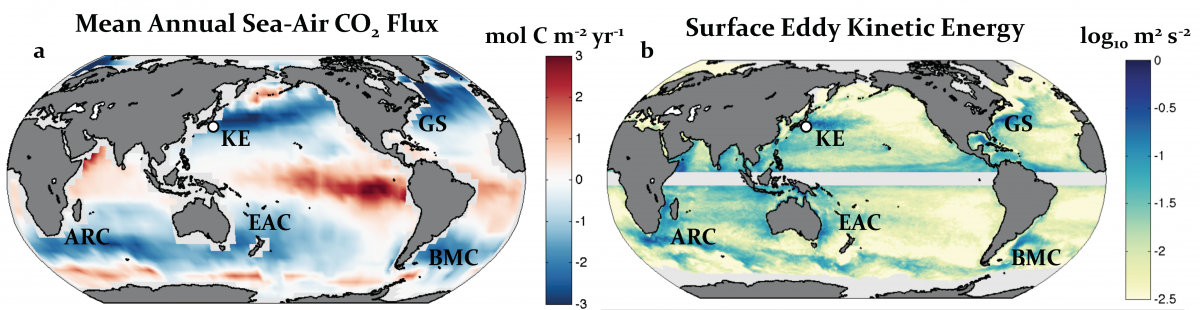
Alison R. Gray1, Jaime Palter2 1. University of Washington 2. University of Rhode Island Estimates of contemporary global air-sea carbon dioxide (CO2) flux (Takahashi et al. 2009; Landschützer et al. 2014)…

Read More

WBC Series: Frontiers in western boundary current research
By chadwick.chinnery | November 11, 2017

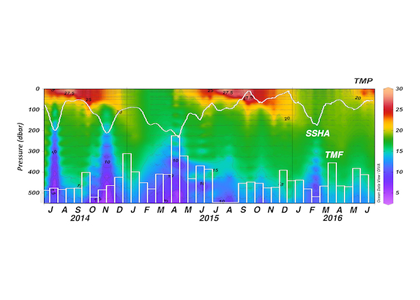
WBC Series Guest Editors: Andrea J. Fassbender1 and Stuart P. Bishop2 1. Monterey Bay Aquarium Research Institute 2. North Carolina State University Western boundary current (WBC) regions are often studied…

Read More

WBC Series: Western boundary currents as conduits for the ejection of anthropogenic carbon from the thermocline
By chadwick.chinnery | November 11, 2017

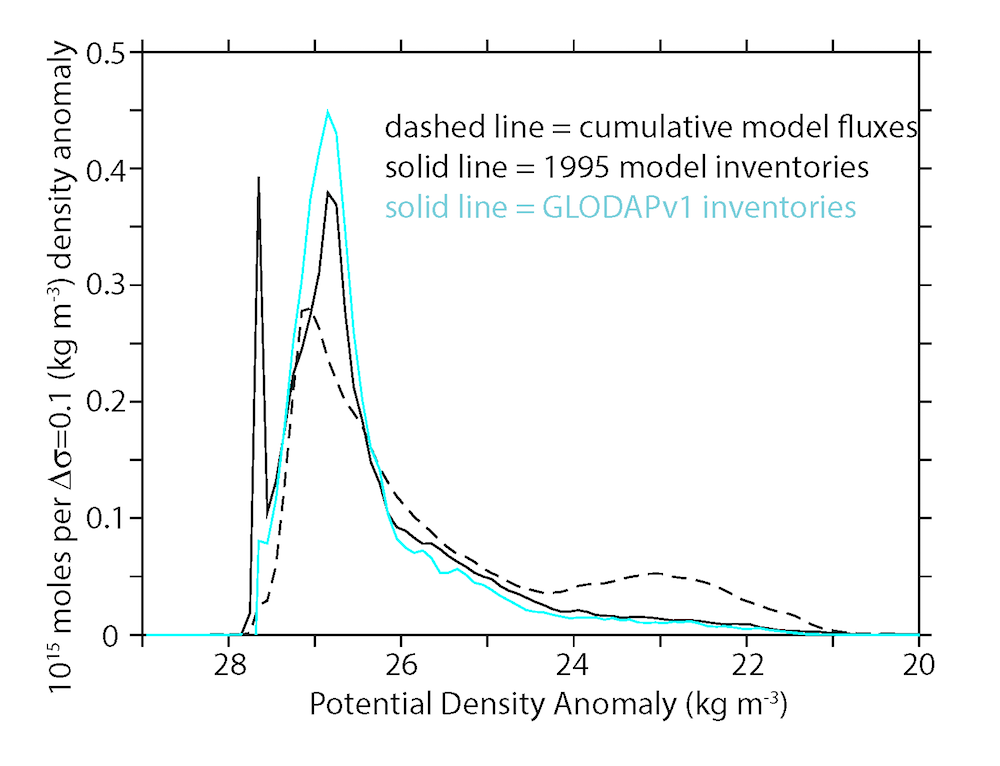
Keith B. Rodgers1, Ping Zhai1, Daniele Iudicone2, Olivier Aumont3, Brendan Carter4, Andrea J. Fassbender5, Stephen M. Griffies6, Yves Plancherel7, Laure Resplandy8, Richard D. Slater1, Katsuya Toyama9 1. Princeton University 2.…

Read More

WBC Series: Decadal variability of the Kuroshio Extension system and its impact on subtropical mode water formation 
By chadwick.chinnery | November 10, 2017

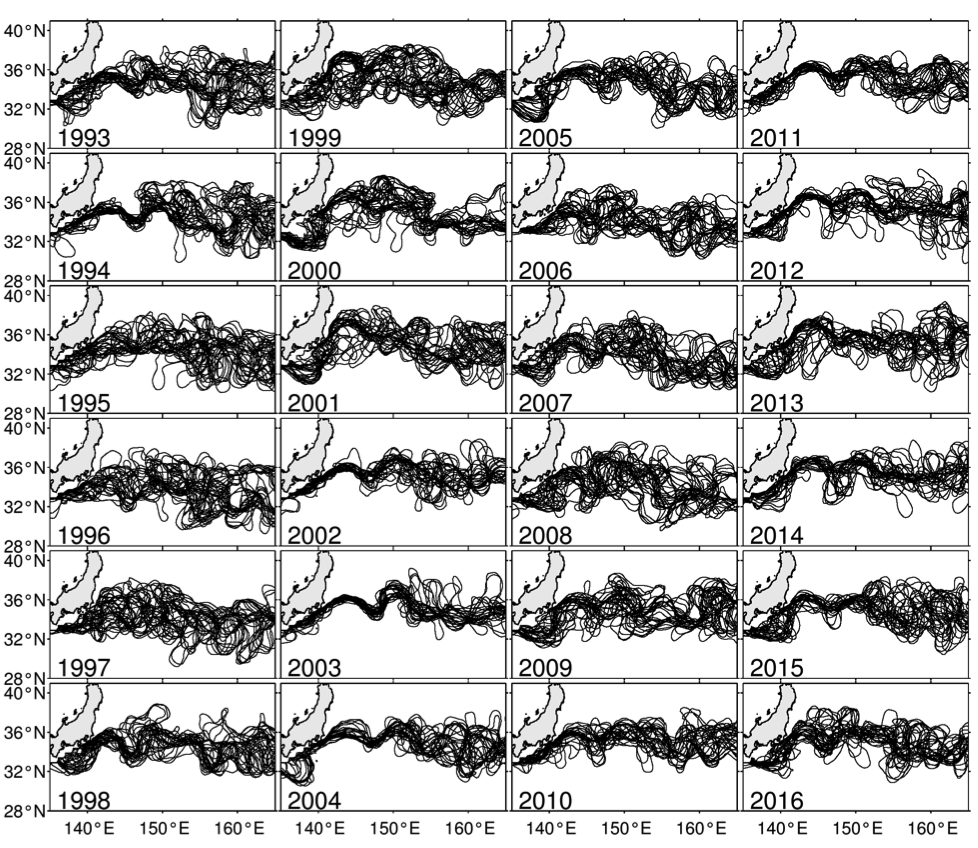
Bo Qiu1, Eitarou Oka2, Stuart P. Bishop3, Shuiming Chen1, Andrea J. Fassbender4 1. University of Hawaii at Manoa 2. The University of Tokyo 3. North Carolina State University 4. Monterey Bay…

Read More

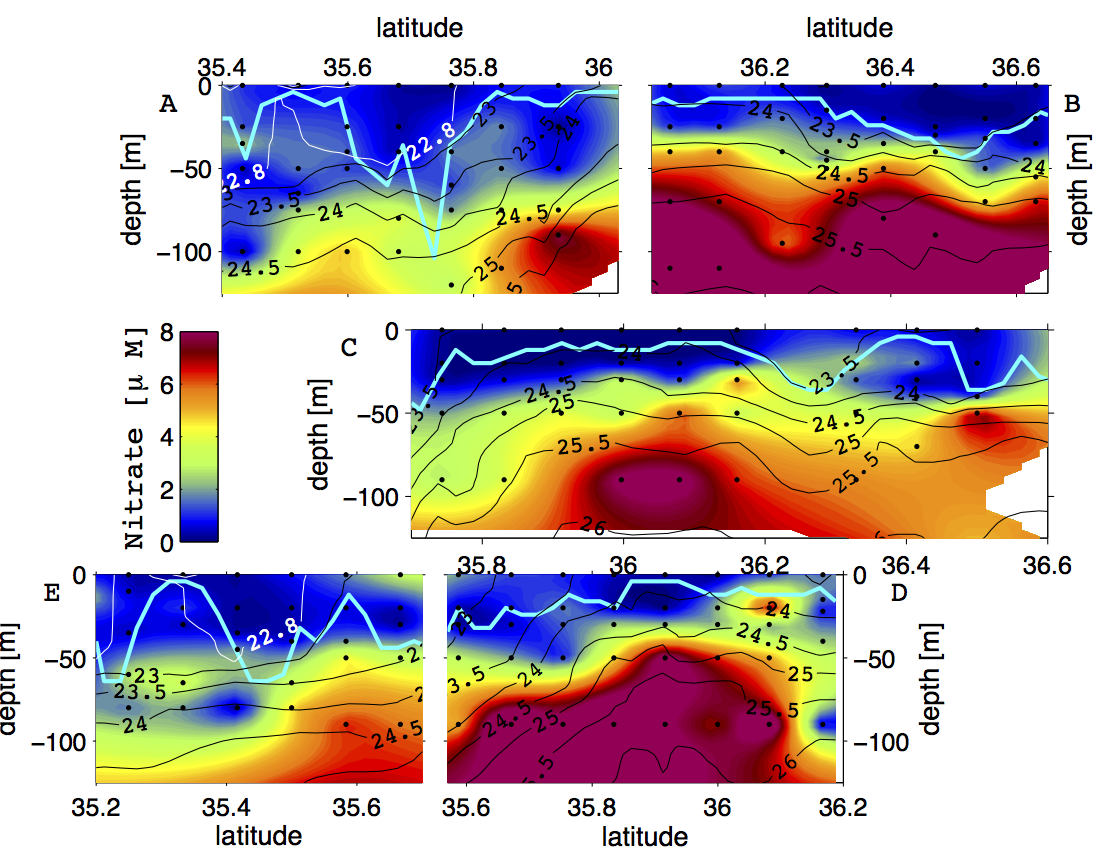
WBC Series: Fine-scale biophysical controls on nutrient supply, phytoplankton community structure, and carbon export in western boundary current regions
By chadwick.chinnery | November 10, 2017

Sophie Clayton1, Peter Gaube1, Takeyoshi Nagai2, Melissa M. Omand3, Makio Honda4 1. University of Washington 2. Tokyo University of Marine Science and Technology, Japan 3. University of Rhode Island 4.…

Read More

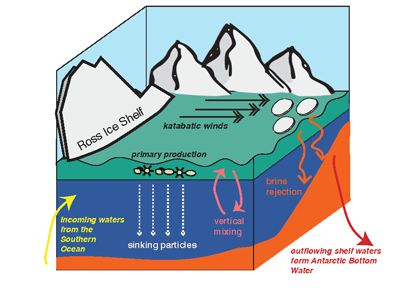
The Ross Sea deep microbial community’s role in sequestering CO2
By chadwick.chinnery | November 9, 2017

Antarctic shelf systems generate the densest waters in the world. These shelf waters are the building blocks of Antarctic Bottom Water, the ocean’s abyssal water mass. These bottom waters have…

Read More

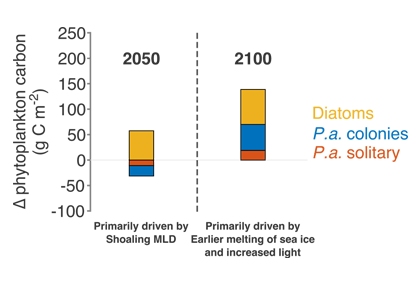
Phytoplankton increase projected for the Ross Sea in response to climate change
By chadwick.chinnery | October 26, 2017

How will phytoplankton respond to climate changes over the next century in the Ross Sea, the most productive coastal waters of Antarctica? Model projections of physical conditions suggest substantial environmental…

Read More

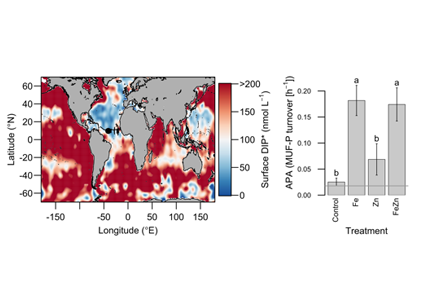
Role for iron in controlling microbial phosphorus acquisition in the ocean
By chadwick.chinnery | October 12, 2017

In the subtropical North Atlantic, dissolved inorganic phosphorus (DIP) concentrations are depleted and might co-limit N2 fixation and microbial productivity. There are relatively large pools of dissolved organic phosphorus (DOP),…

Read More

Arctic surface waters release methane but also absorb 2,000 times the CO2 for a net cooling effect
By chadwick.chinnery | September 28, 2017

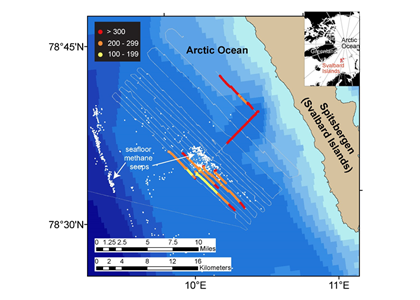
A recent study by Pohlman et al. published in PNAS showed that ocean waters near the surface of the Arctic Ocean absorbed 2,000 times more carbon dioxide (CO2) from the…

Read More

Sinking particles as biogeochemical hubs for trace metal cycling and release
By chadwick.chinnery | September 14, 2017

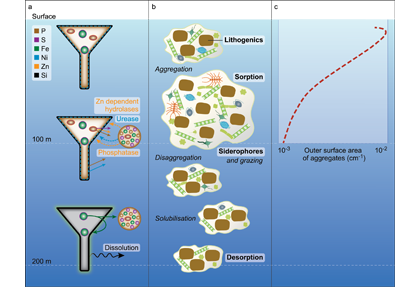
The extent to which the return of major and minor elements to the dissolved phase in the deep ocean (termed remineralization) is decoupled plays a major role in setting patterns…

Read More
« Newer Posts
Older Posts »

Recent Posts

  • Celebrating 20 years of OCB + OCB2027 dates
  • 2026 Call for OCB Scientific Steering Committee (SSC) nominations 
  • Join us for these upcoming OCB webinars
  • Surprise giant phytoplankton revealed by in situ imaging
  • Fresh organic particles take a shortcut to the deep ocean

Copyright © 2026 - OCB Project Office, Woods Hole Oceanographic Institution, 266 Woods Hole Rd, MS #25, Woods Hole, MA 02543 USA Phone: 508-289-2838  •  Fax: 508-457-2193  •  Email: ocb_news@us-ocb.org


Funding for the Ocean Carbon & Biogeochemistry Project Office is provided by the National Science Foundation (NSF) and the National Aeronautics and Space Administration (NASA). The OCB Project Office is housed at the Woods Hole Oceanographic Institution.

Manage Consent
To provide the best experiences, we use technologies like cookies to store and/or access device information. Consenting to these technologies will allow us to process data such as browsing behavior or unique IDs on this site. Not consenting or withdrawing consent, may adversely affect certain features and functions.
Functional Always active
The technical storage or access is strictly necessary for the legitimate purpose of enabling the use of a specific service explicitly requested by the subscriber or user, or for the sole purpose of carrying out the transmission of a communication over an electronic communications network.
Preferences
The technical storage or access is necessary for the legitimate purpose of storing preferences that are not requested by the subscriber or user.
Statistics
The technical storage or access that is used exclusively for statistical purposes. The technical storage or access that is used exclusively for anonymous statistical purposes. Without a subpoena, voluntary compliance on the part of your Internet Service Provider, or additional records from a third party, information stored or retrieved for this purpose alone cannot usually be used to identify you.
Marketing
The technical storage or access is required to create user profiles to send advertising, or to track the user on a website or across several websites for similar marketing purposes.
  • Manage options
  • Manage services
  • Manage {vendor_count} vendors
  • Read more about these purposes
View preferences
  • {title}
  • {title}
  • {title}