Posts by chadwick.chinnery
Unmixing deep sea sedimentary records identifies sensitivity of marine calcifying zooplankton to abrupt warming and ocean acidification in the past
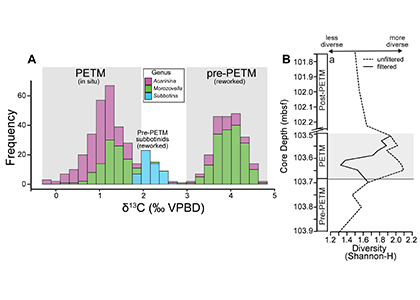
Ocean acidification and rising temperatures have led to concerns about how calcifying organisms foundational to marine ecosystems, will be affected in the near future. We often look to analogous abrupt…
Read MoreHow do coccolithophores survive the darkness?
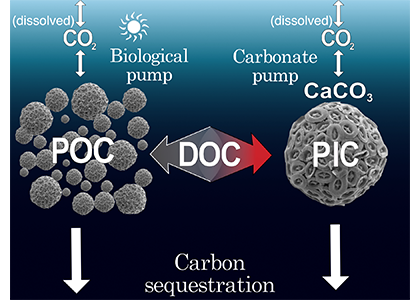
Coccolithophores have survived several major extinction events over geologic time. The most significant was the asteroid impact at the K/T boundary, followed by months of darkness. Additionally, coccolithophores regularly reside…
Read MorePredators Set Range for the Ocean’s Most Abundant Phytoplankton
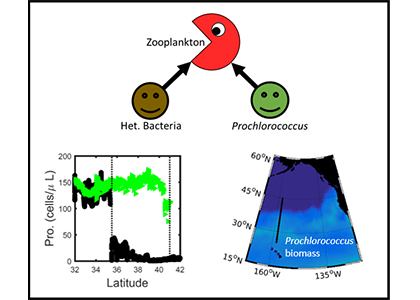
Prochlorococcus is the world’s smallest phytoplankton (microscopic plant-like organisms) and the most numerous, with more than ten septillion individuals. This tiny plankton lives ubiquitously in warm, blue, tropical waters but is…
Read MoreDecline in spring chlorophyll-a concentrations in response to COVID-19 lockdown in the Yellow Sea
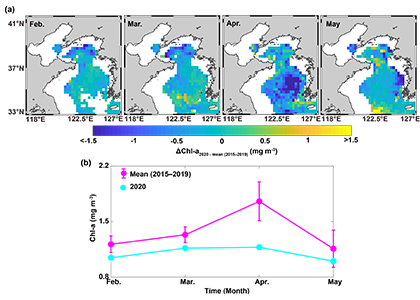
Recently, it was reported that the coronavirus (COVID-19) pandemic-related lockdowns have led to a reduction in anthropogenic emissions of pollutant nitrogen on a global scale. This reduction may have induced…
Read MoreNew Data Standard for Oceanographic Research
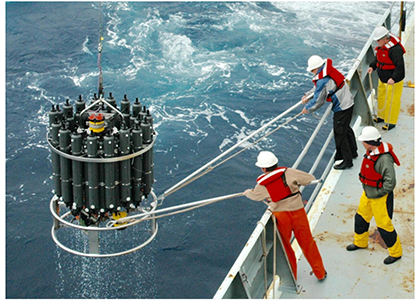
Effective data management is paramount in oceanographic research. The ocean is a global system, and research to understand regional and global oceanographic processes often involves compiling cruise-based data from different…
Read MoreSeagrass is not a silver bullet for climate change
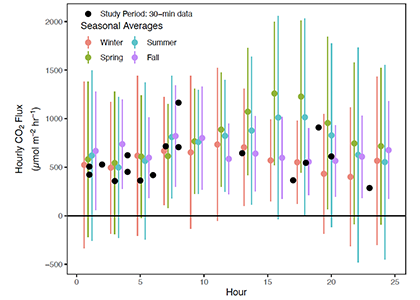
Coastal management actions aimed at protecting or restoring seagrass meadows are often assumed to have the collateral benefit of removing large amounts of carbon dioxide from the atmosphere to combat climate change. Be aware, however: not…
Read MoreAircraft reveal a surprisingly strong Southern Ocean carbon sink
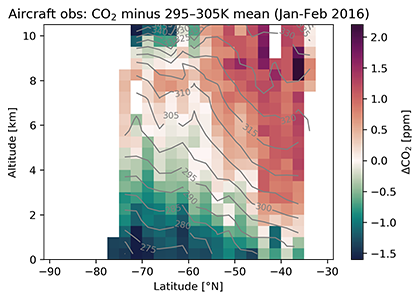
The Southern Ocean is indeed a significant carbon sink—absorbing a large amount of the excess carbon dioxide emitted into the atmosphere by human activities—according to a newly published study led…
Read MoreEddies oxygenate the upper equatorial Pacific
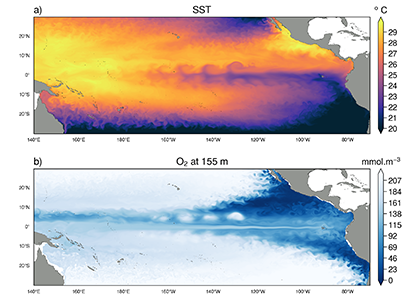
As the ocean warms, the future of the tropical Pacific Oxygen Minimum Zones (OMZs) remains highly uncertain, in part due to incomplete understanding of processes and poor model representation of how mesoscale circulation impacts…
Read MoreOcean Acidification drives shifts in global stoichiometry and carbon export efficiency
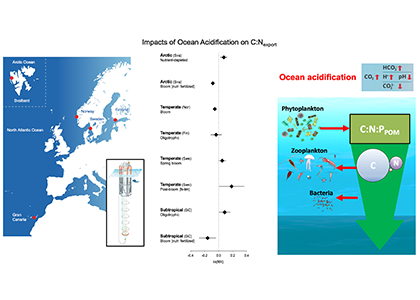
Marine food webs and biogeochemical cycles react sensitively to increases in carbon dioxide (CO2) and associated ocean acidification, but the effects are far more complex than previously thought. A comprehensive…
Read MoreZooplankton evolutionary rescue is limited by warming and acidification interactions
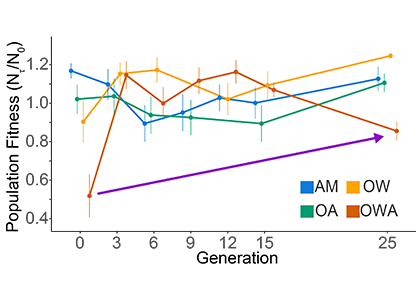
A key issue facing ocean global change scientists is predicting the fate of biota under the combined effects of ocean warming and acidification (OWA). In addition to the constraints of…
Read More