Posts by chadwick.chinnery
Deep ocean carbon reconstruction helps decipher a million-year-old climate mystery
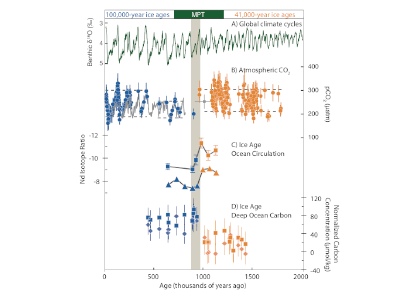
Approximately one million years ago, Earth’s periodic ice ages increased in strength and duration, shifting from a 41,000-year pacing to a 100,000-year pacing, both linked to Earth’s orbital variations. The…
Read MoreThe causes of the 90-ppm glacial atmospheric CO2 drawdown still strongly debated
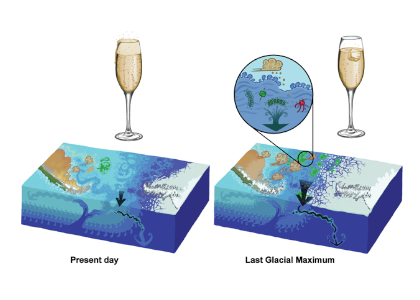
Joint feature with GEOTRACES Using an observationally constrained earth system model, S. Khatiwala and co-workers compare different processes that could lead to the 90-ppm glacial atmospheric CO2 drawdown, with an important…
Read MoreForecasting air-sea CO2 flux variations several years in advance
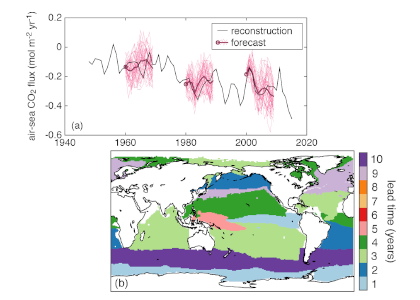
Year-to-year changes in the flux of CO2 between the atmosphere and the ocean impact the global carbon cycle and climate system, and challenge our ability to verify fossil fuel CO2…
Read MoreUpwelled hydrothermal Fe stimulates massive phytoplankton blooms in the Southern Ocean
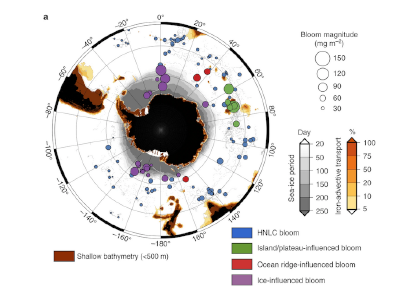
Joint feature with GEOTRACES In a recent study, Ardyna et al combined observations of profiling floats with historical trace element data and satellite altimetry and ocean color data from the…
Read MoreThe competing impacts of climate change and nutrient reductions on dissolved oxygen in Chesapeake Bay
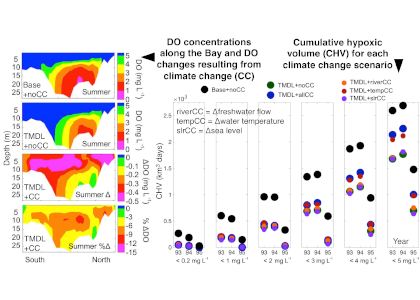
The Chesapeake Bay is a 200-mile-long estuary with both economic and ecological importance to the mid-Atlantic region. Runoff, pollution, and algae blooms resulting in hypoxia have been major issues over…
Read MoreZooplankton-fueled carbon export is changing in the North Atlantic Ocean
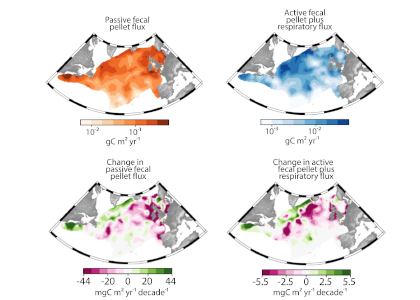
Zooplankton-mediated carbon export is an important, but variable and relatively unconstrained part of the biological carbon pump—the processes that fix atmospheric carbon dioxide in organic material and transport it from…
Read MoreOcean microbes drive fluctuating nutrient loss
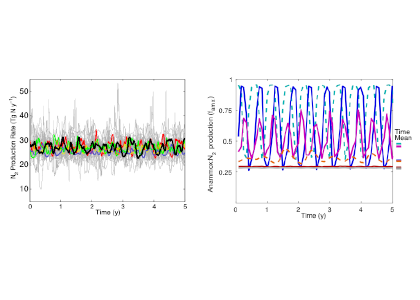
The removal of bioavailable nitrogen (N) by anaerobic microbes in the ocean’s oxygen deficient zones (ODZs) is thought to vary over time primarily as a result of climate impacts on…
Read MoreSuddenly shallow: A new aragonite saturation horizon will soon emerge in the Southern Ocean
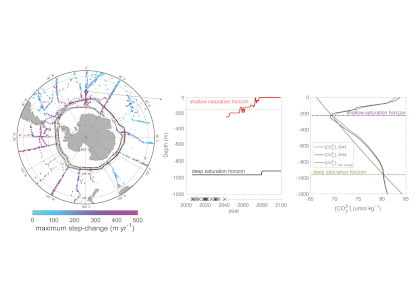
Earth System Models (ESMs) project that by the end of this century, the aragonite saturation horizon (the boundary between shallower, saturated waters and deeper, undersaturated waters that are corrosive to…
Read MoreMicrobes: Gatekeepers of earth’s deep carbon?
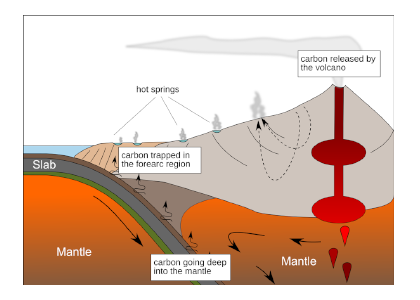
In 2017, an interdisciplinary group of early career scientists, the Biology Meets Subduction team, visited Costa Rica’s subduction zone, where the ocean floor sinks beneath the continent, to find out…
Read MoreSouth Pacific particulate organic carbon fate challenges Martin’s Law
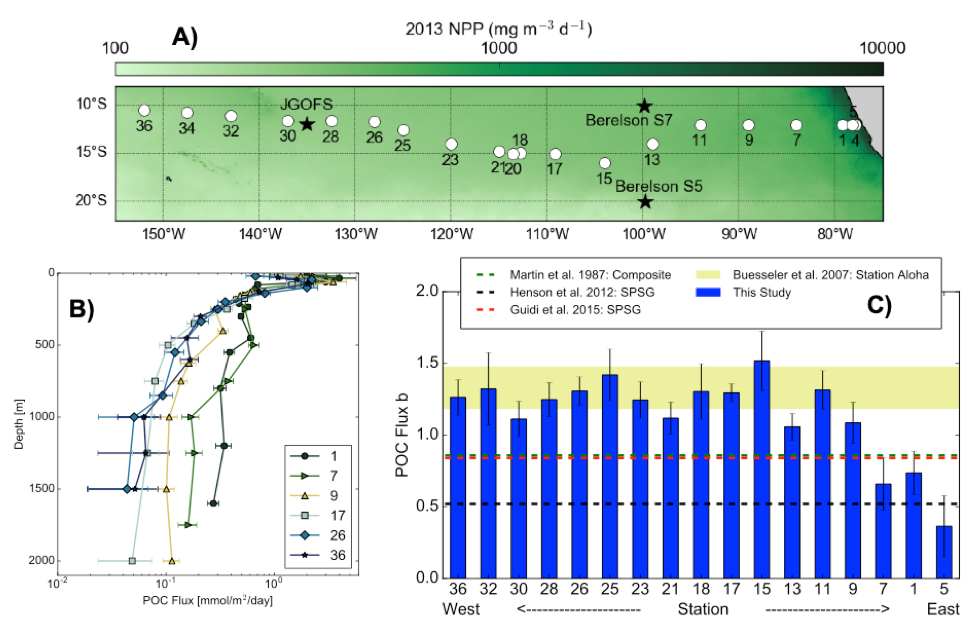
Joint science highlight with GEOTRACES Carbon storage in the ocean is sensitive to the depths at which particulate organic carbon (POC) is respired back to CO2 within the twilight zone…
Read More