Posts by chadwick.chinnery
A new tidal non-photochemical quenching model reveals obscured variability in coastal chlorophyll fluorescence
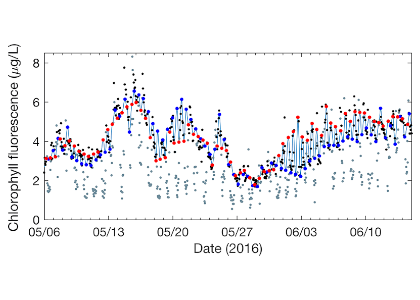
Although chlorophyll fluorescence is widely-used as a proxy for chlorophyll concentration, sunlight exposure makes fluorescence measurements inaccurate through a process called non-photochemical quenching, limiting its proxy accuracy during daylight hours.…
Read MoreA new roadmap of climate change driven ocean changes
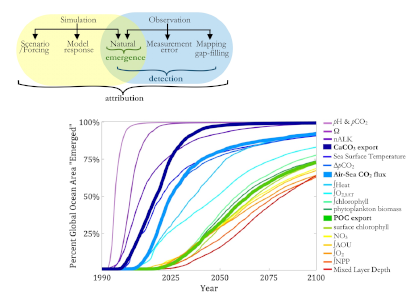
When will we see significant changes in the ocean due to climate change? A new study in Nature Climate Change confirms that outcomes tied directly to the escalation of atmospheric…
Read MoreIndustrial era climate forcing drives multi-century decline in North Atlantic productivity
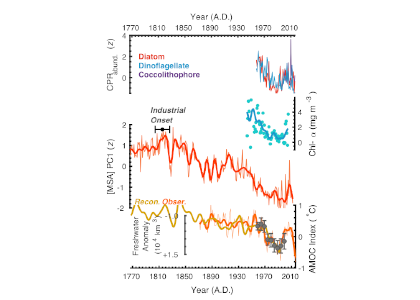
Phytoplankton respond directly to climate forcing, and due to their central role in global oxygen production and atmospheric carbon sequestration, they are critical components of the Earth’s climate system. There…
Read MoreWhere the primary production goes determines whether you catch tuna or cod
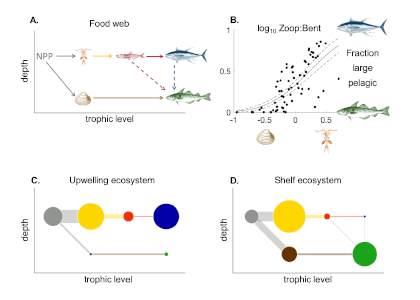
Fishes are incredibly diverse, fill various roles in their ecosystems, and are an important resource—economically, socially, and nutritionally. The relationship between primary productivity and fish catches is not straightforward; fisheries…
Read MorePredicting marine ecosystem futures
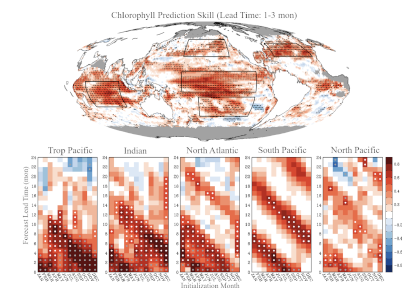
Earth System Models (ESMs) are powerful and effective tools for exploring and predicting marine ecosystem response to environmental change, including biogeochemical processes that underlie threats to ocean health such as…
Read MoreUpwelling and solubility drive global surface dissolved inorganic carbon (DIC) distribution
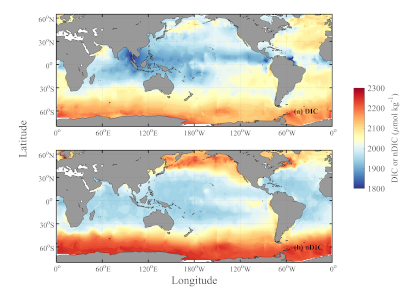
What drives the latitudinal gradient in open-ocean surface DIC concentration? Understanding the processes that drive the distribution of carbon in the surface ocean is essential to the study of the…
Read MoreAir-sea gas exchange estimates biased by multi-day surface trapping
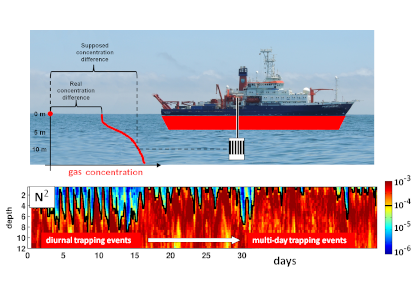
Routine measurements of air-sea gas exchange assume a homogeneous gas concentration across the upper few meters of the ocean. But is this assumption valid? A recent study in Biogeosciences revealed…
Read MoreRegional circulation changes and a growing atmospheric CO2 concentration drive accelerated anthropogenic carbon uptake in the South Pacific
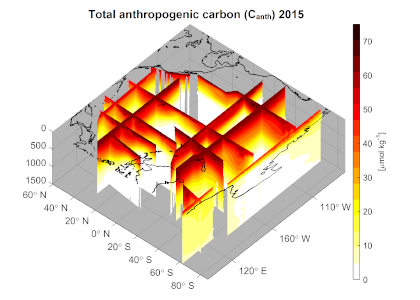
About one tenth of human CO2 emissions are currently being taken up by the Pacific Ocean, which makes the seawater more corrosive to the calcium carbonate shells and skeletons of…
Read MoreA new era of observing the ocean carbonate system
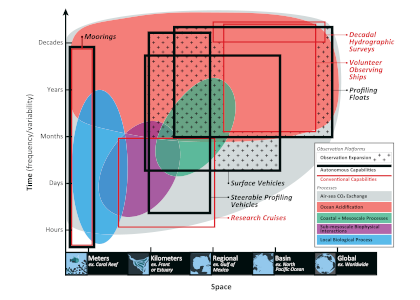
Amidst a backdrop of natural variability, the ocean carbonate system is undergoing a massive anthropogenic change. To capture this anthropogenic signal and differentiate it from natural variability, carbonate observations are…
Read MoreCan microzooplankton shape the depth distribution of phytoplankton?
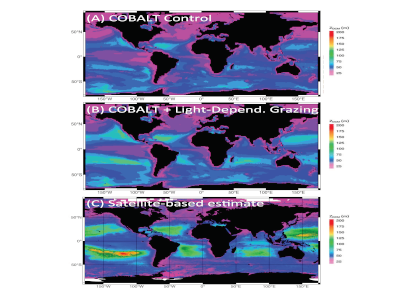
Photosynthetic, single-celled phytoplankton form the base of many marine and lacustrine (lake) food webs. These microscopic algae typically occur in the sunlit surface layer, but in many ecosystems, there are…
Read More