OCB-US CLIVAR Joint Issue: Forecasting ENSO impacts in the California Current System
The North Pacific eastern boundary upwelling system is one of the most ecologically productive, economically relevant, and well-studied systems in the world. Over the last 60 years, a wide range of observations have documented the significant impacts of the El Niño Southern Oscillation (ENSO) on marine ecosystems along the US West Coast. Yet there has been no systematic attempt to use this knowledge to explicitly forecast local marine ecosystem responses to individual ENSO events.
A recent workshop co-sponsored by US CLIVAR, OCB, NOAA, PICES, and ICES, Forecasting ENSO impacts on marine ecosystems of the US West Coast, attempted to develop a framework for using ENSO forecasts from climate and statistical models in order to predict changes in key components of the marine ecosystem in the California Current System.
This set of articles published jointly between OCB and US CLIVAR (in their newsletter Variations) features participants from the workshop, including biologists and physical climate scientists, who were involved in advancing the discussion and outcomes. After describing a strategy to understand and quantify the predictable components of the ecosystem response to ENSO along the US West Coast (DiLorenzo and Miller), this issue discusses the need to identify target ecosystem indicators or populations that respond to ENSO and are societally relevant, such as exploitable species that are regulated by federal and state agencies (Ohman et al.).
A major challenge for understanding the predictability of targeted ecosystem indicators is identification of the dominant regional physical, biogeochemical, and lower trophic processes that carry the ENSO predictable response in the marine ecosystem (Jacox et al.; Anderson et al.). These processes are sensitive to the different flavors of ENSO teleconnections originating in the tropical Pacific (Capotondi et al.). Exploiting ENSO predictability dynamics can add skill to current seasonal forecasts of large marine ecosystems in the California Current (Tommasi et al.) and improve existing modeling tools for managing top predators (Hazen et al.).
Watch the associated webinar here, click here for compiled PDF of articles.
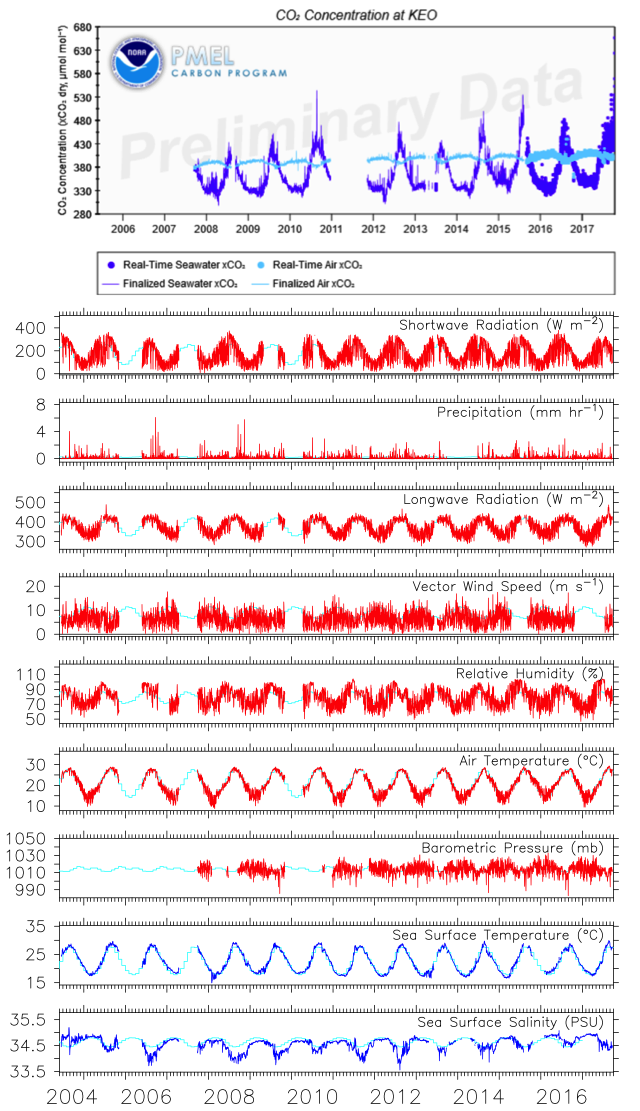
Dongxiao Zhang1,2, Meghan F. Cronin2, Xiaopei Lin3, Ryuichiro Inoue4, Andrea J. Fassbender5, Stuart P. Bishop6, Adrienne Sutton2 1. University of Washington 2. NOAA Pacific Marine Environmental Laboratory 3. Ocean University…
Read More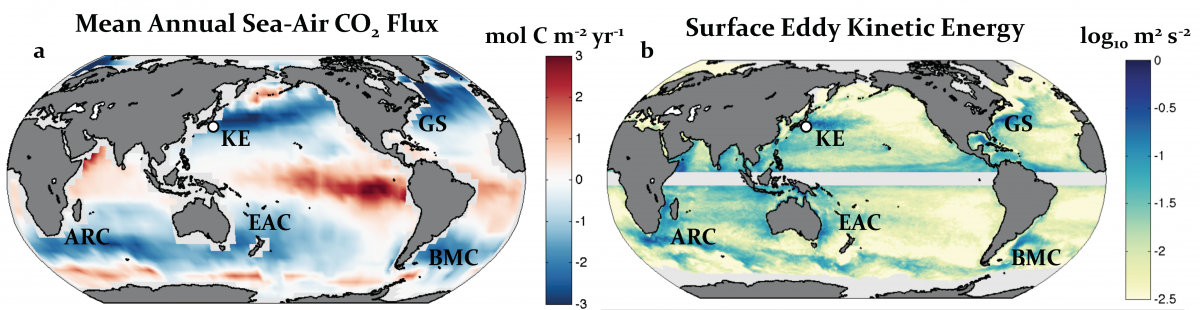
Alison R. Gray1, Jaime Palter2 1. University of Washington 2. University of Rhode Island Estimates of contemporary global air-sea carbon dioxide (CO2) flux (Takahashi et al. 2009; Landschützer et al. 2014)…
Read More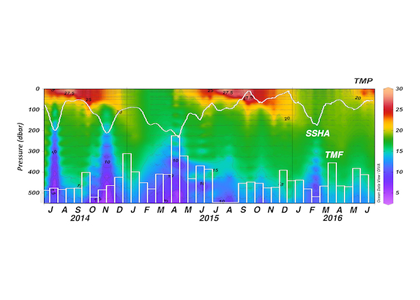
WBC Series Guest Editors: Andrea J. Fassbender1 and Stuart P. Bishop2 1. Monterey Bay Aquarium Research Institute 2. North Carolina State University Western boundary current (WBC) regions are often studied…
Read More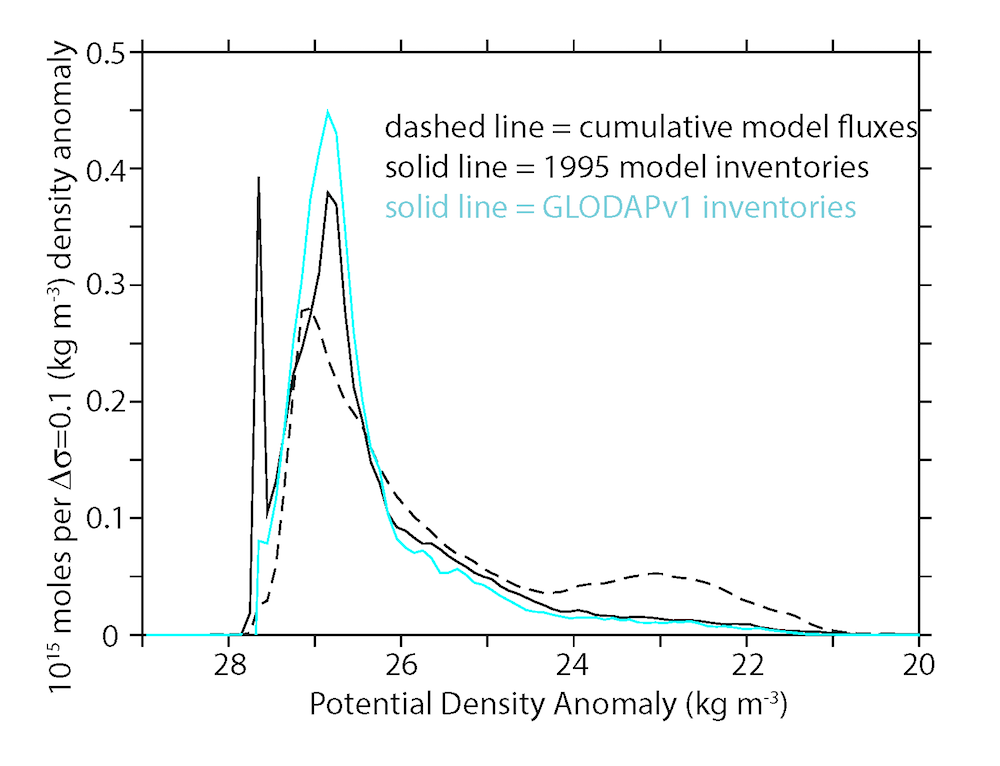
Keith B. Rodgers1, Ping Zhai1, Daniele Iudicone2, Olivier Aumont3, Brendan Carter4, Andrea J. Fassbender5, Stephen M. Griffies6, Yves Plancherel7, Laure Resplandy8, Richard D. Slater1, Katsuya Toyama9 1. Princeton University 2.…
Read More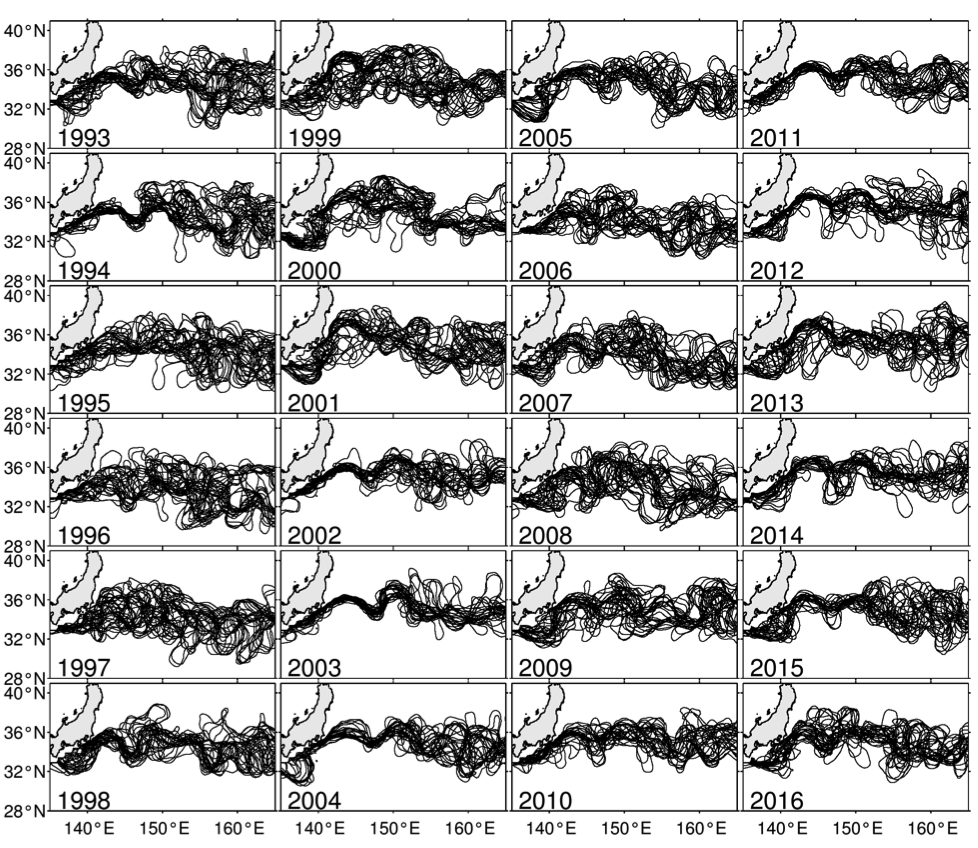
Bo Qiu1, Eitarou Oka2, Stuart P. Bishop3, Shuiming Chen1, Andrea J. Fassbender4 1. University of Hawaii at Manoa 2. The University of Tokyo 3. North Carolina State University 4. Monterey Bay…
Read More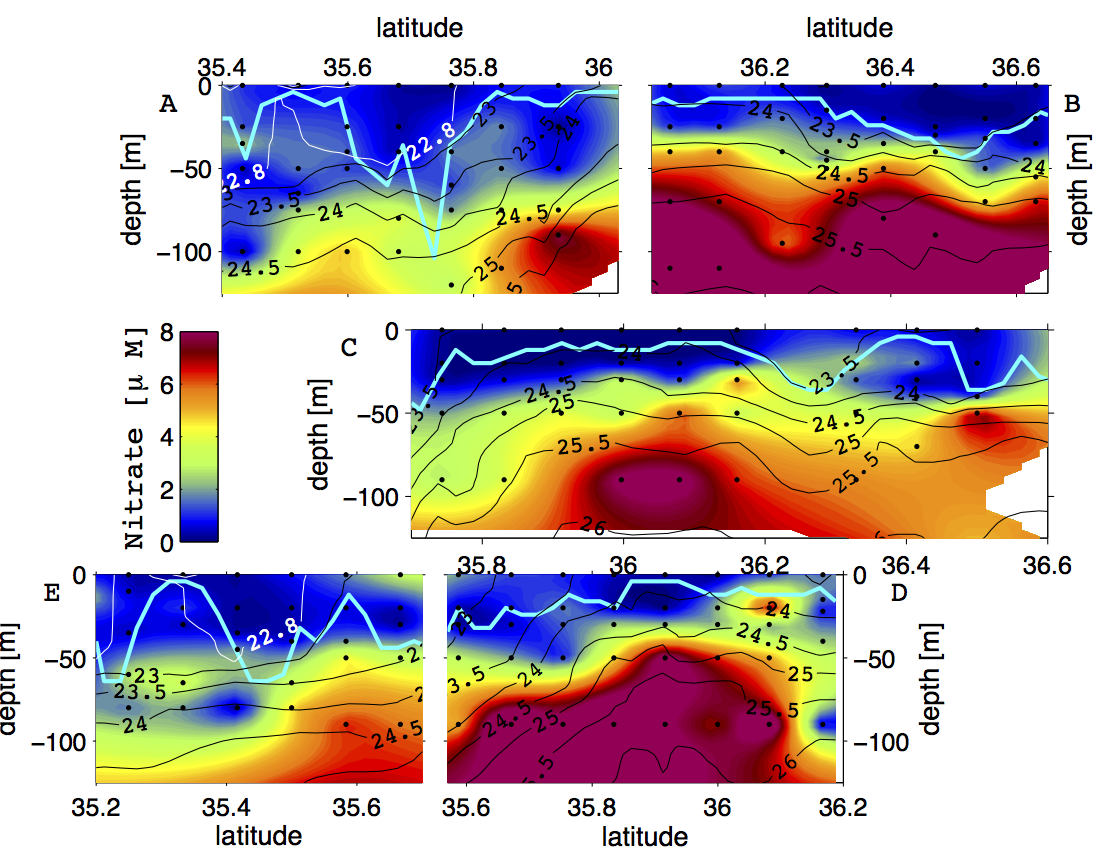
Sophie Clayton1, Peter Gaube1, Takeyoshi Nagai2, Melissa M. Omand3, Makio Honda4 1. University of Washington 2. Tokyo University of Marine Science and Technology, Japan 3. University of Rhode Island 4.…
Read More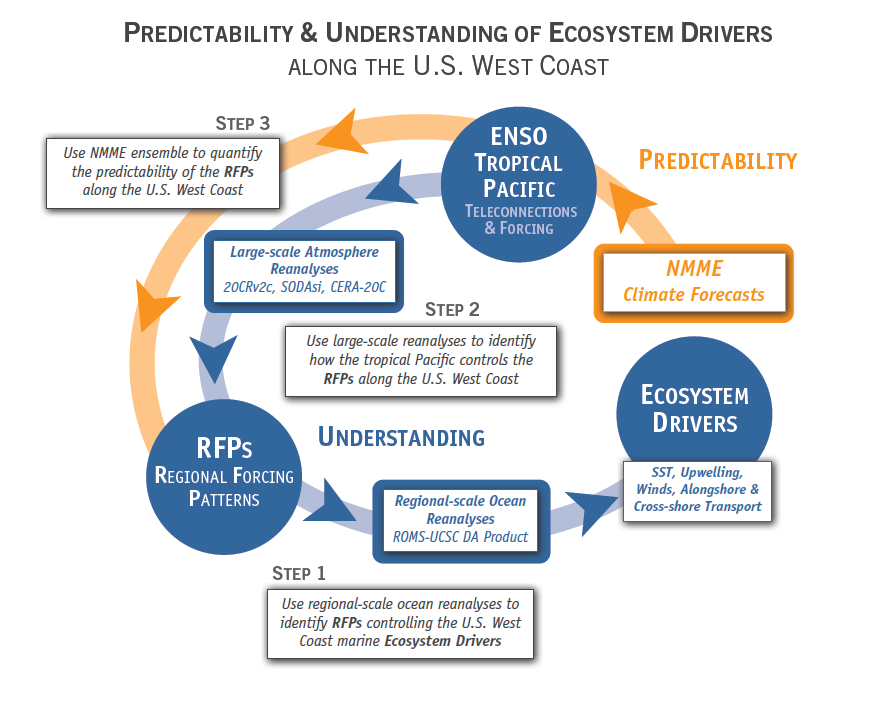
The US West Coast eastern boundary upwelling system supports one of the most productive marine ecosystems in the world and is a primary source of ecosystem services for the US…
Read More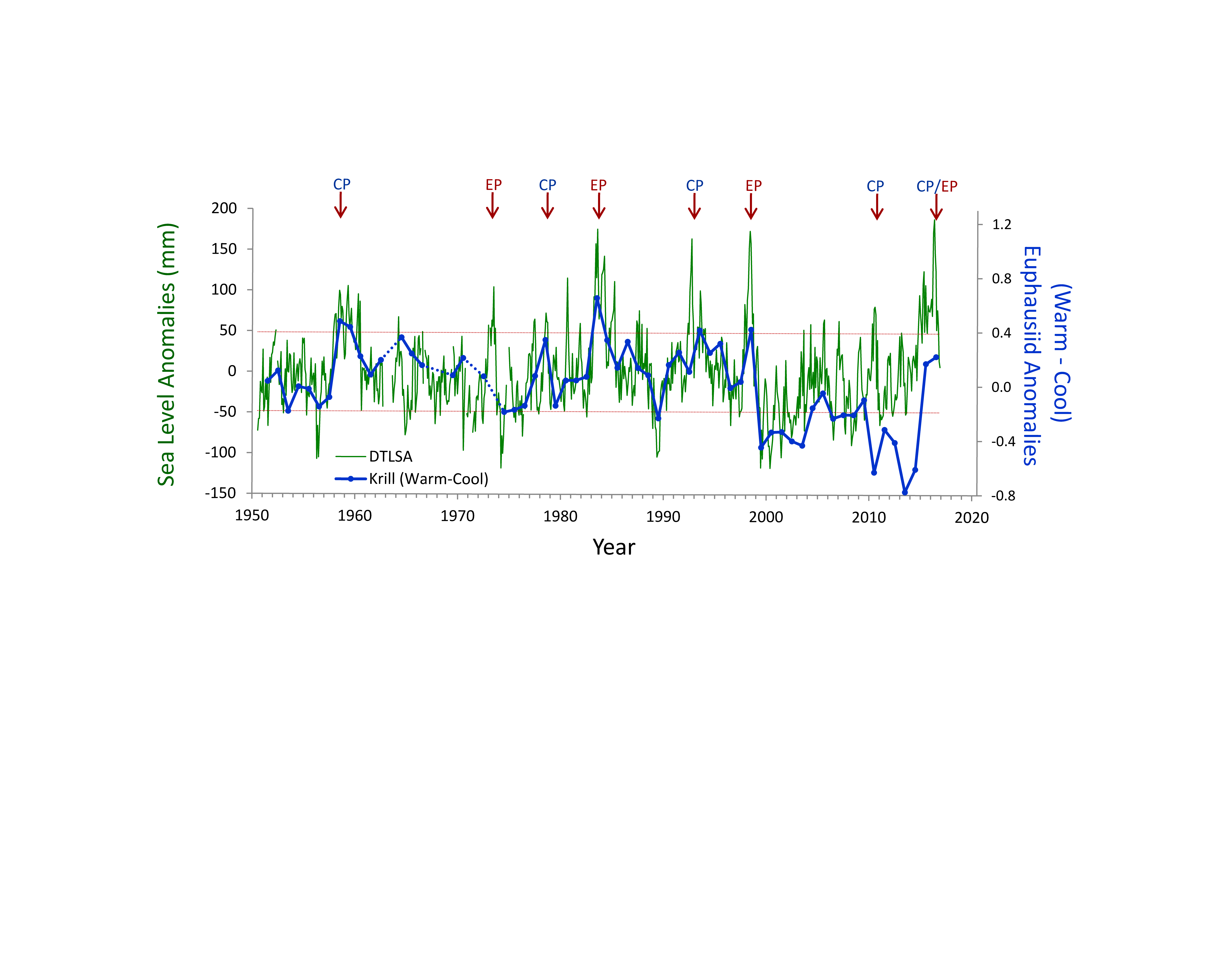
El Niño-Southern Oscillation (ENSO) events activate long-distance teleconnections through the atmosphere and ocean that can dramatically impact marine ecosystems along the West Coast of North America, affecting diverse organisms ranging…
Read More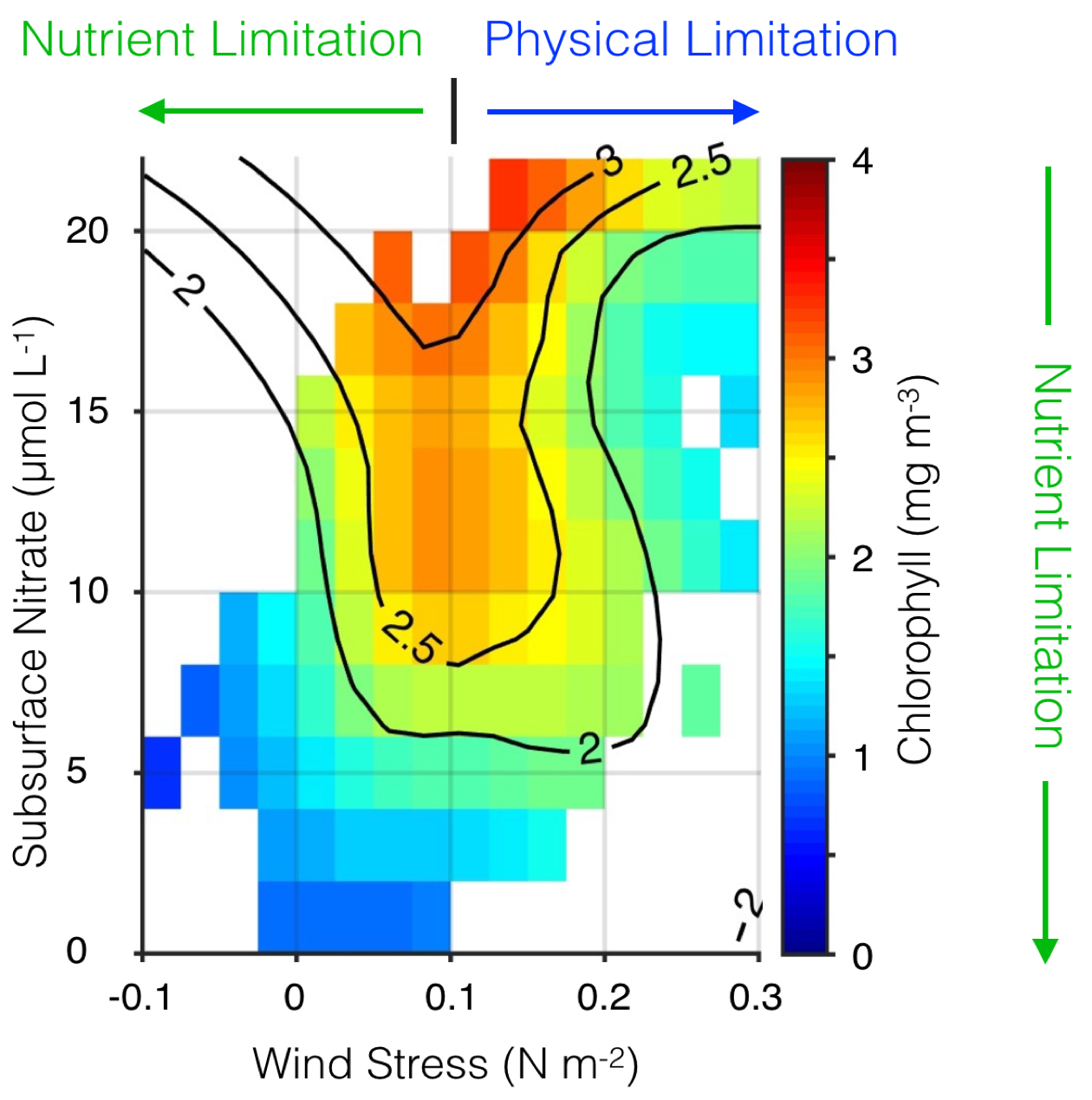
The El Niño–Southern Oscillation (ENSO) is a dominant driver of interannual variability in the physical and biogeochemical state of the northeast Pacific, and, consequently, exerts considerable control over the ecological…
Read More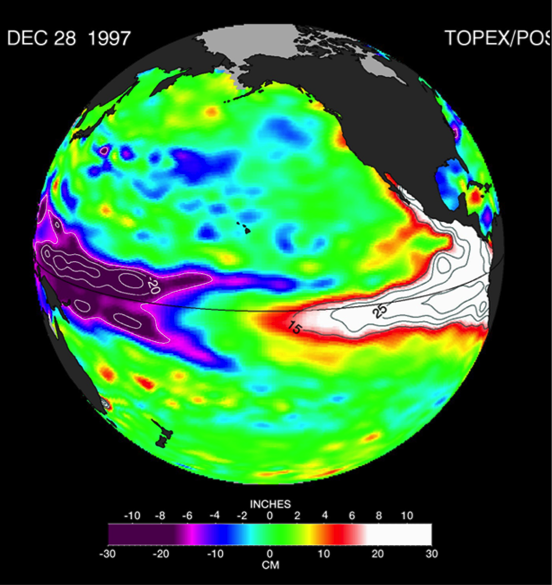
The El Niño-Southern Oscillation (ENSO) is the dominant mode of tropical Pacific climate variability at interannual timescales, with profound influences on seasonal weather and ecosystems worldwide. In particular, the physical…
Read More