OCB Science Highlights
If you would like to have your recent publications featured on the OCB website and eNewsletter please contact ocb_news@whoi.edu. View our guidelines for writing a OCB Science Highlight.
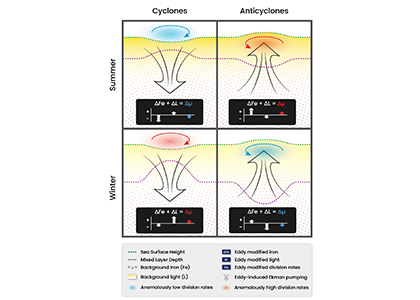
Southern Ocean biological productivity is instrumental in regulating the global carbon cycle. Previous correlative studies associated widespread mesoscale activity with anomalous chlorophyll levels. However, eddies simultaneously modify both the physical…
Read More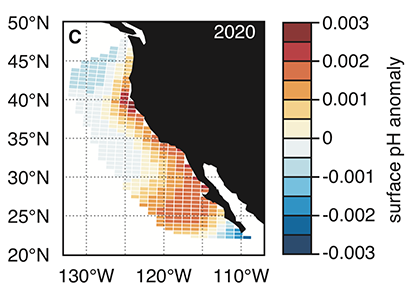
The California Current System is a highly productive coastal upwelling region that supports commercial fisheries valued at $6 billion/year. These fisheries are supported by upwelled waters, which are rich in…
Read More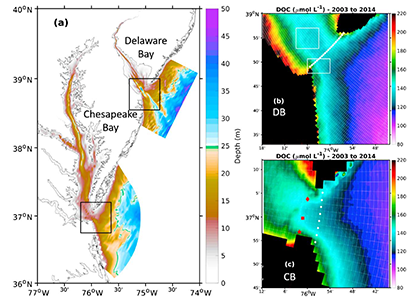
Dissolved organic carbon (DOC) is a food supplement that supports microorganism growth and plays a major role in the global carbon cycle via the microbial loop, which integrates DOC into…
Read More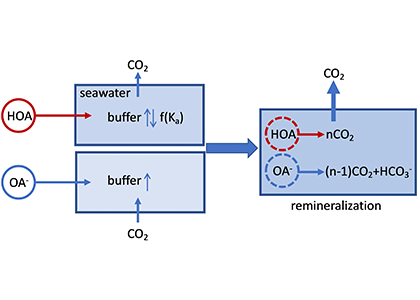
The marine chemistry community has measured organic alkalinity in coastal and estuarine waters for over two decades. While the common perception is that any unaccounted alkalinity should enhance seawater buffer…
Read More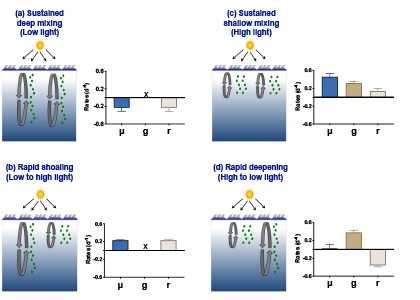
Microscopic plankton in the surface ocean make planet Earth habitable by generating oxygen and forming the basis of marine food webs, yielding harvestable protein. For over 100 years, oceanographers have…
Read More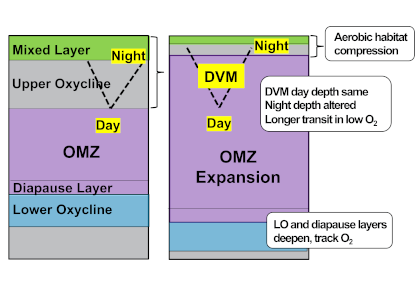
Global warming increases ocean deoxygenation and expands the oxygen minimum zone (OMZ), which has implications for major zooplankton groups like copepods. Reduced oxygen levels may impact individual copepod species abundance,…
Read More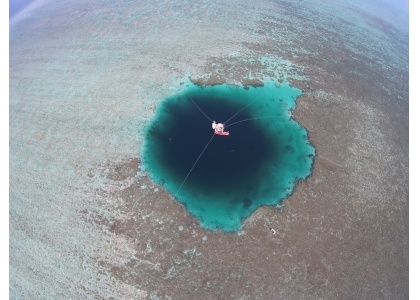
Blue holes are unique depositional environments that are formed within carbonate platforms. Due to an enclosed geomorphology that restricts water exchange, blue hole ecosystems are typically characterized by steep biogeochemical…
Read More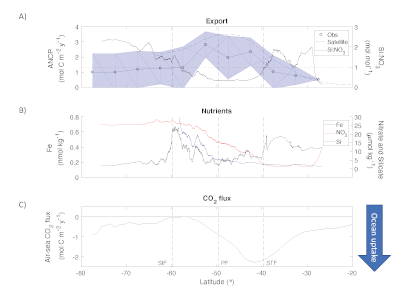
The Southern Ocean is a major player in driving global distributions of heat, carbon dioxide, and nutrients, making it key to ocean chemistry and the earth’s climate system. In the…
Read More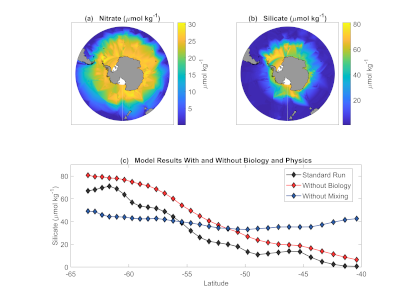
In the Southern Ocean, surface water silicate (SiO4) concentrations decline very quickly relative to nitrate concentrations along a northward gradient toward mode water formation regions on the northern edge (Figure…
Read More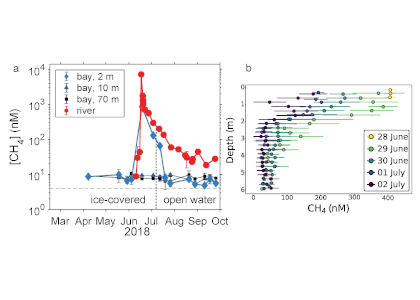
Rapid environmental changes in the Arctic will potentially alter the atmospheric emissions of heat-trapping greenhouse gases such as methane (CH4) and carbon dioxide (CO2). A recent study on the Canadian…
Read More