OCB Science Highlights
If you would like to have your recent publications featured on the OCB website and eNewsletter please contact ocb_news@whoi.edu. View our guidelines for writing a OCB Science Highlight.
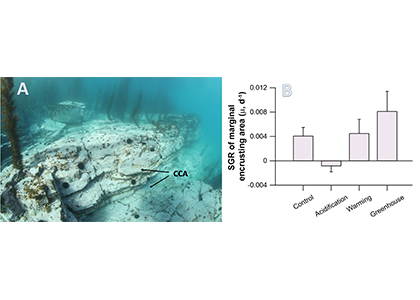
Seawater carbonate chemistry has been altered by dramatic increases in anthropogenic CO2 release and global temperatures, leading to significant changes in rocky shore habitats and the metabolism of most marine…
Read More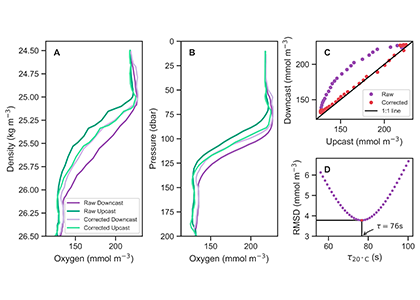
Despite its fundamental importance to the global carbon cycle, climate, and marine ecosystems, oceanic primary production is grossly under-sampled. Autonomous platforms represent an important frontier for expanding measurements of marine…
Read More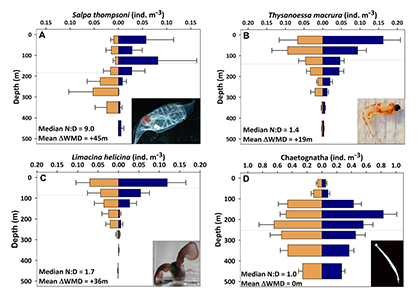
Sunrise and sunset are the main cues driving zooplankton diel vertical migration (DVM) throughout the world’s oceans. These marine animals balance the trade-off between feeding in surface waters at night…
Read More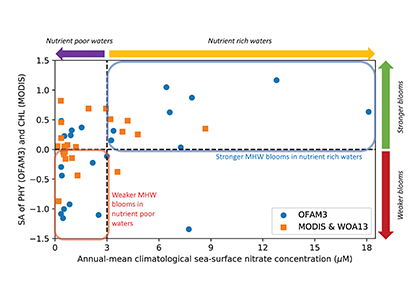
Ocean temperature extreme events such as marine heatwaves are expected to intensify in coming decades due to anthropogenic warming. Although the effects of marine heatwaves on large plants and animals…
Read More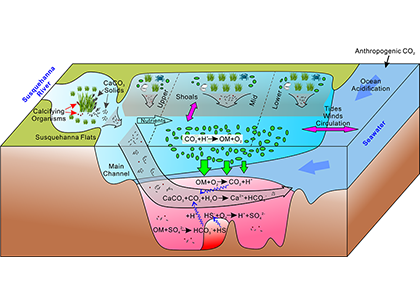
Ocean acidification is often enhanced by eutrophication and subsequent hypoxia and anoxia in coastal waters, which collectively threaten marine organisms and ecosystems. Acidification is particularly of concern for organisms that…
Read More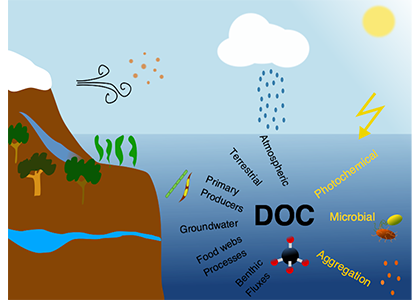
The dissolved organic carbon (DOC) pool is vital for the functioning of marine ecosystems. DOC fuels marine food webs and is a cornerstone of the earth’s carbon cycle. As one…
Read More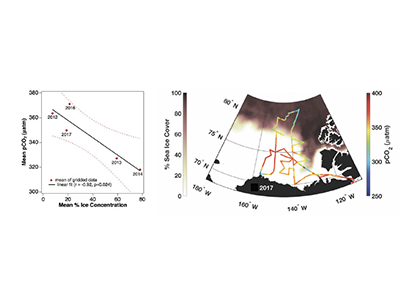
Loss of Arctic Ocean ice cover is altering the carbon cycle in ways that are not well understood. Effectively “popping the top off” the Arctic Ocean, ice loss exposes the…
Read More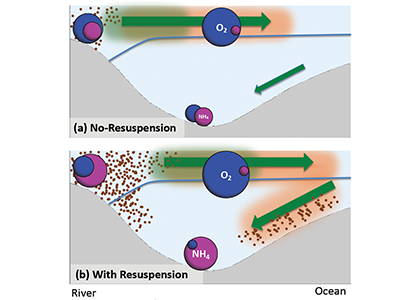
Sediment processes, including resuspension and transport, affect water quality in estuaries by altering light attenuation, primary productivity, and organic matter remineralization, which then influence oxygen and nitrogen dynamics. In a…
Read More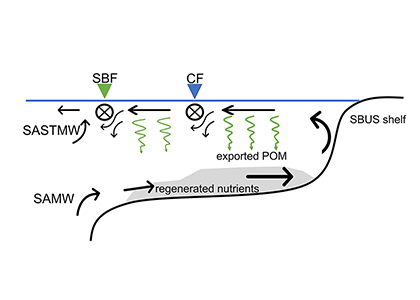
The southern Benguela upwelling system (SBUS) off southwest Africa is an exceptionally fertile ocean region that supports valuable commercial fisheries. The productivity of this system derives from the upwelling of…
Read More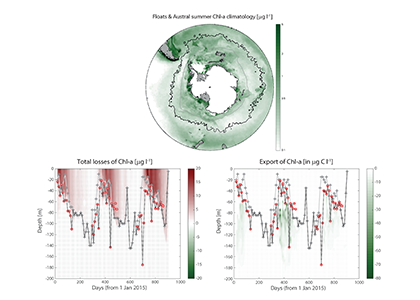
More observations are needed to constrain the relative roles of physical (advection), biogeochemical (downward export), and ecological (grazing and biological losses) processes in driving the fate of phytoplankton blooms in…
Read More