OCB Science Highlights
If you would like to have your recent publications featured on the OCB website and eNewsletter please contact ocb_news@whoi.edu. View our guidelines for writing a OCB Science Highlight.
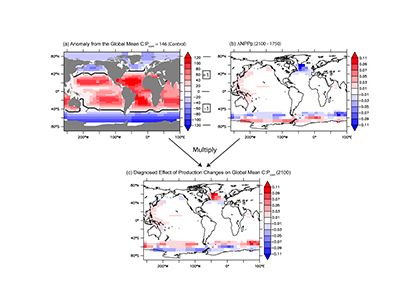
The C:N:P stoichiometry of global ocean biological production is the gear by which marine biology turns the wheels of the global ocean carbon cycle. From the days of Alfred Redfield…
Read More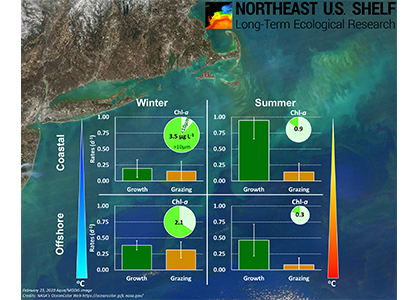
It is critical to quantify the amount of phytoplankton that microzooplankton consume to better understand the flow of carbon toward higher trophic levels in the ocean. The Northeast US Shelf…
Read More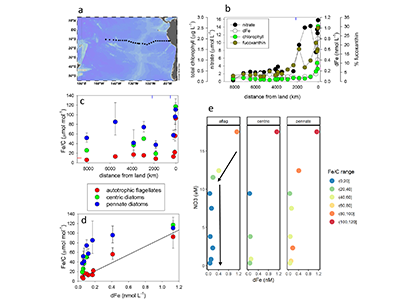
The uptake of iron by phytoplankton is a key part of the marine iron cycle, but we still have a rudimentary understanding of the controls on this process. It is…
Read More
The pH of aerosols controls their impact on climate and human health. Sea spray aerosols are one of the largest sources of aerosols globally by mass, yet it has been…
Read More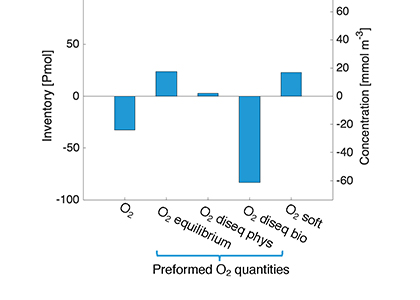
During the Last Glacial Maximum (~20,000 years ago, LGM) sediment data show that the deep ocean had lower dissolved oxygen (O2) concentrations than the preindustrial ocean, despite cooler temperatures of…
Read More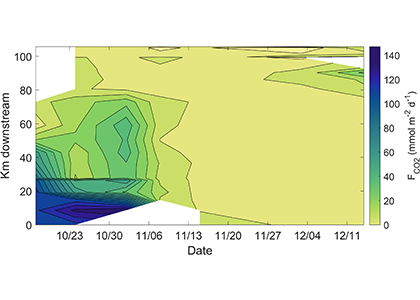
The world is getting stormier, and recent evidence shows significant impacts on coastal carbon cycling. The upticks in extreme weather events such as tropical cyclones have resulted in enhanced delivery…
Read More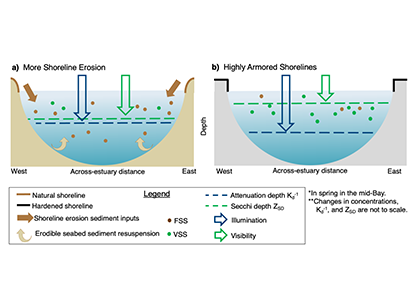
Around the world, human-altered shorelines change sediment inputs to estuaries and coastal waters, altering water clarity, especially in areas of dense human population. The Chesapeake Bay estuary is recovering from…
Read More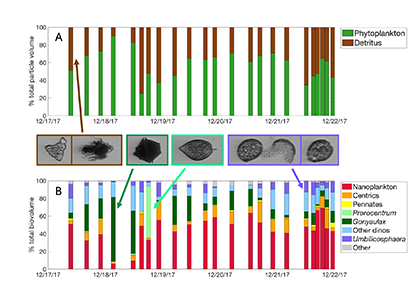
Wildfire frequency, size, and destructiveness has increased over the last two decades, particularly in coastal regions such as Australia, Brazil, and the western United States. While the impact of fire…
Read More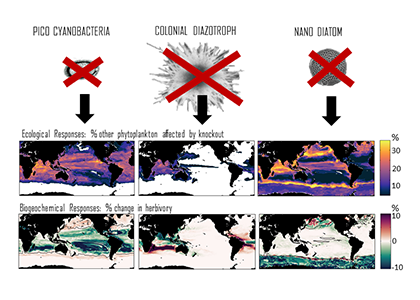
Climate change impacts on the ocean such as warming, altered nutrient supply, and acidification will lead to significant rearrangement of phytoplankton communities, with the potential for some phytoplankton species to…
Read More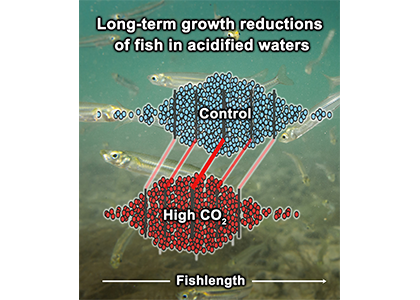
The question of whether ocean acidification (OA) will impact the growth of marine fish remains surprisingly uncertain. The bulk of available evidence in the form of laboratory experiments suggests that…
Read More