OCB Science Highlights
If you would like to have your recent publications featured on the OCB website and eNewsletter please contact ocb_news@whoi.edu. View our guidelines for writing a OCB Science Highlight.
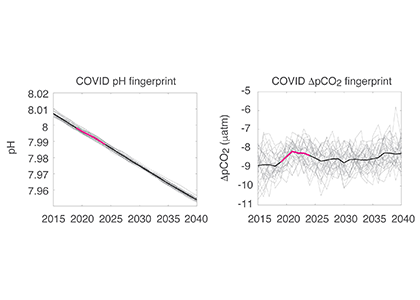
The global pandemic of the last nearly two years has affected all of us on a daily and long-term basis. Our planet is not exempt from these impacts. Can we…
Read More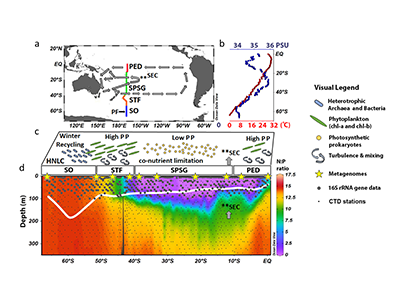
Unravelling the relationship between biological diversity and ecosystem functions is a timeless question which dates back to the expeditions of Alexander von Humboldt in the early 1800′. At the base…
Read More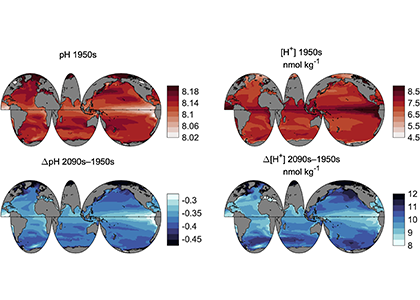
The Intergovernmental Panel on Climate Change (IPCC) defines ocean acidification as “a reduction in pH of the ocean over an extended period, typically decades or longer, caused primarily by the uptake…
Read More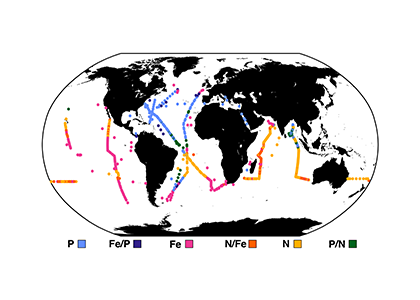
In the surface ocean, phytoplankton growth is often limited by a scarcity of key nutrients such as nitrogen, phosphorus, and iron. While this is important, there are methodological and conceptual…
Read More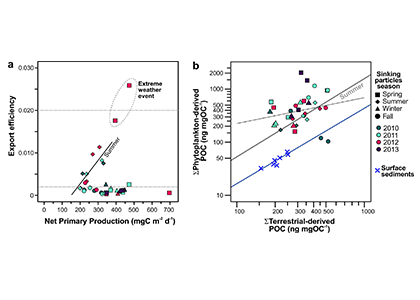
Sinking particles are a critical conduit for the export of material from the surface to the deep ocean. Despite their importance in oceanic carbon cycling, little is known about the…
Read More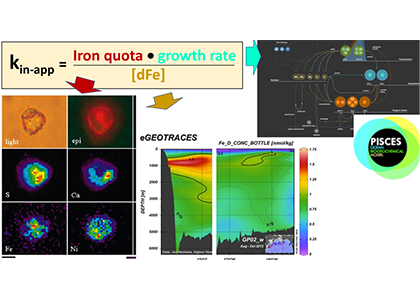
In many oceanic regions, iron exerts strong control on phytoplankton growth, ecosystem structure and carbon cycling. Yet, iron bioavailability and uptake rates by phytoplankton in the ocean are poorly constrained.…
Read More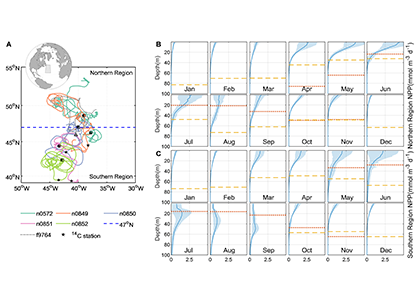
Net primary production (NPP)—the organic carbon produced by the phytoplankton minus the organic carbon respired by phytoplankton themselves—serves as a major energy source of the marine ecosystem. Traditional methods for…
Read More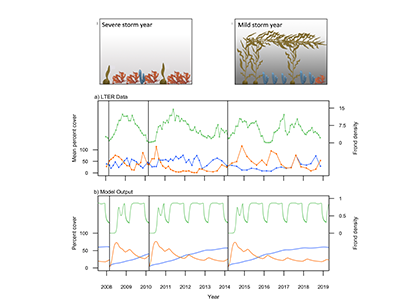
Giant kelp is a highly productive foundation species that forms dense forests on temperate reefs around the world. These ecosystems have remarkably high rates of carbon fixation—giant kelp can grow…
Read More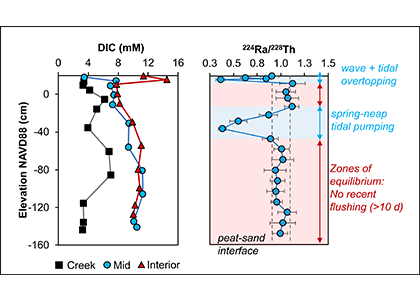
Tidal wetlands are highly productive ecosystems that have the potential to sequester and bury vast quantities of atmospheric carbon dioxide, making them effective blue carbon habitats. There is emerging evidence…
Read More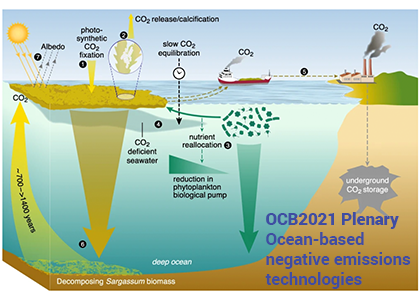
The world is in need of effective methods to reduce CO2 in the atmosphere, and the ocean could potentially help us to meet this objective. One idea, explored since the…
Read More