OCB Science Highlights
If you would like to have your recent publications featured on the OCB website and eNewsletter please contact ocb_news@whoi.edu. View our guidelines for writing a OCB Science Highlight.
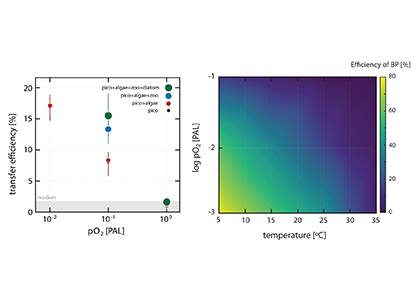
The marine biological pump (BP) plays a crucial role in regulating earth’s atmospheric oxygen and carbon dioxide levels by transferring carbon fixed by primary producers into the ocean interior and…
Read More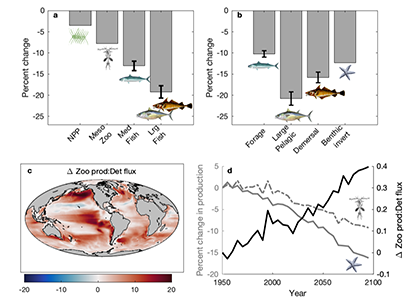
Global warming changes the conditions for all ocean life, with wide-ranging consequences. It is particularly difficult to predict the impact of climate change on fish because fish production is conditioned…
Read More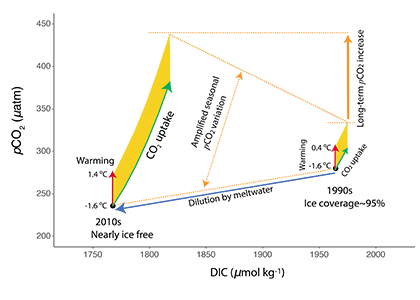
Warming and sea ice loss over the past few decades have caused major changes in sea surface partial pressure of CO2 (pCO2) of the western Arctic Ocean, but detailed temporal…
Read More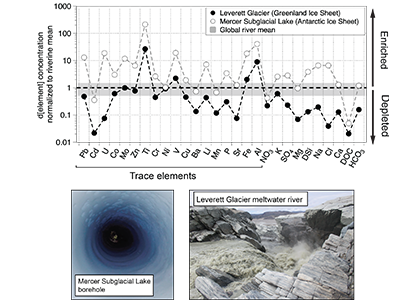
Trace elements are essential micronutrients for life in the ocean and also serve as valuable fingerprints of chemical weathering. The behaviour of trace elements in the ocean has gained interest…
Read More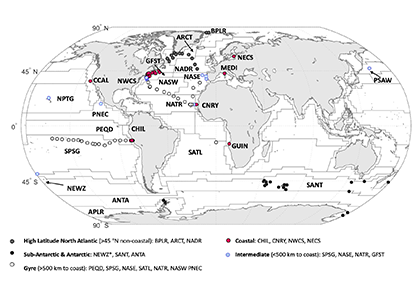
Authors of a recent paper published in Global Biogeochemical Cycles conducted a detailed study of the residence times of total and dissolved iron (Fe) in the upper layers (0-250m) of…
Read More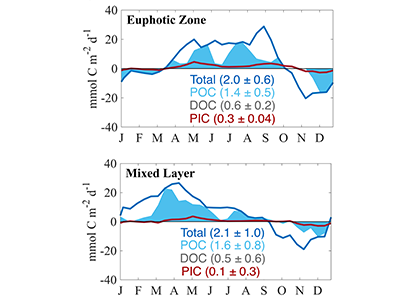
Carbon export from the surface into the deep ocean via the biological pump is a significant sink for atmospheric carbon dioxide. The relative contributions of sinking particles—particulate organic carbon (POC)…
Read More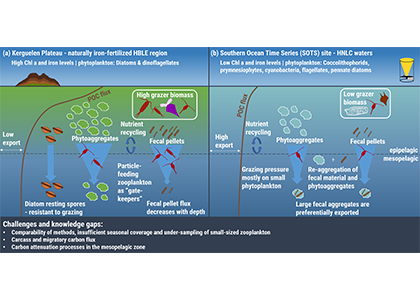
The Southern Ocean exhibits an inverse relationship between surface primary production and export flux out of the euphotic zone. The causes of this production-export decoupling are still under debate. A…
Read More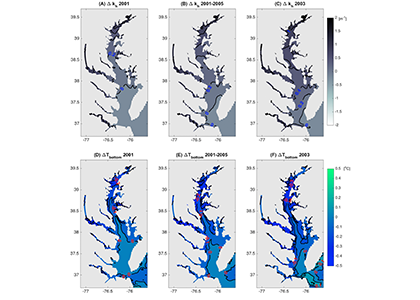
Estuarine water clarity is determined by suspended materials in the water, including colored dissolved organic matter, phytoplankton, sediment, and detritus. These constituents directly affect temperature because when water is opaque,…
Read More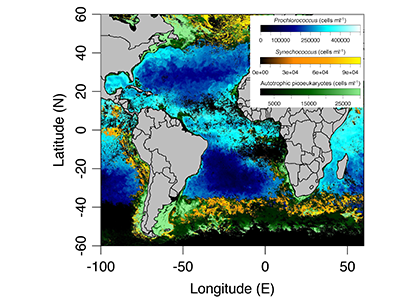
Picophytoplankton, the smallest phytoplankton on Earth, are dominant in over half of the global surface ocean, growing in low-nutrient “ocean deserts” where diatoms and other large phytoplankton have difficult to…
Read More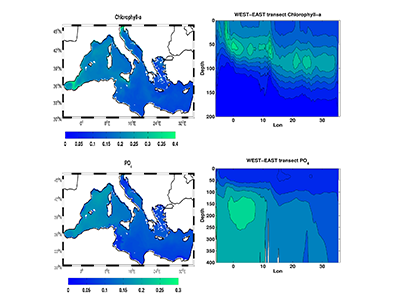
The Mediterranean Sea is a semi-enclosed mid-latitude oligotrophic basin with a lower net primary production than the global ocean. A west-east productivity trophic gradient results from the superposition of biogeochemical…
Read More