OCB Science Highlights
If you would like to have your recent publications featured on the OCB website and eNewsletter please contact ocb_news@whoi.edu. View our guidelines for writing a OCB Science Highlight.
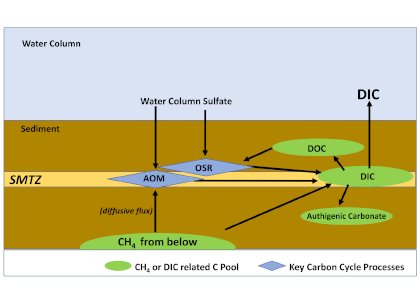
Ocean margins are often characterized by the transport of methane, a potent greenhouse gas, entering from the subsurface and moving towards the seafloor. However, a significant portion of subsurface methane…
Read More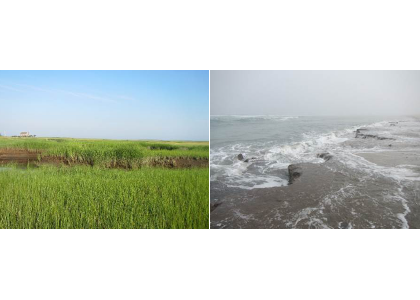
Vegetated coastal “blue carbon” ecosystems, including sea grasses, mangroves, and salt marshes, provide valuable ecosystem services such as carbon sequestration, storm protection, critical habitat, etc.. Many of these services are…
Read More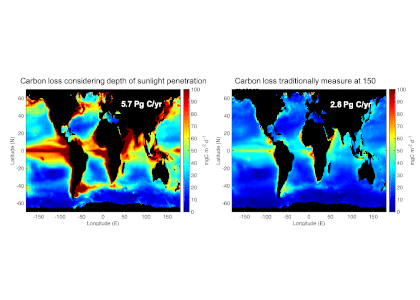
Organic carbon produced during photosynthesis in the sunlit euphotic zone is transported to the deep ocean via the ocean’s biological carbon pump (BCP). Even small changes in the BCP efficiency…
Read More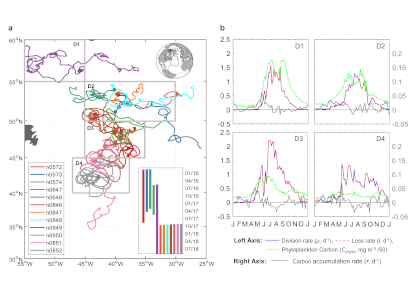
Phytoplankton produces organic carbon, which serves as a major energy source in marine food webs and plays an important role in the global carbon cycle. Studies of phytoplankton seasonal timing…
Read More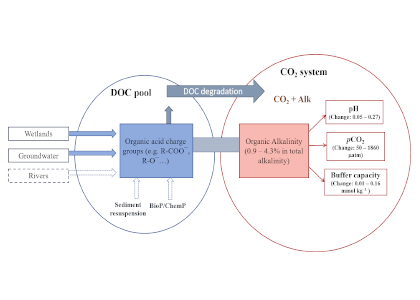
As a part of dissolved organic carbon (DOC), organic acid charge groups can contribute significantly to total alkalinity (TA) in natural waters. Such a contribution is termed as organic alkalinity…
Read More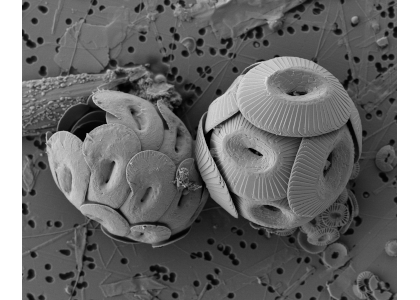
In the Southern Ocean, coccolithophores are thought to account for a major fraction of marine carbonate production and export to the deep sea. Despite their importance in the ocean carbon…
Read More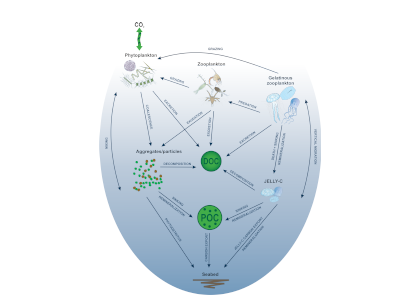
Barely visible to the naked eye, gelatinous zooplankton play important roles in marine food webs. Cnidaria, Ctenophora, and Urochordata are omnipresent and provide important food sources for many more highly…
Read More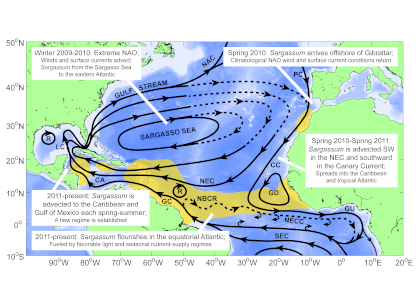
The pelagic brown alga Sargassum forms a habitat that hosts a rich diversity of life, including other algae, crustaceans, fish, turtles, and birds in both the Gulf of Mexico and…
Read More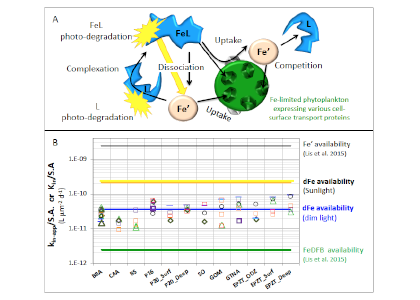
Iron (Fe) is a key element to sustaining life, but it is present at extremely low concentrations in seawater. This scarcity limits phytoplankton growth in large swaths of the global…
Read More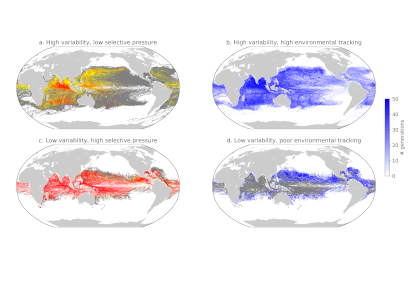
Marine microbes are the engines of global biogeochemical cycling in the oceans. They are responsible for approximately half of all photosynthesis on the planet and drive the ‘biological pump’, which…
Read More