OCB Science Highlights
If you would like to have your recent publications featured on the OCB website and eNewsletter please contact ocb_news@whoi.edu. View our guidelines for writing a OCB Science Highlight.
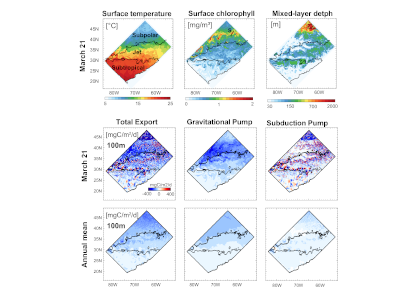
One factor that limits our capacity to quantify the ocean biological carbon pump is uncertainty associated with the physical injection of particulate (POC) and dissolved (DOC) organic carbon to the…
Read More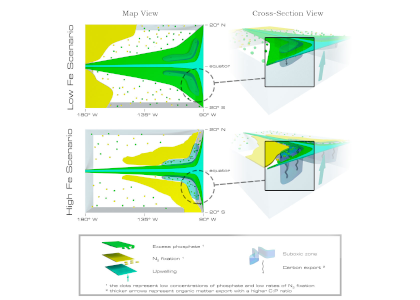
Iron fertilization of marine phytoplankton by Aeolian dust is a well-established mechanism for atmospheric carbon dioxide (CO2) drawdown by the ocean. When atmospheric CO2 decreased by 90-100 ppm during previous ice…
Read More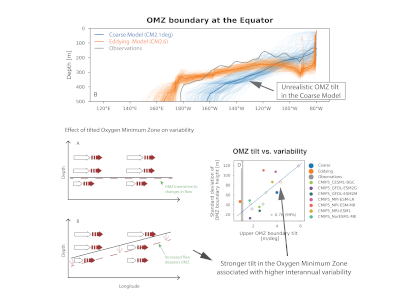
While the ocean as a whole is losing oxygen due to warming, oxygen minimum zones (OMZs) are maintained by a delicate balance of biological and physical processes; it is unclear…
Read More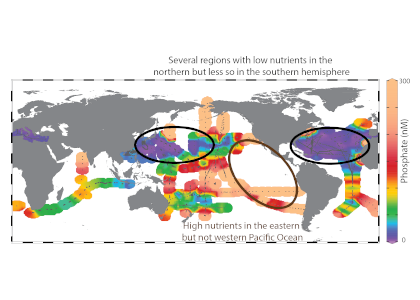
Phosphorus availability is important for phytoplankton growth and more broadly ocean biogeochemical cycles. However, phosphate concentration is often below the analytical detection limit of the standard auto-analyzer technique. Thus, we…
Read More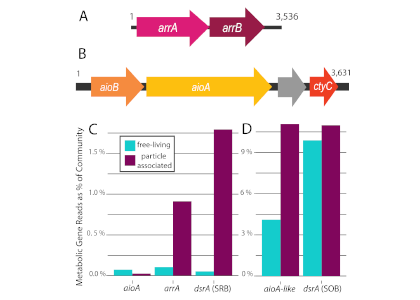
Oxygen Deficient Zones (ODZs) are naturally occurring functionally anoxic regions of the open ocean which can act as proxies for early Earth’s anoxic ocean. Without free oxygen, microorganisms in these…
Read More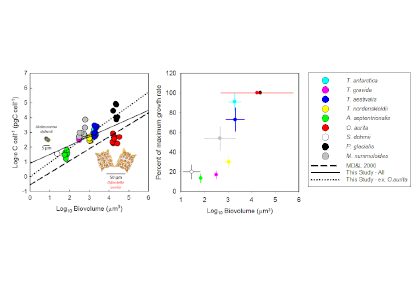
Large diatoms are common in polar phytoplankton blooms, contributing significantly to food webs and carbon export, but relatively little is known about their elemental biogeochemistry. A recent study in Frontiers…
Read More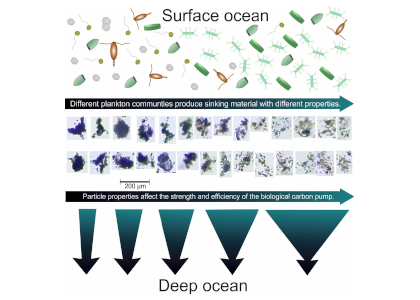
Plankton in the surface ocean convert CO2 into organic biomass thereby fueling marine food webs. Part of this organic biomass sinks down into the deep ocean, where the surface-derived organic…
Read More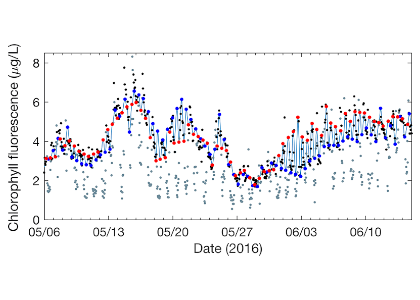
Although chlorophyll fluorescence is widely-used as a proxy for chlorophyll concentration, sunlight exposure makes fluorescence measurements inaccurate through a process called non-photochemical quenching, limiting its proxy accuracy during daylight hours.…
Read More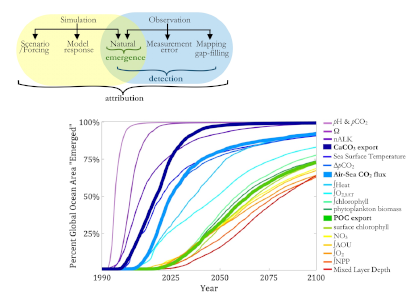
When will we see significant changes in the ocean due to climate change? A new study in Nature Climate Change confirms that outcomes tied directly to the escalation of atmospheric…
Read More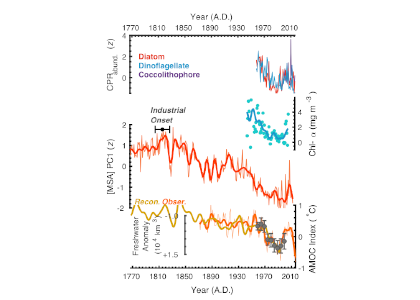
Phytoplankton respond directly to climate forcing, and due to their central role in global oxygen production and atmospheric carbon sequestration, they are critical components of the Earth’s climate system. There…
Read More