OCB Science Highlights
If you would like to have your recent publications featured on the OCB website and eNewsletter please contact ocb_news@whoi.edu. View our guidelines for writing a OCB Science Highlight.
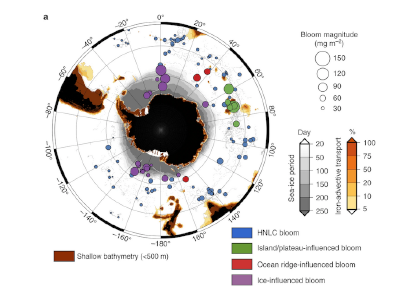
Joint feature with GEOTRACES In a recent study, Ardyna et al combined observations of profiling floats with historical trace element data and satellite altimetry and ocean color data from the…
Read More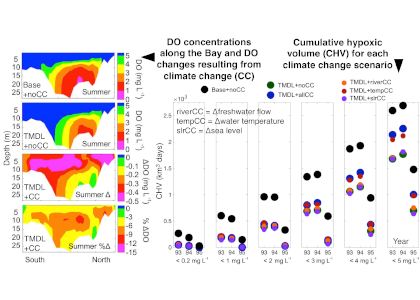
The Chesapeake Bay is a 200-mile-long estuary with both economic and ecological importance to the mid-Atlantic region. Runoff, pollution, and algae blooms resulting in hypoxia have been major issues over…
Read More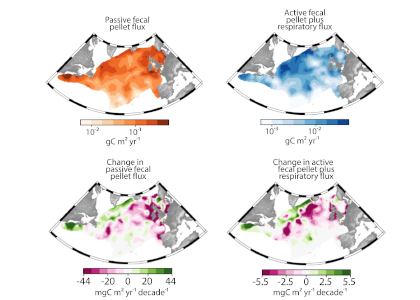
Zooplankton-mediated carbon export is an important, but variable and relatively unconstrained part of the biological carbon pump—the processes that fix atmospheric carbon dioxide in organic material and transport it from…
Read More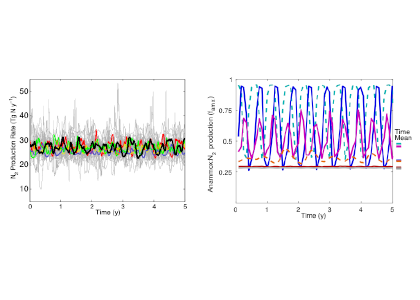
The removal of bioavailable nitrogen (N) by anaerobic microbes in the ocean’s oxygen deficient zones (ODZs) is thought to vary over time primarily as a result of climate impacts on…
Read More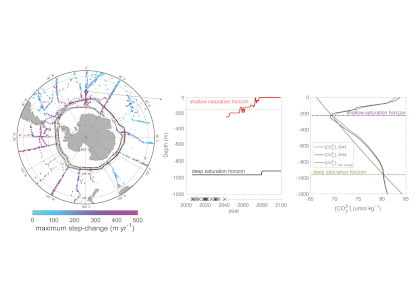
Earth System Models (ESMs) project that by the end of this century, the aragonite saturation horizon (the boundary between shallower, saturated waters and deeper, undersaturated waters that are corrosive to…
Read More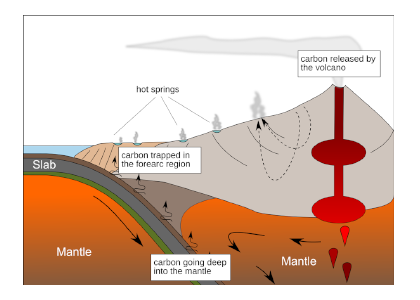
In 2017, an interdisciplinary group of early career scientists, the Biology Meets Subduction team, visited Costa Rica’s subduction zone, where the ocean floor sinks beneath the continent, to find out…
Read More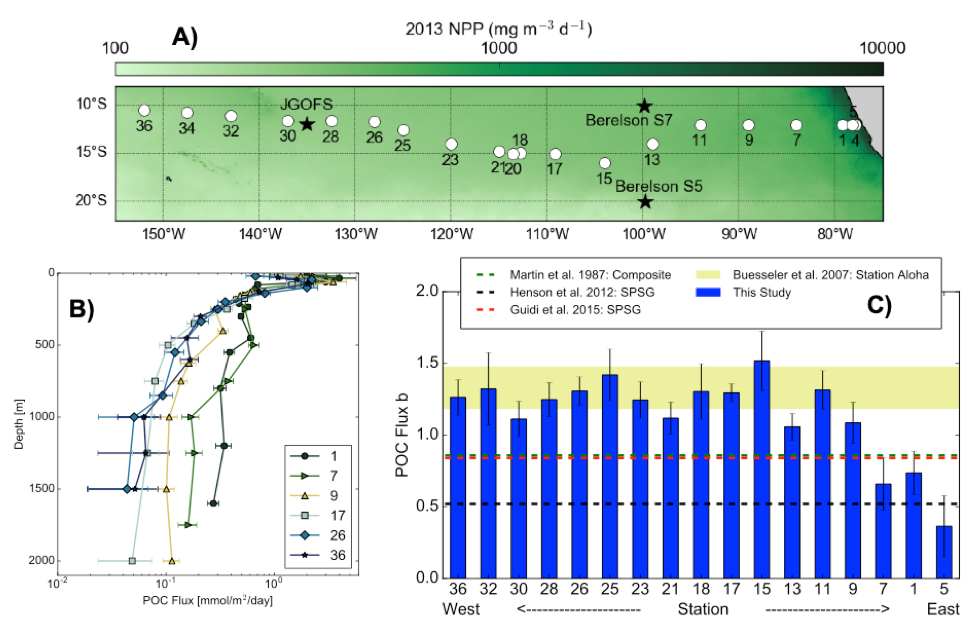
Joint science highlight with GEOTRACES Carbon storage in the ocean is sensitive to the depths at which particulate organic carbon (POC) is respired back to CO2 within the twilight zone…
Read More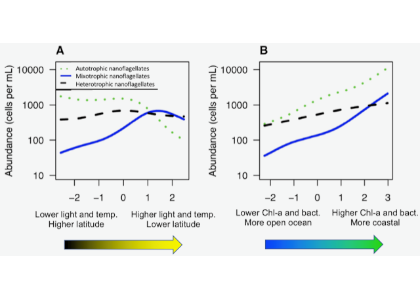
In the ocean, unicellular eukaryotes are often mixotrophic, which means they photosynthesize and also consume prey. In recent decades, it has become clear that mixotrophs are ubiquitous in sunlit ocean…
Read More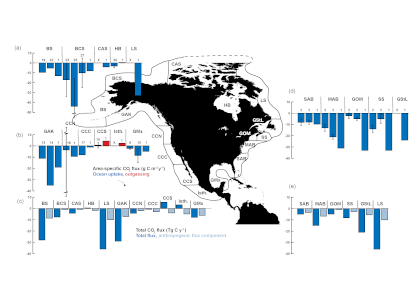
Carbon fluxes in the coastal ocean and across its boundaries with the atmosphere, land, and the open ocean are an important but poorly constrained component of the global carbon budget.…
Read More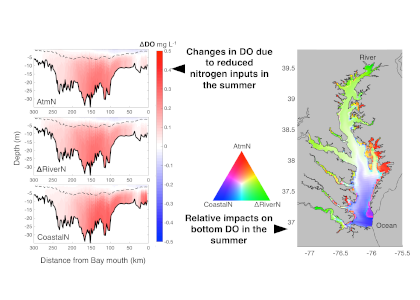
How do atmospheric and oceanic nutrients impact oxygen concentrations in the Chesapeake Bay? Generally, researchers focus on how terrestrial nutrients impact hypoxia. The relative importance of river, atmosphere, and ocean…
Read More