OCB Science Highlights
If you would like to have your recent publications featured on the OCB website and eNewsletter please contact ocb_news@whoi.edu. View our guidelines for writing a OCB Science Highlight.
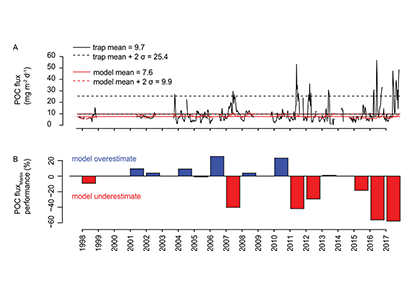
Temporal fluctuations in the oceanic carbon budget play an important role in the cycling of organic matter from production in surface waters to consumption and sequestration in the deep ocean.…
Read More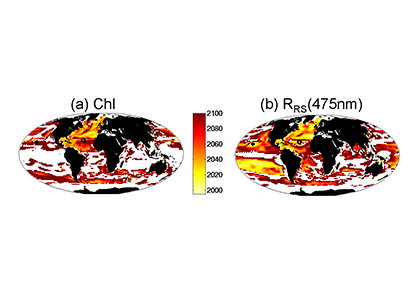
Marine phytoplankton form the foundation of the marine food web and play a crucial role in the earth’s carbon cycle. Typically, satellite-derived Chlorophyll a (Chl a) is used to evaluate…
Read More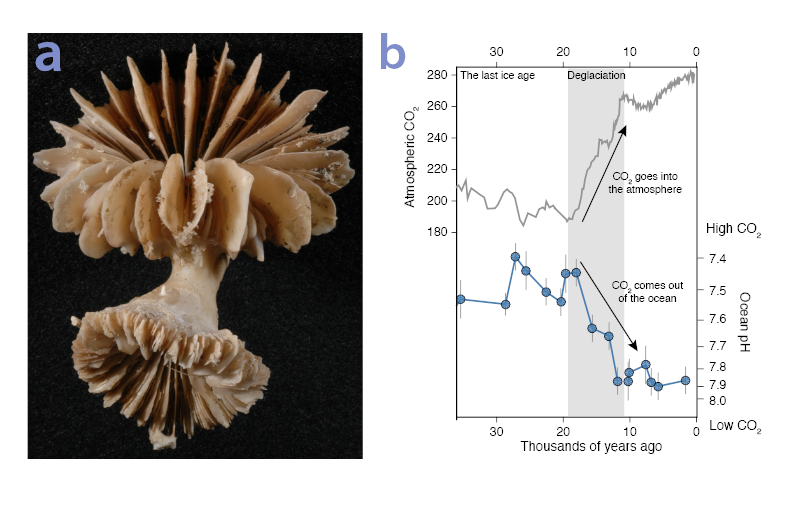
Many scientists have long hypothesized that the ocean around Antarctica was responsible for changing CO2 levels during ice ages, but lacked definitive evidence. A new study in Nature provides the…
Read More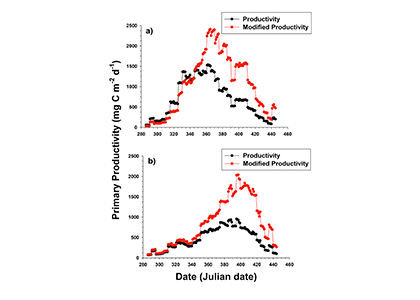
Studies of cruise observations in the Ross Sea are typically biased to a single or a few year(s), and long-term trends have predominantly come from satellites. Consequently, the in situ…
Read More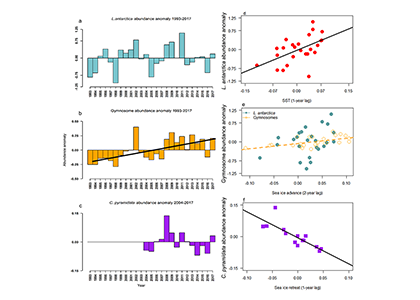
Shelled pteropods (pelagic snails) are abundant planktonic predators and prey, linking grazers and higher trophic levels and contributing to the carbon cycle via consumption and excretion. Pteropods have been heralded…
Read More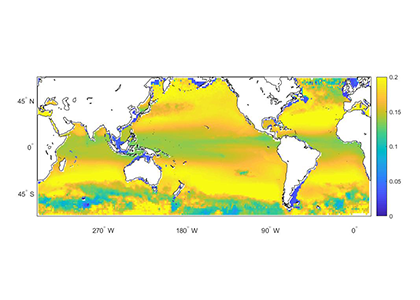
Huge numbers of tiny marine animals, known as zooplankton, migrate between the surface ocean and the twilight zone (200 – 1,000 m below the surface) everyday; it is the largest…
Read More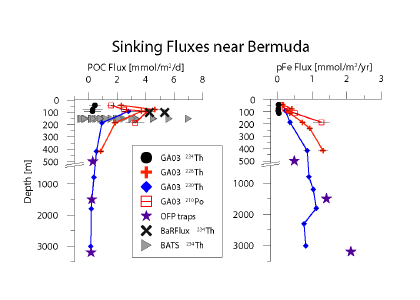
The sinking of elements in the ocean influences many important processes such as deep ocean carbon storage and the availability of trace metals for phytoplankton. Previously, quantification of this sinking…
Read More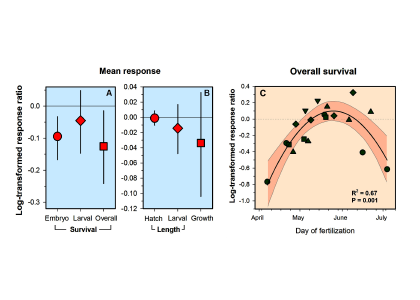
To detect potential effects of acidification on marine organisms, experimenters most commonly use within-experiment replication, but repeating the experiments themselves is rarely done. While the first approach suffices to detect major CO2 effects, other…
Read More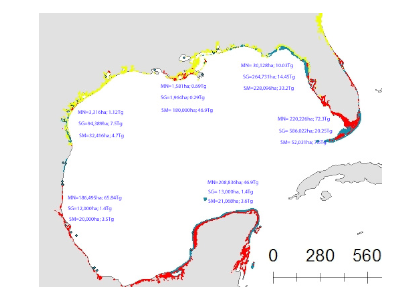
The Gulf of Mexico (GoM) is an important global hotspot that comprises over 2.1615 million hectares of blue carbon habitats, including mangroves, seagrasses, and salt marshes, which collectively store 480.5…
Read More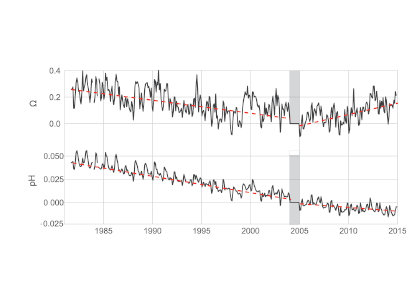
Why don’t we see ocean acidification in over a decade of high-frequency observations in the Gulf of Maine? The answer lies in a recent decade of changes that raised sea…
Read More