OCB Science Highlights
If you would like to have your recent publications featured on the OCB website and eNewsletter please contact ocb_news@whoi.edu. View our guidelines for writing a OCB Science Highlight.
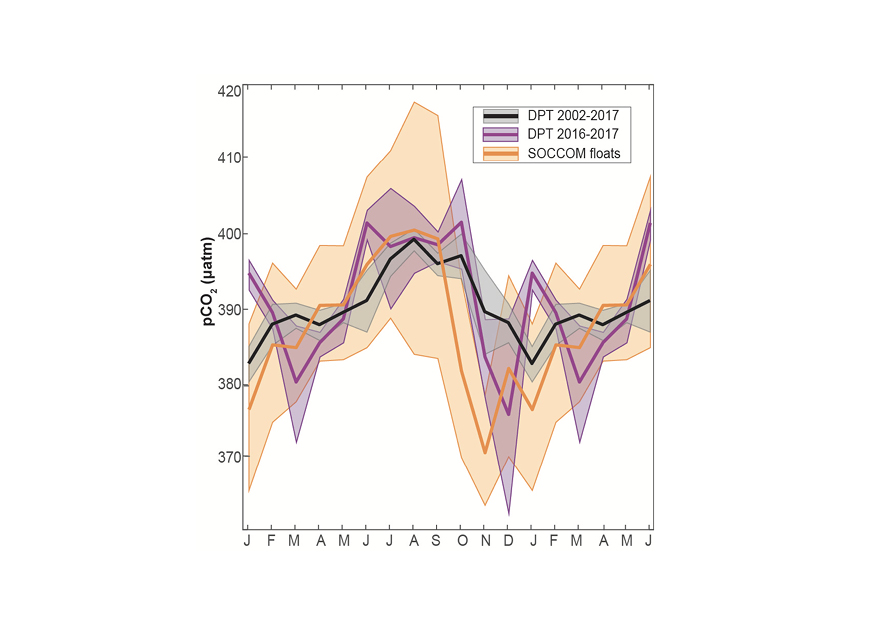
The Southern Ocean dominates the mean global ocean sink for anthropogenic carbon, but its sparse sampling relative to other basins limits our capacity to quantify carbon uptake and accompanying seasonal…
Read More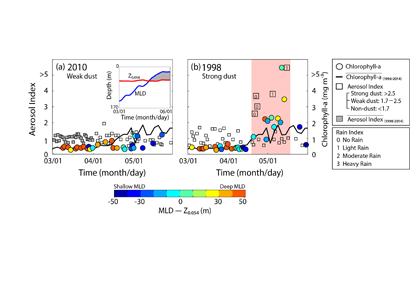
According to Martin’s iron hypothesis, input of aeolian dust into the ocean environment temporarily relieves iron limitation that suppresses primary productivity. Asian dust events that originate in the Taklimakan and…
Read More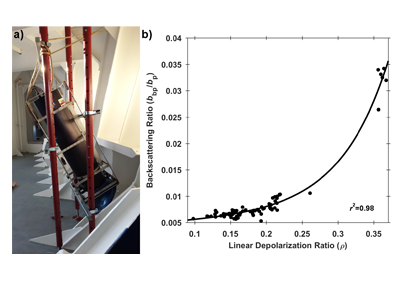
Despite major advances in ocean observing capabilities, characterizing the vertical distribution of materials in the ocean with high spatial resolution remains challenging. Light Detection and Ranging (LiDAR), a technique that…
Read More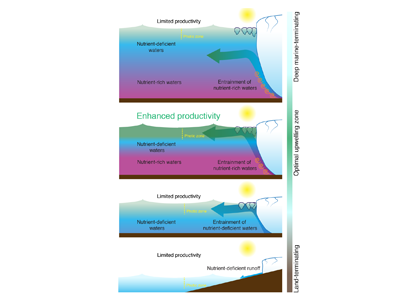
How will increasing meltwater from Greenland affect the biogeochemistry of the ocean? Release of meltwater into the ocean has physical and biogeochemical effects on the local water column. With respect…
Read More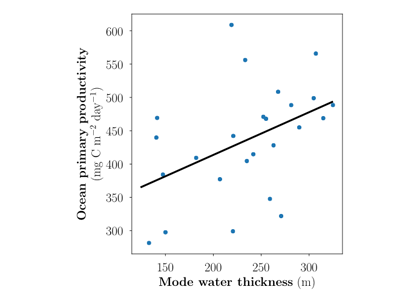
The presence of large-scale Ekman downwelling is the textbook explanation for low nutrient concentrations, and hence low productivity, in subtropical gyres. However, recent research has suggested that mesoscale eddies oppose…
Read More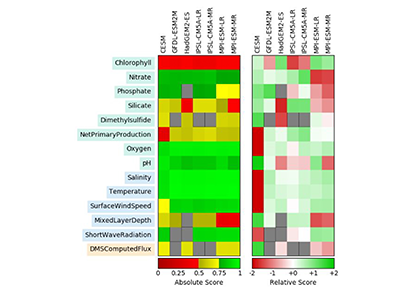
Improved method to identify and reduce uncertainties in marine carbon cycle predictions How well do contemporary Earth System Models (ESMs) represent the dynamics of the modern day ocean? Often we…
Read More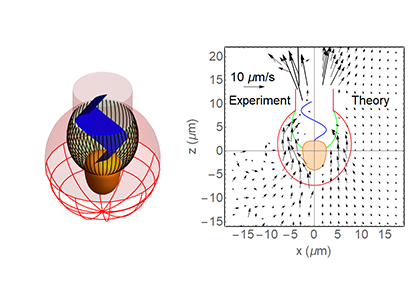
Microbial filter-feeders actively filter water for bacteria-sized prey, but hydrodynamic theory predicts that their filtration rate should be one order of magnitude lower than what they realize. What is missing…
Read More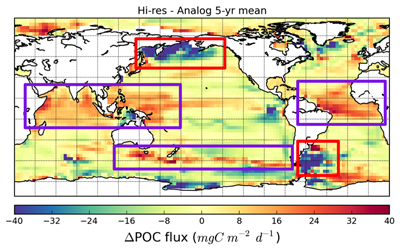
Most Earth System models (ESMs) that are used to study global climate and the carbon cycle do not resolve the most energetic scales in the ocean, the mesoscale (10-100 km),…
Read More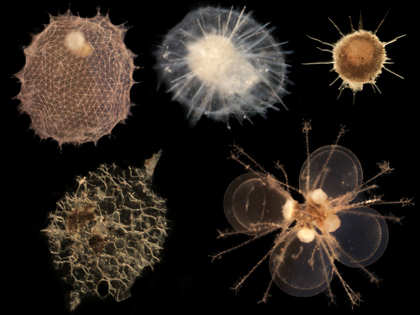
Phaeodaria are single-celled eukaryotes (a.k.a. protists) belonging to the supergroup Rhizaria. Like diatoms, phaeodarians build up skeletons made of opaline silica, but unlike their emblematic relatives, phaeodarians have been largely…
Read More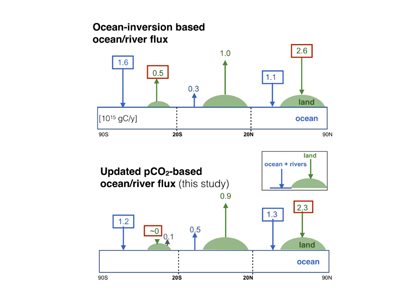
Studies over the past 25 years have supported the existence of a large net land biosphere CO2 sink of 0.5–2 PgC yr-1. Significant uncertainties remain, however, regarding the long-term partitioning between northern,…
Read More