OCB Science Highlights
If you would like to have your recent publications featured on the OCB website and eNewsletter please contact ocb_news@whoi.edu. View our guidelines for writing a OCB Science Highlight.
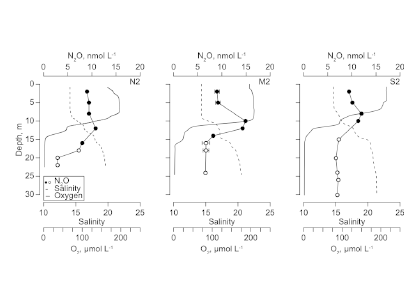
Nitrous oxide (N2O) is a potent greenhouse gas with rising atmospheric concentrations. Atmospheric emissions of N2O are predicted to increase with continued anthropogenic perturbation of the nitrogen cycle, yet the…
Read More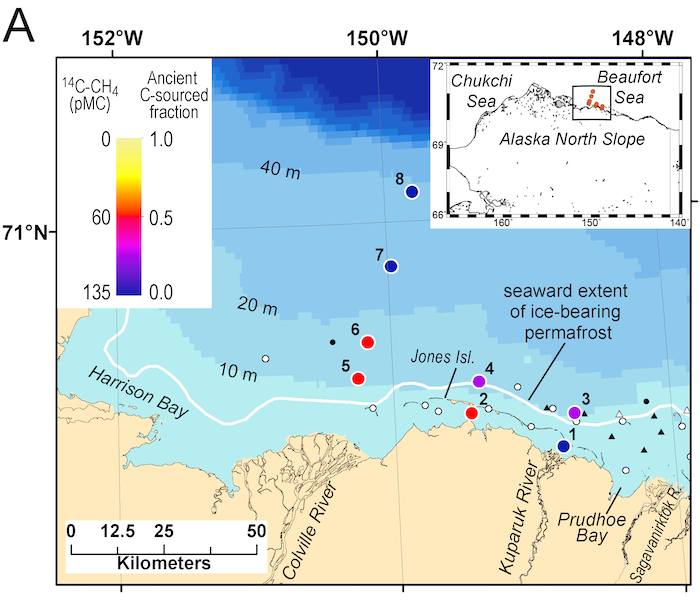
Gas hydrates are an ice-like storehouse of the greenhouse gas methane found in continental margins of the world ocean. Warming waters can cause hydrates to decompose and release ancient methane…
Read More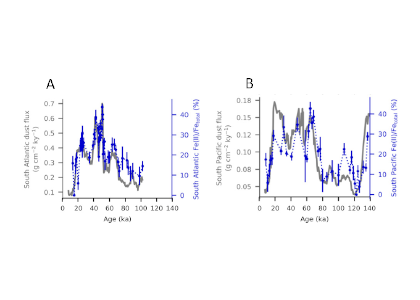
The Southern Ocean is iron (Fe)-limited, and increased fluxes of dust-borne Fe to the Southern Ocean during the Last Glacial Maximum (LGM) have been associated with phytoplankton growth and CO2…
Read More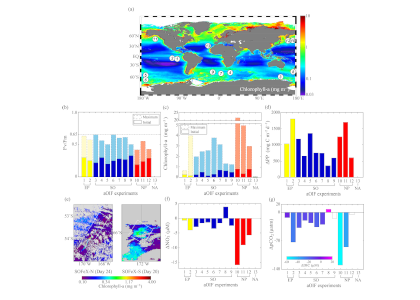
Since the beginning of the industrial revolution, human activities have greatly increased atmospheric CO2 concentrations, leading to global warming and indicating an urgent need to reduce global greenhouse gas emissions.…
Read More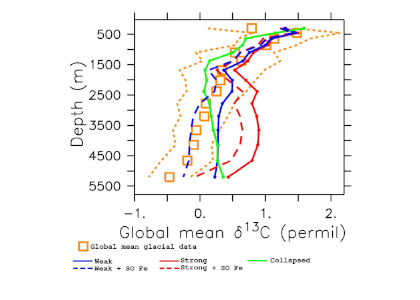
One of the biggest unsolved mysteries in climate science concerns the dynamics and feedbacks of the ice age carbon dioxide (CO2) cycle. At the height of the Pleistocene ice ages,…
Read More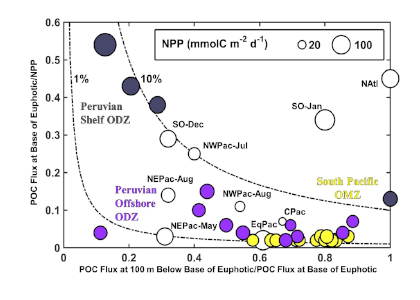
Oxygen minimum zones (OMZs) are thought to be regions of the global ocean where a greater percentage of the organic carbon associated with particles makes it to depth. Currently covering…
Read More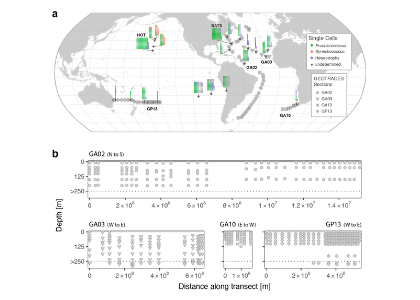
Microorganisms play a central role in the transfer of matter and energy in the marine food web. Microbes depend on micronutrients (e.g. iron, cobalt, zinc, and a host of other…
Read More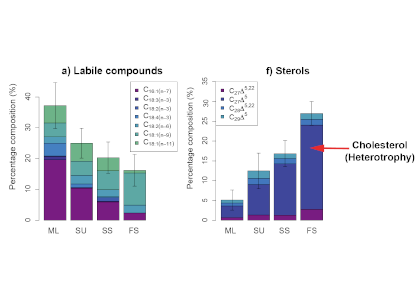
The ocean is one of the largest sinks of atmospheric carbon dioxide (CO2) on our planet, driven in part by CO2 uptake by phytoplankton in the upper ocean during photosynthesis.…
Read More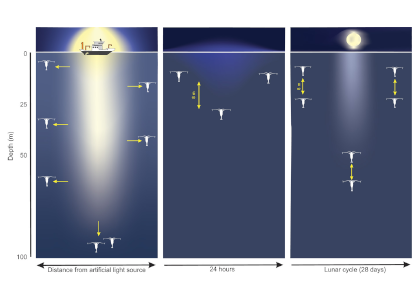
When designing sampling we make generally accepted assumptions that what we collect is representative of what is “normal” or naturally occurring at the place, time, and depth of collection. However,…
Read More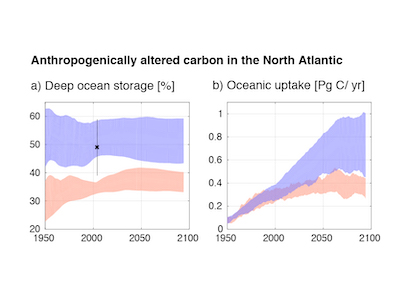
As one of the major carbon sinks in the global ocean, the North Atlantic is a key player in mediating and ameliorating the ongoing global warming. Current projections of the…
Read More