OCB Science Highlights
If you would like to have your recent publications featured on the OCB website and eNewsletter please contact ocb_news@whoi.edu. View our guidelines for writing a OCB Science Highlight.
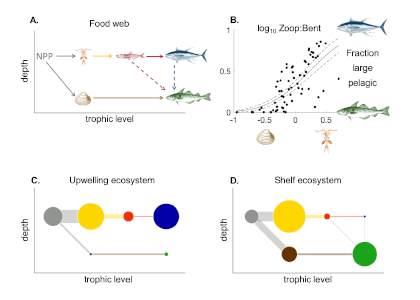
Fishes are incredibly diverse, fill various roles in their ecosystems, and are an important resource—economically, socially, and nutritionally. The relationship between primary productivity and fish catches is not straightforward; fisheries…
Read More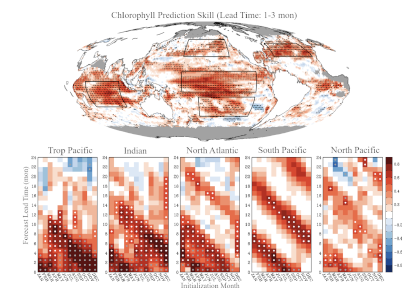
Earth System Models (ESMs) are powerful and effective tools for exploring and predicting marine ecosystem response to environmental change, including biogeochemical processes that underlie threats to ocean health such as…
Read More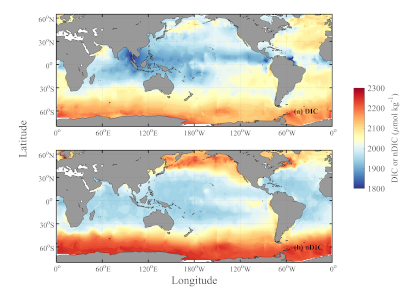
What drives the latitudinal gradient in open-ocean surface DIC concentration? Understanding the processes that drive the distribution of carbon in the surface ocean is essential to the study of the…
Read More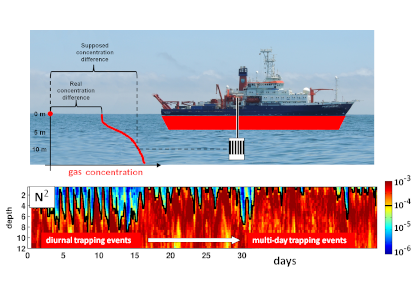
Routine measurements of air-sea gas exchange assume a homogeneous gas concentration across the upper few meters of the ocean. But is this assumption valid? A recent study in Biogeosciences revealed…
Read More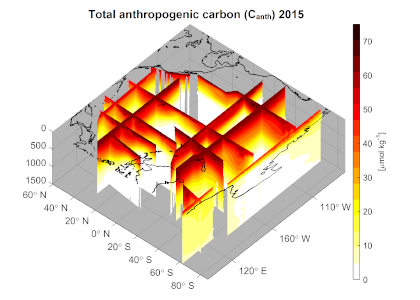
About one tenth of human CO2 emissions are currently being taken up by the Pacific Ocean, which makes the seawater more corrosive to the calcium carbonate shells and skeletons of…
Read More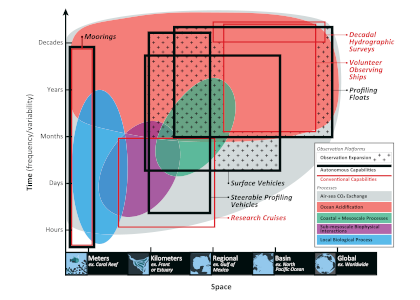
Amidst a backdrop of natural variability, the ocean carbonate system is undergoing a massive anthropogenic change. To capture this anthropogenic signal and differentiate it from natural variability, carbonate observations are…
Read More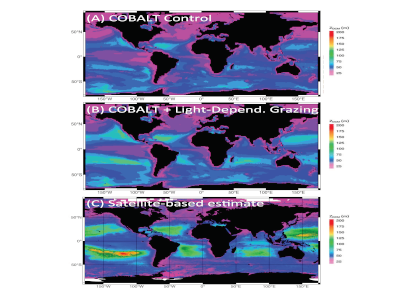
Photosynthetic, single-celled phytoplankton form the base of many marine and lacustrine (lake) food webs. These microscopic algae typically occur in the sunlit surface layer, but in many ecosystems, there are…
Read More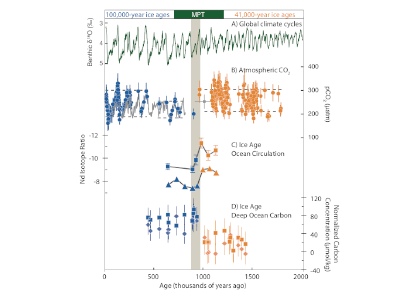
Approximately one million years ago, Earth’s periodic ice ages increased in strength and duration, shifting from a 41,000-year pacing to a 100,000-year pacing, both linked to Earth’s orbital variations. The…
Read More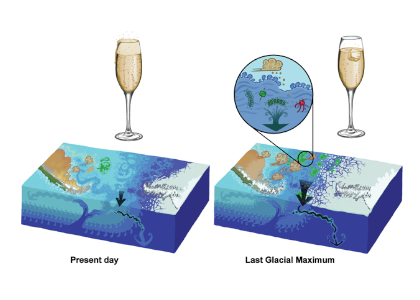
Joint feature with GEOTRACES Using an observationally constrained earth system model, S. Khatiwala and co-workers compare different processes that could lead to the 90-ppm glacial atmospheric CO2 drawdown, with an important…
Read More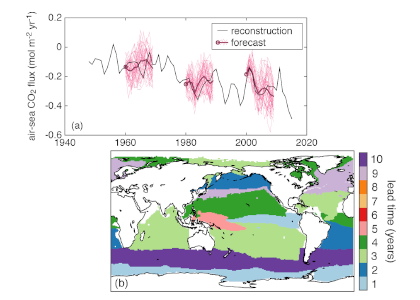
Year-to-year changes in the flux of CO2 between the atmosphere and the ocean impact the global carbon cycle and climate system, and challenge our ability to verify fossil fuel CO2…
Read More