OCB Science Highlights
If you would like to have your recent publications featured on the OCB website and eNewsletter please contact ocb_news@whoi.edu. View our guidelines for writing a OCB Science Highlight.
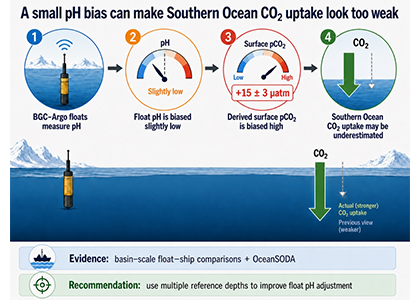
The Southern Ocean is one of the most important regions for absorbing anthropogenic CO₂, and it is one of the most challenging places to observe, until Biogeochemical (BGC) Argo floats…
Read More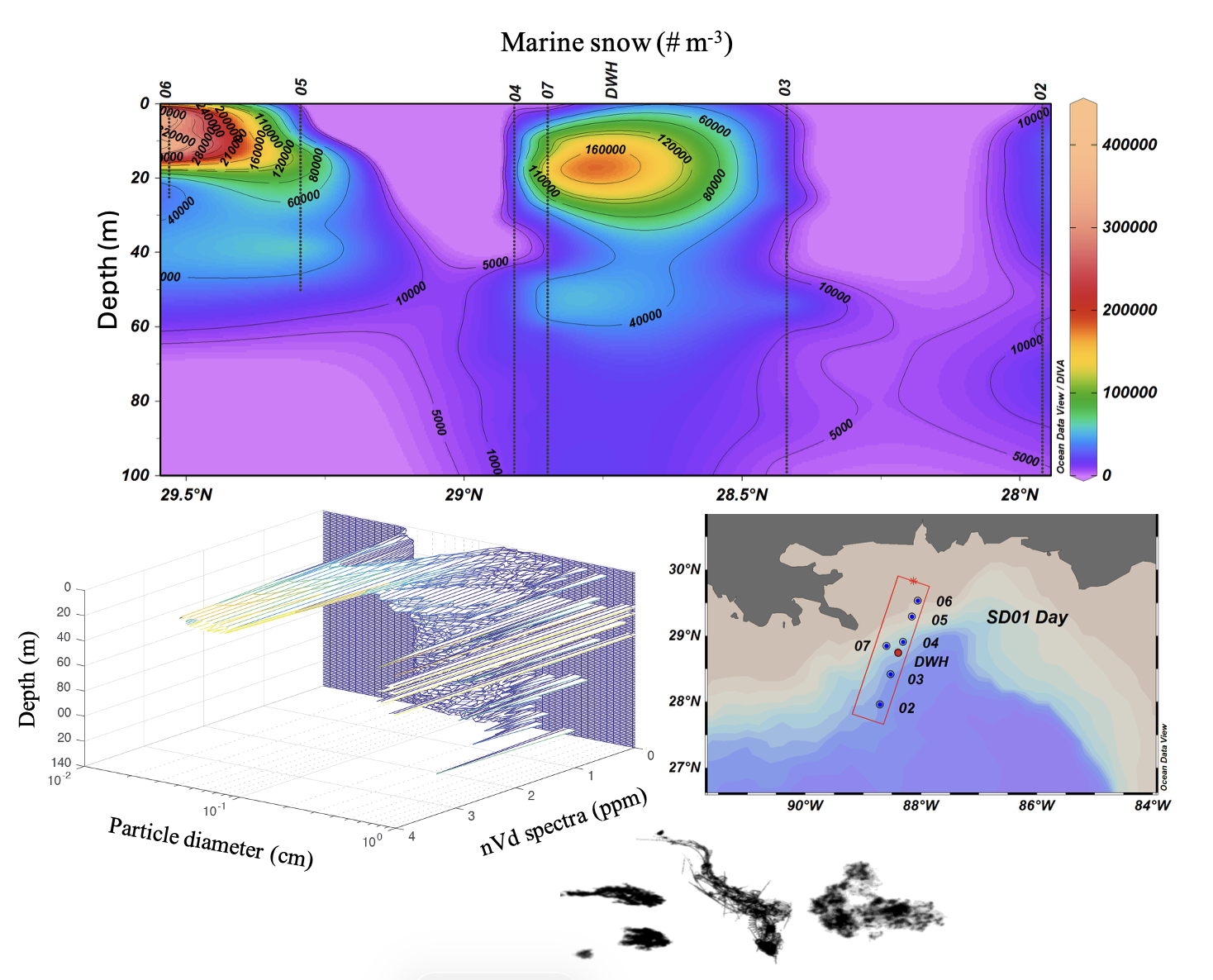
The Deepwater Horizon oil spill (April-July 2010) in the NE Gulf of Mexico provided researchers with an opportunity to explore what happens when marine snow and oil mix. Marine snow…
Read More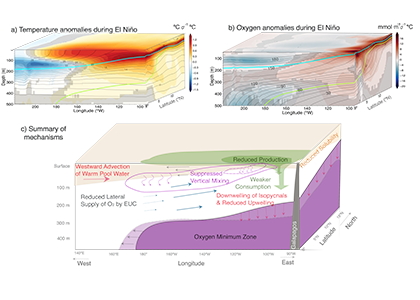
What drives the year-to-year variability of dissolved oxygen (O2) in the tropical Pacific? A recent study explored this question using a global high-resolution model with active ocean biogeochemistry along with…
Read More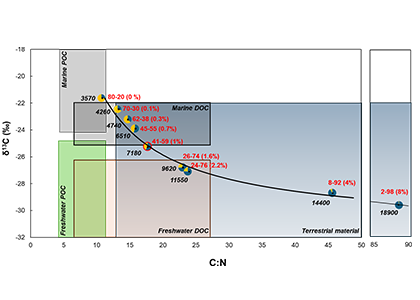
What if a tiny amount of plastic could make the ocean’s carbon appear thousands of years older than it really is? For decades, oceanographers have relied on routine measurements of…
Read More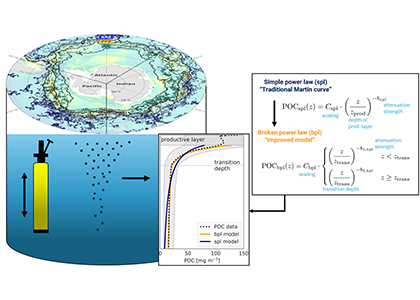
How much organic carbon is actually transported to depth in the Southern Ocean and what are the mechanisms driving seasonal and regional variability? With large-scale remote sensing observations constrained to…
Read More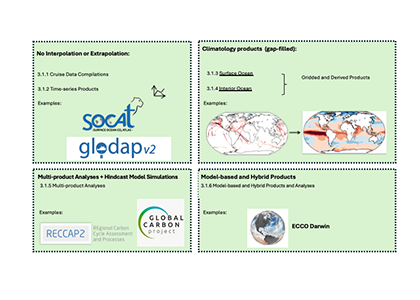
The paper provides a comprehensive synthesis of 68 existing ocean carbonate chemistry data products and data product sets, including cruise-based compilations, time-series datasets, gap-filled observational products, and model-based reconstructions. The…
Read More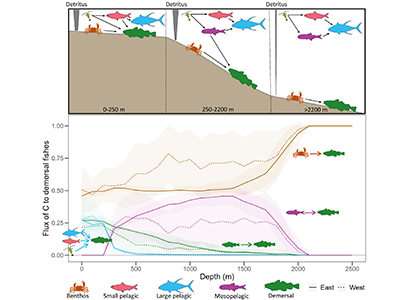
Ocean organisms transfer carbon via many natural processes from surface to seafloor. These include the passive sinking of carbon-rich particles and the active transport of carbon as animals swim downward.…
Read More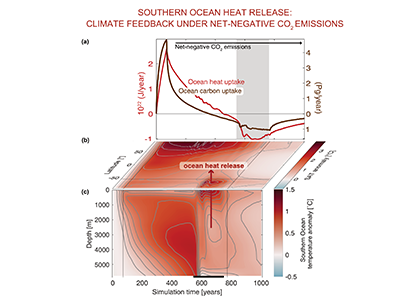
The ocean stores vast amounts of heat and carbon under anthropogenic CO₂ emissions, but its behavior under net-negative emission scenarios remains poorly understood. Here we use an Earth System Model…
Read More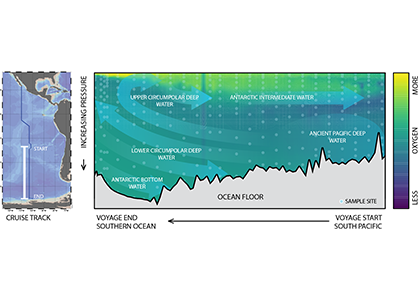
Global overturning circulation is a planetary conveyor belt: dense waters sink around Antarctica, spread through the deep ocean for centuries, and eventually rise elsewhere, redistributing heat, nutrients, and carbon. But…
Read More