OCB Science Highlights
If you would like to have your recent publications featured on the OCB website and eNewsletter please contact ocb_news@whoi.edu. View our guidelines for writing a OCB Science Highlight.
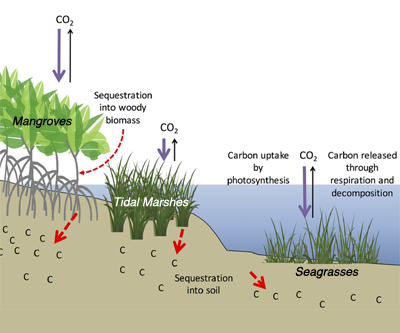
Under the increasing threat of climate change, conservation practitioners and policy makers are seeking innovative and data–driven recommendations for mitigating emissions and increasing natural carbon sinks through nature-based solutions. While…
Read More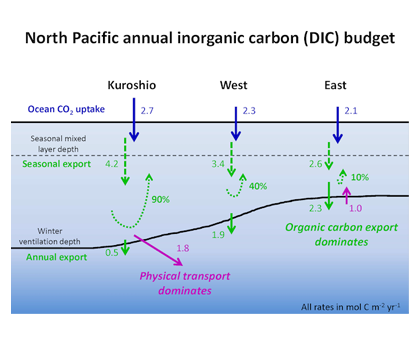
The North Pacific accounts for ~25% of the global ocean’s uptake of carbon dioxide (CO2) from the atmosphere. However, the relative importance of the biological pump vs. physical circulation in…
Read More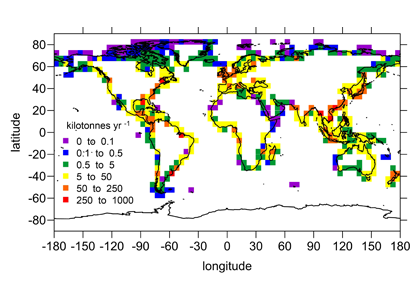
Rivers carry large amounts of nutrients (e.g., nitrogen and phosphorus) to the sea, but we do not know how much of that riverine nutrient supply escapes biological and chemical processing…
Read More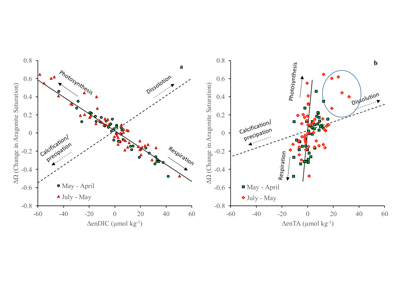
The Gulf of Maine (GoME) is a shelf region that is especially vulnerable to ocean acidification (OA). GoME’s shelf waters display the lowest mean pH, aragonite saturation state (Ω-Ar), and…
Read More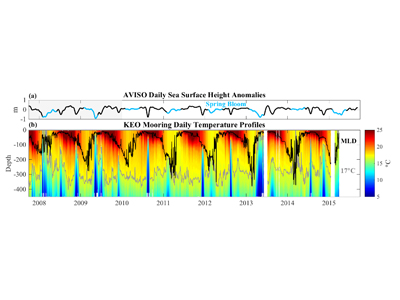
The Kuroshio Current and its Extension jet in the western North Pacific Ocean form a dynamic western boundary current (WBC) region characterized by large air-sea exchanges of heat and carbon…
Read More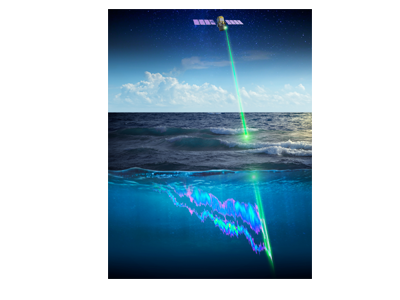
What controls annual cycles and interannual changes in polar phytoplankton biomass? Answers to this question are now emerging from a satellite light detection and ranging (lidar) sensor, which can observe…
Read More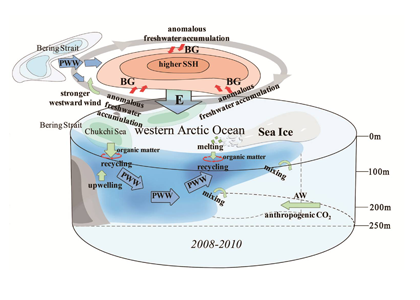
The Arctic Ocean is particularly sensitive to climate change and ocean acidification such that aragonite saturation state is expected to become undersaturated (Ωarag <1) there sooner than in other oceans.…
Read More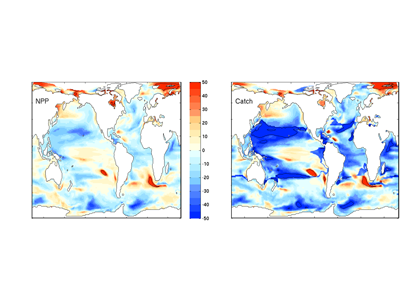
Phytoplankton provide the energy that fuels marine food webs, yet differences in fisheries catch across global ecosystems far exceed accompanying differences in phytoplankton production. Nearly 50 years ago, John Ryther…
Read More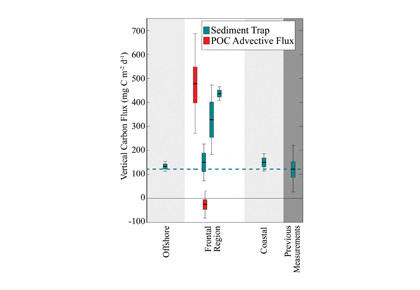
Mesoscale fronts are regions with potentially enhanced nutrient fluxes, phytoplankton production and biomass, and aggregation of mesozooplankton and higher trophic levels. However, the role of these features in transporting organic…
Read More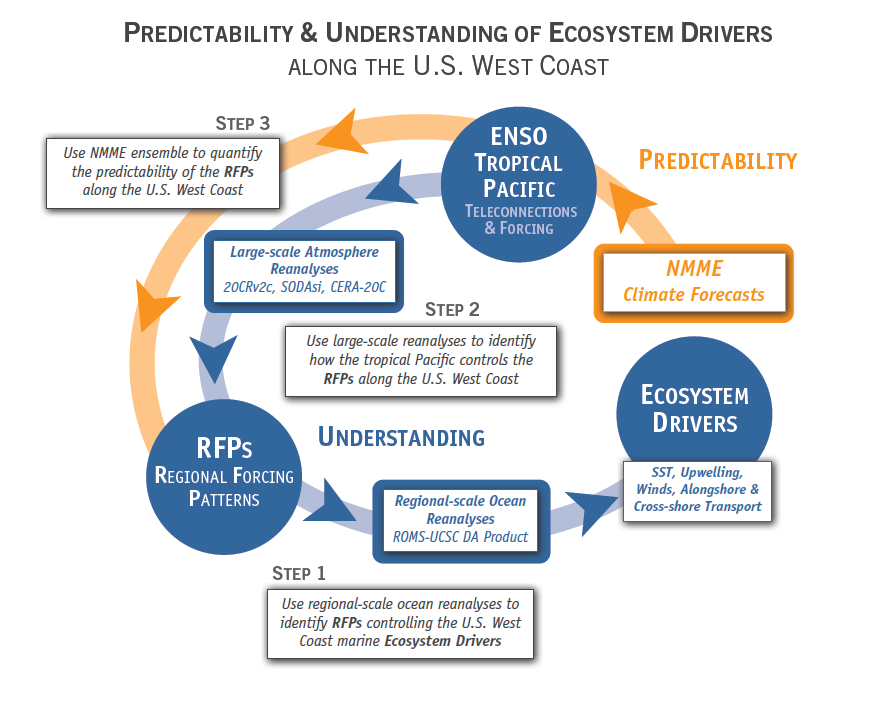
The US West Coast eastern boundary upwelling system supports one of the most productive marine ecosystems in the world and is a primary source of ecosystem services for the US…
Read More