OCB Science Highlights
If you would like to have your recent publications featured on the OCB website and eNewsletter please contact ocb_news@whoi.edu. View our guidelines for writing a OCB Science Highlight.
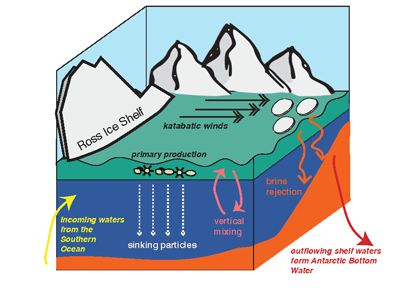
Antarctic shelf systems generate the densest waters in the world. These shelf waters are the building blocks of Antarctic Bottom Water, the ocean’s abyssal water mass. These bottom waters have…
Read More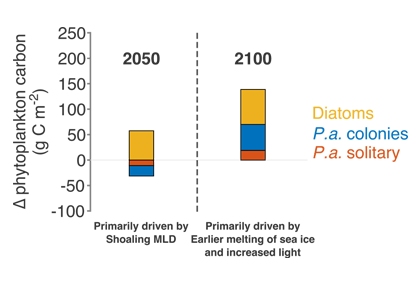
How will phytoplankton respond to climate changes over the next century in the Ross Sea, the most productive coastal waters of Antarctica? Model projections of physical conditions suggest substantial environmental…
Read More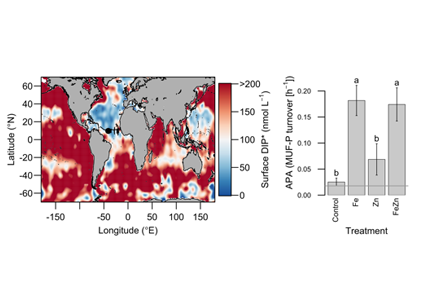
In the subtropical North Atlantic, dissolved inorganic phosphorus (DIP) concentrations are depleted and might co-limit N2 fixation and microbial productivity. There are relatively large pools of dissolved organic phosphorus (DOP),…
Read More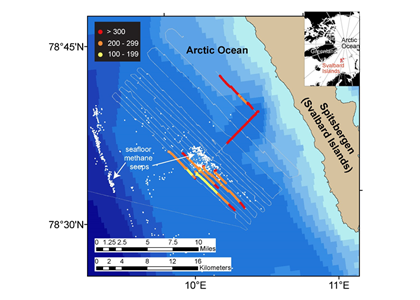
A recent study by Pohlman et al. published in PNAS showed that ocean waters near the surface of the Arctic Ocean absorbed 2,000 times more carbon dioxide (CO2) from the…
Read More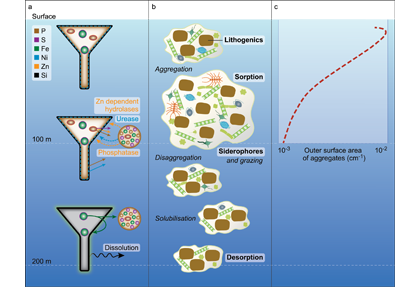
The extent to which the return of major and minor elements to the dissolved phase in the deep ocean (termed remineralization) is decoupled plays a major role in setting patterns…
Read More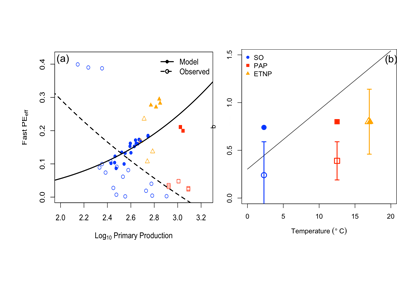
What controls the amount of organic carbon entering the deep ocean? In the sunlit layer of the ocean, phytoplankton transform inorganic carbon to organic carbon via a process called photosynthesis.…
Read More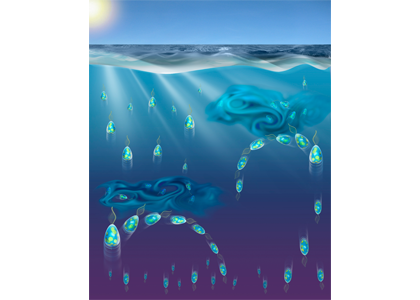
Turbulence is known to be a primary determinant of plankton fitness and succession. However, open questions remain about whether phytoplankton can actively respond to turbulence and, if so, how rapidly…
Read More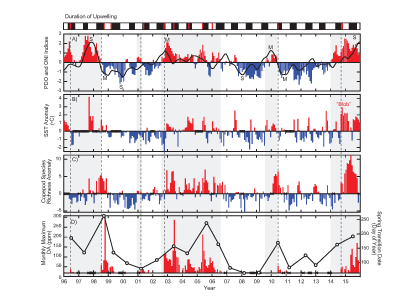
The diatom Pseudo-nitzchia produces a neurotoxin called domoic acid, which in high concentrations affects wildlife ranging from mussels and crabs to seabirds and sea lions, as well as humans. In…
Read More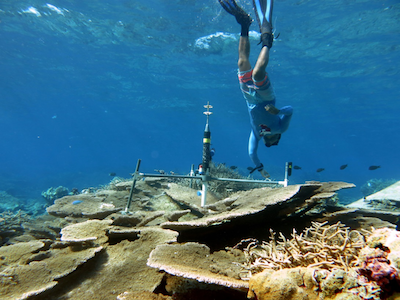
Coral reefs are diverse, productive ecosystems that are highly vulnerable to changing ocean conditions such as acidification and warming. Coral reef metabolism—in particular the fundamental ecosystem properties of net community…
Read More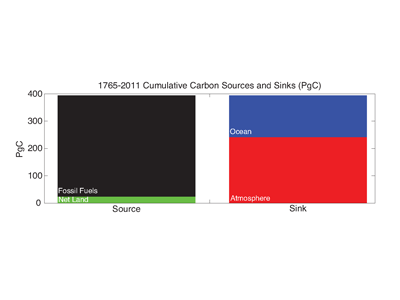
Since preindustrial times, the ocean has removed from the atmosphere 41% of the carbon emitted by human industrial activities (Figure 1). The globally integrated rate of ocean carbon uptake is…
Read More