Ocean Carbon & Biogeochemistry
Studying marine ecosystems and biogeochemical cycles in the face of environmental change
  • Home
  • About OCB
    • About Us
    • Scientific Breadth
      • Biological Pump
      • Changing Marine Ecosystems
      • Changing Ocean Chemistry
      • Estuarine and Coastal Carbon Fluxes
      • Ocean Carbon Uptake and Storage
      • Ocean Observatories
    • Code of Conduct
    • Get Involved
    • Project Office
    • Scientific Steering Committee
    • OCB committees
      • OCSIF – Ocean Carbonate System Intercomparison
      • Ocean-Atmosphere Interaction
      • Ocean Time-series
      • US Biogeochemical-Argo
  • Activities
    • Summer Workshop
    • OCB Webinars
    • Guidelines for OCB Workshops & Activities
    • Topical Workshops
      • CMIP6 Models Workshop
      • Coastal BGS Obs with Fisheries
      • C-saw extreme events workshop
      • Expansion of BGC-Argo and Profiling Floats
      • Fish, fisheries and carbon
      • Future BioGeoSCAPES program
      • GO-BCG Scoping Workshop
      • Lateral Carbon Flux in Tidal Wetlands
      • Leaky Deltas Workshop – Spring 2025
      • Marine CDR Workshop
      • Ocean Nucleic Acids ‘Omics
      • Pathways Connecting Climate Changes to the Deep Ocean
    • Small Group Activities
      • Aquatic Continuum OCB-NACP Focus Group
      • Arctic-COLORS Data Synthesis
      • BECS Benthic Ecosystem and Carbon Synthesis WG
      • Carbon Isotopes in the Ocean Workshop
      • CMIP6 WG
      • Filling the gaps air–sea carbon fluxes WG
      • Fish Carbon WG
      • Metabarcoding intercal WG
      • Meta-eukomics WG
      • mCDR
      • Metaproteomic Intercomparison
      • Mixotrophs & Mixotrophy WG
      • N-Fixation WG
      • Ocean Carbonate System Intercomparison Forum
      • Ocean Carbon Uptake WG
      • OOI BGC sensor WG
      • Operational Phytoplankton Observations WG
      • Phytoplankton Taxonomy WG
    • Other Workshops
    • Science Planning
      • Coastal CARbon Synthesis (CCARS)
      • North Atlantic-Arctic
    • Ocean Acidification PI Meetings
    • Training Activities
      • PACE Hackweek 2025
      • PACE Hackweek 2024
      • PACE Training Activity 2022
  • Science Support
    • OCB Activity Proposal Solicitation
    • Guidelines for OCB Workshops & Activities
    • Data management and archival
    • Early Career
    • Funding Sources
    • Jobs & Postdocs
    • Meeting List
    • OCB Topical Websites
      • Ocean Fertilization
      • Trace gases
      • US IIOE-2
    • Outreach & Education
    • Promoting your science
    • Student Opportunities
    • Travel Support
  • Publications
    • OCB Workshop Reports
    • Science Planning and Policy
    • Newsletter Archive
  • Science Highlights
  • News

Archive for ocean carbon uptake and storage – Page 4

Partitioning carbon export into particulate and dissolved pools from biogeochemical profiling float observations

Posted by mmaheigan 
· Thursday, December 17th, 2020 

Carbon export from the surface into the deep ocean via the biological pump is a significant sink for atmospheric carbon dioxide. The relative contributions of sinking particles—particulate organic carbon (POC) and dissolved organic carbon (DOC)—to the total export affect the efficiency of carbon export.

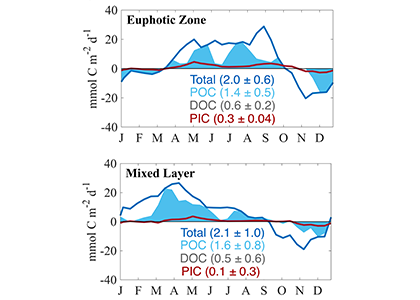
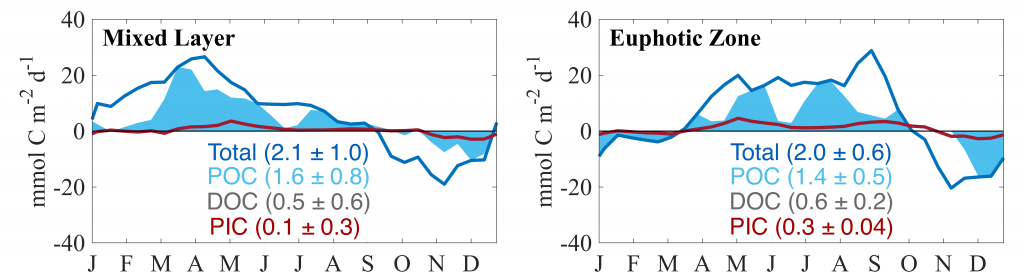
In a recent study published in Global Biogeochemical Cycles, the authors used measurements from biogeochemical profiling floats in the Northeast Pacific from 2009 to 2017 to estimate net community production (NCP), an analog for carbon export. In order to close three tracer budgets (nitrate, dissolved inorganic carbon, and total alkalinity), the authors combined these float measurements with data from the Ocean Station Papa mooring and recently developed algorithms for carbonate system parameters. By constraining end-member nutrient ratios of the POC and DOC produced, this multi-tracer approach was used to estimate regional NCP across multiple depth horizons throughout the annual cycle, partition NCP into the POC and DOC contributions, and calculate particulate inorganic carbon (PIC) production, a known ballast material for sinking particles (Figure 1). The authors also estimated POC attenuation with depth, POC export across deeper horizons, and in situ export efficiency via a particle backscatter-based approach.

With the advent of “fully-loaded” biogeochemical profiling floats equipped with nitrate, oxygen, pH and bio-optical sensors, this approach may be used to assess the magnitude and efficiency of carbon export in other ocean regions from a single platform, which will greatly reduce the risks and costs associated with traditional ship-based measurements, while broadening the spatiotemporal scales of observation.

Figure caption: Climatological mean NCP (blue line) over the entire study period (2009-2017); the POC portion of NCP (filled blue area), the DOC portion (white space) and PIC production rate (red line), in the mixed layer (left), and the euphotic zone (right). The numbers in parentheses are the integrated annual NCP rates for each curve and uncertainty reported was determined using a Monte Carlo approach.


Authors:
William Haskell (MBARI, now Mote Marine Laboratory)
Andrea Fassbender (MBARI, now PMEL)
Jacki Long (MBARI)
Joshua Plant (MBARI)

How zooplankton control carbon export in the Southern Ocean

Posted by mmaheigan 
· Thursday, December 3rd, 2020 

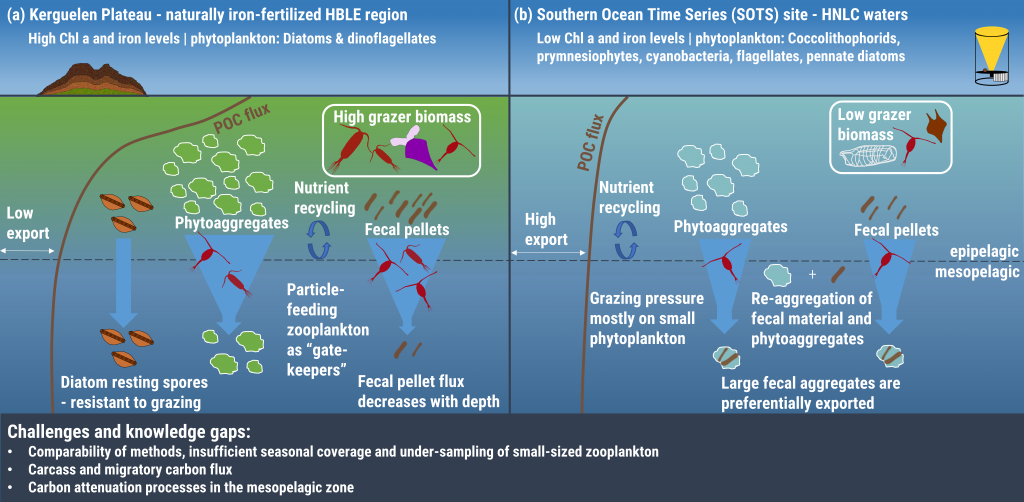
The Southern Ocean exhibits an inverse relationship between surface primary production and export flux out of the euphotic zone. The causes of this production-export decoupling are still under debate. A recently published mini review in Frontiers in Marine Science focused on zooplankton, an important component of Southern Ocean food webs and the biological pump. The authors compared carbon export regimes from the naturally iron-fertilised Kerguelen Plateau (high surface production, but generally low export) with the iron-limited and less productive high nutrient, low chlorophyll (HNLC) waters south of Australia, where carbon export is relatively high.

Figure 1: The role of zooplankton in establishing the characteristic export regimes at two sites in the Southern Ocean, (a) the highly productive northern Kerguelen Plateau, which exhibits low export, and (b) the iron-limited waters south of Australia with low production, but relatively high carbon export.

Size structure and zooplankton grazing pressure are found to shape carbon export at both sites. On the Kerguelen Plateau, a large size spectrum of zooplankton acts as “gate-keeper” to the mesopelagic by significantly reducing the sinking flux of phytoaggregates, which establishes the characteristic low export regime. In the HNLC waters, however, the zooplankton community is low in biomass and grazes predominantly on smaller particles, which leaves the larger particles for export and leads to relatively high export flux.

Gaps in knowledge related to insufficient seasonal data coverage, understudied carbon flux pathways, and associated mesopelagic processes limit our current understanding of carbon transfer through the water column and export. More integrated data collection efforts, including the use of autonomous profiling floats (e.g., BGC-Argo), stationary moorings, etc., will improve seasonal carbon flux data coverage, thus enabling more reliable estimation of carbon export and storage in the Southern Ocean and improved projection of future changes in carbon uptake and atmospheric carbon dioxide levels.


Authors:
Svenja Halfter (University of Tasmania)
Emma Cavan (Imperial College London)
Ruth Eriksen (CSIRO)
Kerrie Swadling (University of Tasmania)
Philip Boyd (University of Tasmania)

Austral summer vertical migration patterns in Antarctic zooplankton

Posted by mmaheigan 
· Thursday, October 15th, 2020 

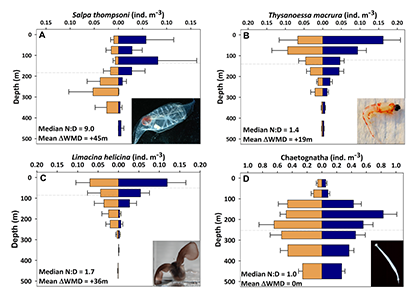
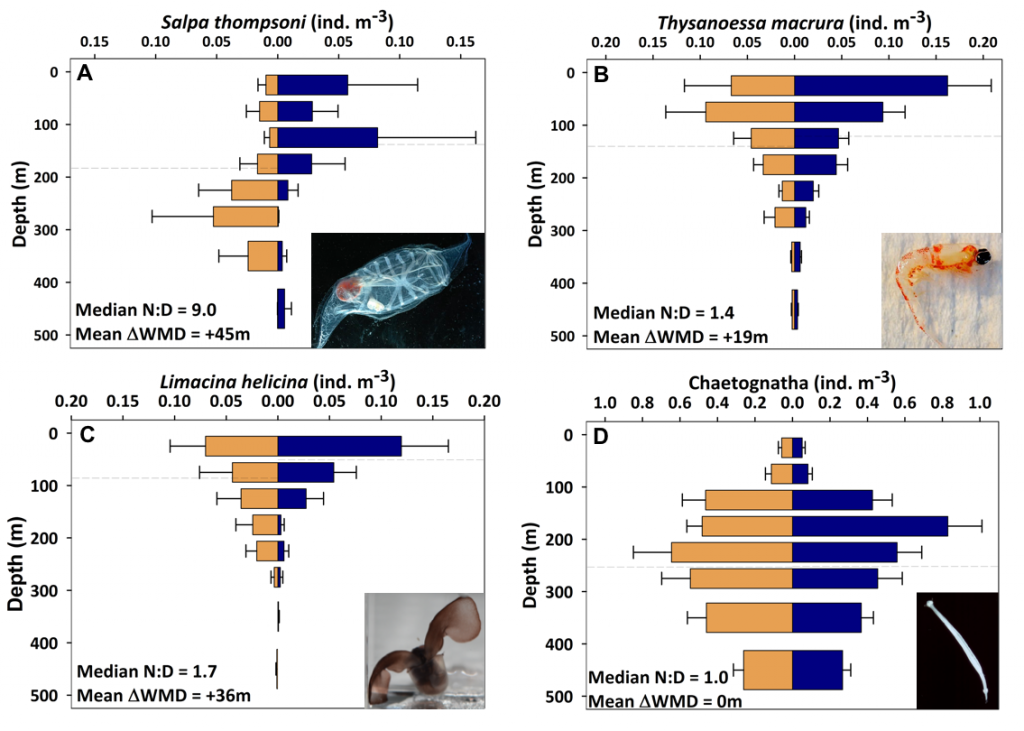
Sunrise and sunset are the main cues driving zooplankton diel vertical migration (DVM) throughout the world’s oceans. These marine animals balance the trade-off between feeding in surface waters at night and avoiding predation during the day at depth. Near-constant daylight during polar summer was assumed to dampen these daily migrations. In a recent paper published in Deep-Sea Research I, authors assessed austral summer DVM patterns for 15 taxa over a 9-year period. Despite up to 22 hours of sunlight, a diverse array of zooplankton – including copepods, krill, pteropods, and salps – continued DVM.

Figure caption: Mean day (orange) and night (blue) abundance of (A) the salp Salpa thompsoni, (B) the krill species Thysanoessa macrura, (C) the pteropod Limacina helicina, and (D) chaetognaths sampled at discrete depth intervals from 0-500m. Horizontal dashed lines indicate weighted mean depth (WMD). N:D is the night to day abundance ratio for 0-150 m. Error bars indicate one standard error. Sample size n = 12 to 22. Photos by Larry Madin, Miram Gleiber, and Kharis Schrage.

The Palmer Antarctica Long-Term Ecological Research (LTER) Program conducted this study using a MOCNESS (Multiple Opening/Closing Net and Environmental Sensing System) to collect depth-stratified samples west of the Antarctic Peninsula. The depth range of migrations during austral summer varied across taxa and with daylength and phytoplankton biomass and distribution. While most taxa continued some form of DVM, others (e.g., carnivores and detritivores) remained most abundant in the mesopelagic zone, regardless of photoperiod, which likely impacted the attenuation of vertical carbon flux. Given the observed differences in vertical distribution and migration behavior across taxa, ongoing changes in Antarctic zooplankton assemblages will likely impact carbon export pathways. More regional, taxon-specific studies such as this are needed to inform efforts to model zooplankton contributions to the biological carbon pump.


Authors:
John Conroy (VIMS, William & Mary)
Deborah Steinberg (VIMS, William & Mary)
Patricia Thibodeau (VIMS, William & Mary; currently University of Rhode Island)
Oscar Schofield (Rutgers University)

Will global change “stress out” ocean DOC cycling?

Posted by mmaheigan 
· Tuesday, September 29th, 2020 

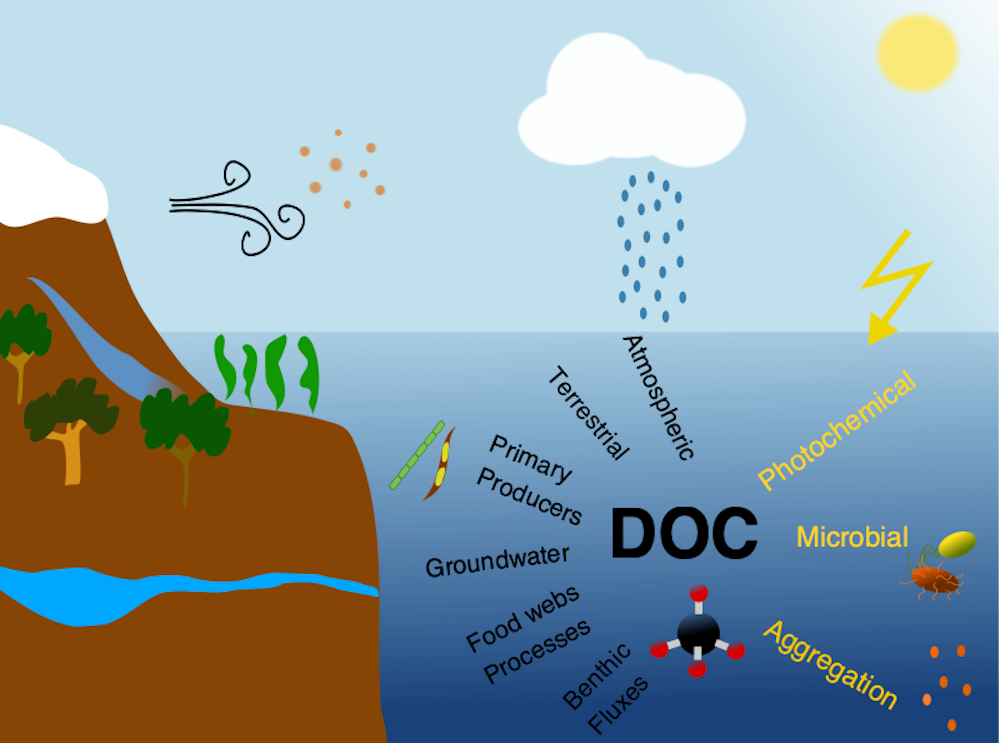
The dissolved organic carbon (DOC) pool is vital for the functioning of marine ecosystems. DOC fuels marine food webs and is a cornerstone of the earth’s carbon cycle. As one of the largest pools of organic matter on the planet, disruptions to marine DOC cycling driven by climate and environmental global changes can impact air-sea CO2 exchange, with the added potential for feedbacks on Earth’s climate system.

Figure 1. Simplified view of major dissolved organic carbon (DOC) sources (black text) and sinks (yellow text) in the ocean.

Since DOC cycling involves multiple processes acting concurrently over a range of time and space scales, it is especially challenging to characterize and quantify the influence of global change. In a recent review paper published in Frontiers in Marine Science, the authors synthesize impacts of global change-related stressors on DOC cycling such as ocean warming, stratification, acidification, deoxygenation, glacial and sea ice melting, inflow from rivers, ocean circulation and upwelling, and atmospheric deposition. While ocean warming and acidification are projected to stimulate DOC production and degradation, in most regions, the outcomes for other key climate stressors are less clear, with much more regional variation. This synthesis helps advance our understanding of how global change will affect the DOC pool in the future ocean, but also highlights important research gaps that need to be explored. These gaps include for example a need for studies that allow to understand the adaptation of degradation/production pathways to global change stressors, and their cumulative impacts (e.g. temperature with acidification).


Authors:
C. Lønborg (Aarhus University)
C. Carreira (CESAM, Universidade de Aveiro)
Tim Jickells (University of East Anglia)
X.A. Álvarez-Salgado (CSIC, Instituto de Investigacións Mariñas)

Sea ice loss and the changing Arctic carbon cycle

Posted by mmaheigan 
· Friday, September 18th, 2020 

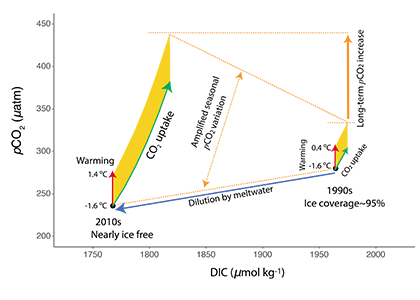
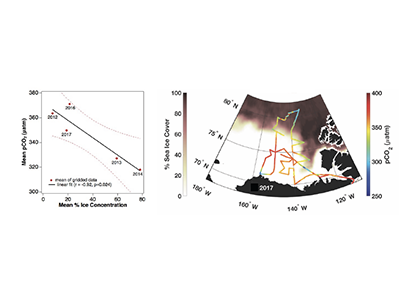
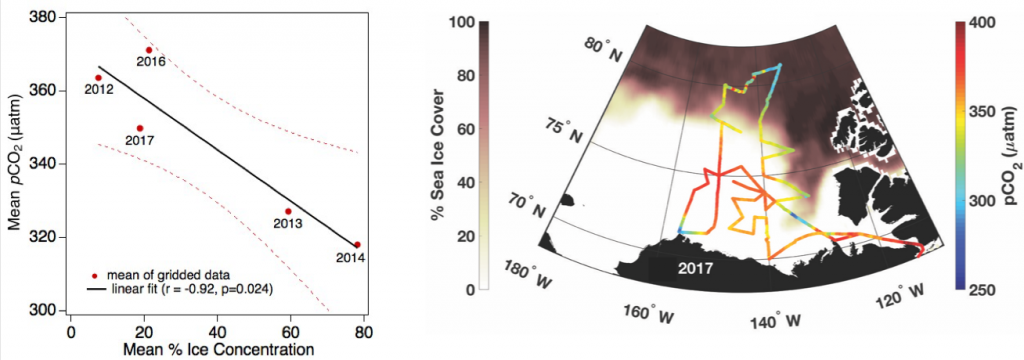
Loss of Arctic Ocean ice cover is altering the carbon cycle in ways that are not well understood. Effectively “popping the top off” the Arctic Ocean, ice loss exposes the sea surface to warming and exchange of CO2 with the atmosphere. These processes are expected to increase CO2 levels in the Arctic Ocean, changing its contribution to the global carbon cycle, but limited data collection in the region has thus far precluded the establishment of a clear relationship between CO2 and ice cover. In a recent study published in Geophysical Research Letters, authors report on observed partial pressure of CO2 (pCO2) trends from several years of data collection in the surface waters of the Canada Basin of the Arctic Ocean. These data show that the pCO2 is higher during years when ice cover is low. Uptake of atmospheric CO2 and heating are the primary sources of the CO2 increase, with only a small counteracting offset from biological production. These processes vary significantly from year to year, masking the likely increase in pCO2 over time. Based on these results, we can expect that, while the Arctic Ocean has thus far been a significant sink for atmospheric CO2, if ice loss continues the uptake of CO2 will diminish in coming years.

Figure caption: Sea surface pCO2 increases with decreasing ice concentration (left), determined using the mean of spatially gridded data. The sea surface pCO2 data were collected on five research cruises on the Canadian icebreaker, CCGS Louis S. St-Laurent, from 2012 to 2017 (shown at right for 2017). The pCO2 levels are indicated by the color along the ship cruise track (right color bar). The dark shading (left color bar) represents sea ice concentration averaged from the daily satellite data collected during the cruise.

Authors:
Michael DeGrandpre (University of Montana-Missoula)
Wiley Evans (Hakai Institute)
Mary-Louise Timmermans (Yale University)
Richard Krishfield (Woods Hole Oceanographic Institution)
Bill Williams (Institute of Ocean Sciences)
Michael Steele (University of Washington)

Modern OMZ copepod dynamics provide analog for future oceans

Posted by mmaheigan 
· Thursday, July 23rd, 2020 

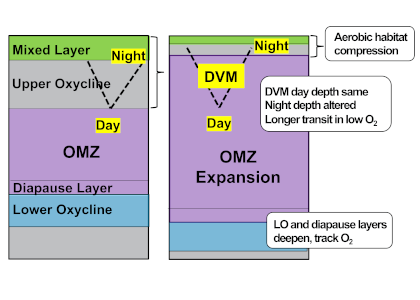
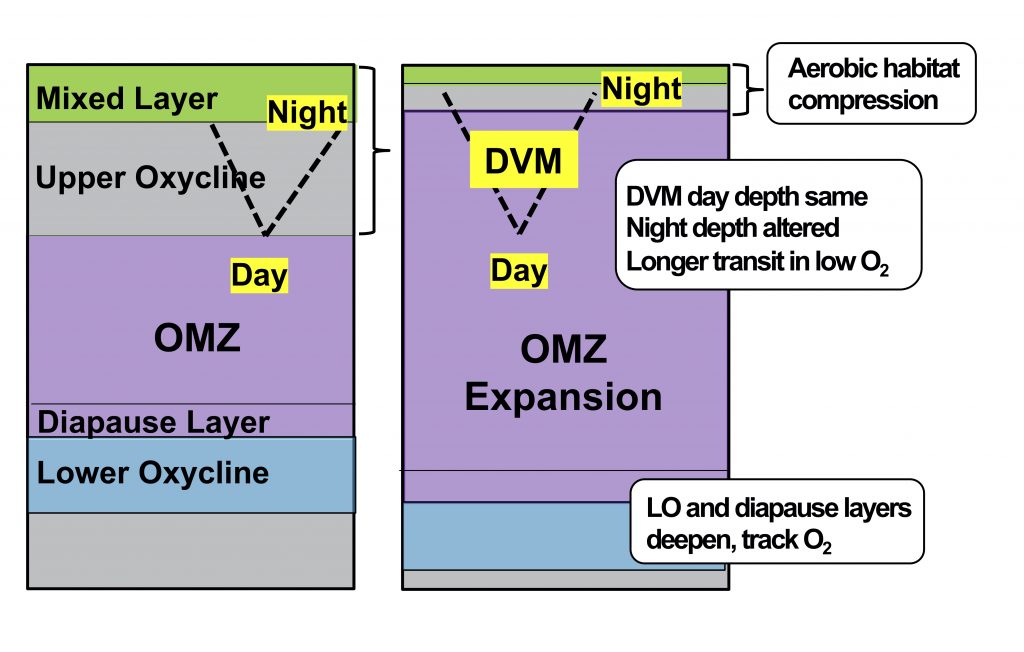
Global warming increases ocean deoxygenation and expands the oxygen minimum zone (OMZ), which has implications for major zooplankton groups like copepods. Reduced oxygen levels may impact individual copepod species abundance, vertical distribution, and life history strategy, which is likely to perturb intricate oceanic food webs and export processes. In a study recently published in Biogeosciences, authors conducted vertically-stratified day and night MOCNESS tows (0-1000 m) during four cruises (2007-2017) in the Eastern Tropical North Pacific, sampling hydrography and copepod distributions in four locations with different water column oxygen profiles and OMZ intensity (i.e. lowest oxygen concentration and its vertical extent in a profile). Each copepod species exhibited a different vertical distribution strategy and physiology associated with oxygen profile variability. The study identified sets of species that (1) changed their vertical distributions and maximum abundance depth associated with the depth and intensity of the OMZ and its oxycline inflection points, (2) shifted their diapause depth, (3) adjusted their diel vertical migration, especially the nighttime upper depth, or (4) expanded or contracted their depth range within the mixed layer and upper part of the thermocline in association with the thickness of the aerobic epipelagic zone (habitat compression concept) (Figure 1). Distribution depths for some species shifted by 10’s to 100’s of meters in different situations, which also had metabolic (and carbon flow) implications because temperature decreased with depth.  This observed present-day variability may provide an important window into how future marine ecosystems will respond to deoxygenation.

Figure caption: Schematic diagram showing how future OMZ expansion may affect zooplankton distributions, based on present-day responses to OMZ variability. The dashed line indicates diel vertical migration (DVM) and highlights the shoaling of the nighttime depth as the aerobic habitat is compressed. The lower oxycline community and the diapause layer for some species, associated with a specific oxygen concentration, may deepen as the OMZ expands.


Authors:
Karen F. Wishner (University of Rhode Island)
Brad Seibel (University of South Florida)
Dawn Outram (University of Rhode Island)

Blue hole in the South China Sea reveals ancient carbon

Posted by mmaheigan 
· Wednesday, July 8th, 2020 

Blue holes are unique depositional environments that are formed within carbonate platforms. Due to an enclosed geomorphology that restricts water exchange, blue hole ecosystems are typically characterized by steep biogeochemical gradients and distinctive microbial communities. For the past three decades, studies have described vertical gradients in physical, chemical, and biological parameters that typify blue hole water columns, but their elemental cycles, particularly carbon, remain poorly understood.

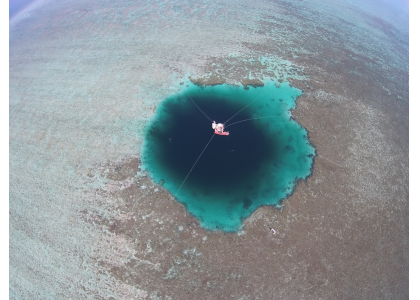
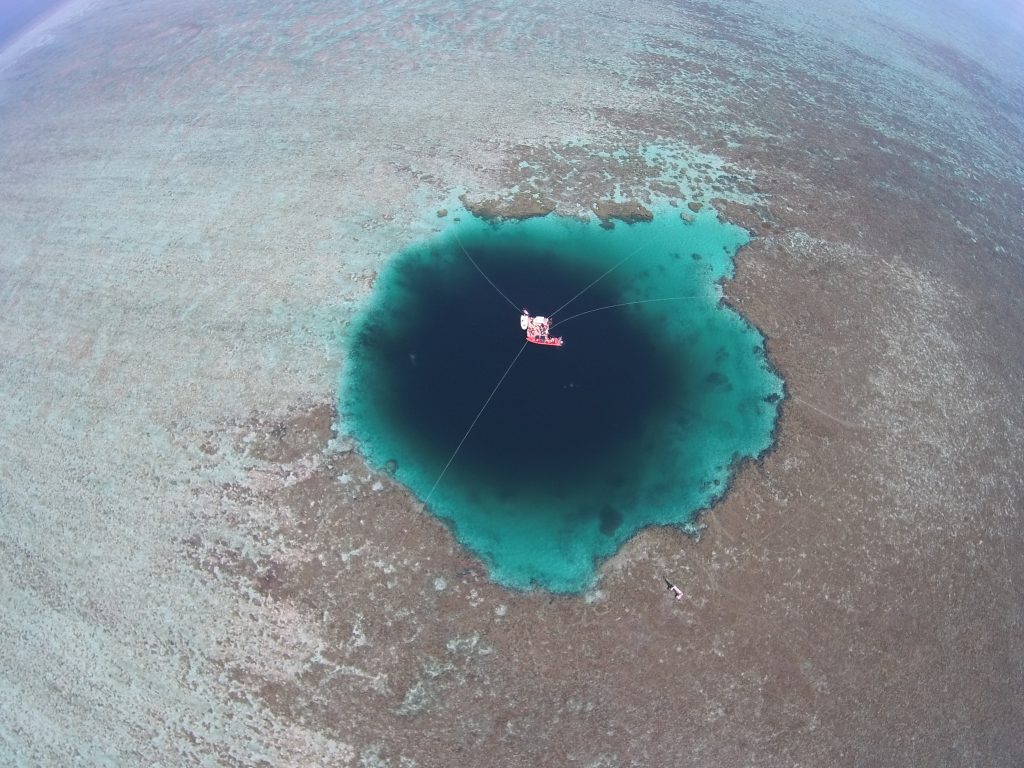
Figure 1. Aerial photo of the Yongle Blue Hole in the South China Sea (Credit: P. Yao et al./JGR Biogeosciences)

In July 2016, the Yongle Blue Hole (YBH) was discovered to be the deepest known blue hole on Earth (~300 m). YBH is located in the Xisha Islands of the South China Sea. The unique features and ease of accessibility make YBH an ideal natural laboratory for studying carbon cycling in marine anoxic systems. In a recent study published in JGR Biogeosciences, the authors reported extremely low concentrations of dissolved organic carbon (DOC) (e.g., 22 µM) and very high concentrations of dissolved inorganic carbon (DIC) (e.g., 3,090 µM) in YBH deep waters. Radiocarbon dating revealed that the YBH DOC and DIC were unusually old, yielding ages (6,810 and 8270 years BP, respectively) that are much more typical of open ocean deep water. Based on H2S and microbial community composition profiles, the authors concluded that sharp redox gradients and a high abundance of sulfur cycling bacteria were likely responsible for much of the DOC consumption in YBH. The unusually low concentrations and old DOC ages in the relatively shallow YBH suggest short-term cycling of recalcitrant DOC in oceanic waters, which has been recognized as a long-term microbial carbon sink in the global ocean. The stoichiometry of DIC and total alkalinity changes suggested that the accumulation of DIC in the deep layer of the YBH was largely derived from both the dissolution of carbonate and OC decomposition through sulfate reduction. However, the role of carbonate dissolution from the walls of the blue hole in affecting the old ages of carbon in this system remain uncertain, yet there appears to no evidence of subterranean freshwater into the bottom waters of the blue hole. In the face of expanding oxygen minimum zones and anthropogenically-induced coastal hypoxia, blue holes such as YBH can provide an accessible natural laboratory in which to study the microbial and biogeochemical features that typify these low-oxygen systems.


Authors:
Peng Yao (Ocean University of China)
Thomas S. Bianchi (University of Florida)
Xuchen Wang (Ocean University of China)
Zuosheng Yang (Ocean University of China)
Zhigang Yu (Ocean University of China)

A Methane-Charged Carbon Pump in Shallow Marine Sediments

Posted by mmaheigan 
· Wednesday, June 3rd, 2020 

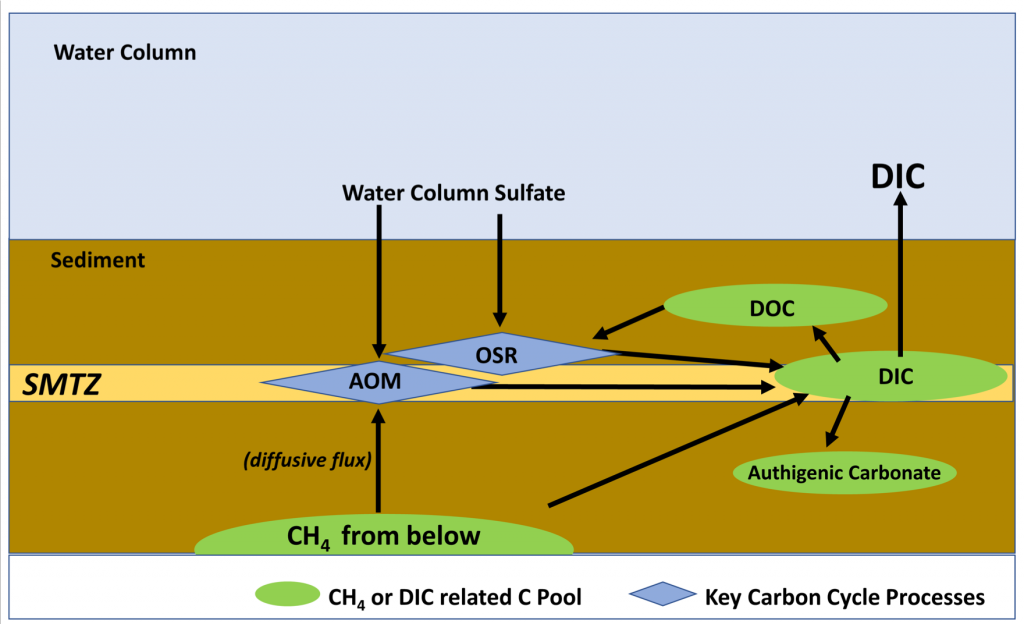
Ocean margins are often characterized by the transport of methane, a potent greenhouse gas, entering from the subsurface and moving towards the seafloor. However, a significant portion of subsurface methane is consumed within shallow sediments via microbial driven anaerobic oxidation of methane (AOM). AOM converts the methane carbon to dissolved inorganic carbon (DIC) and reduces the amount of sulfate that diffuses down from the seafloor towards a sediment interval known as the sulfate-methane transition zone (SMTZ). The SMTZ is where the upward flux of methane encounters the downward diffusive sulfate flux (Figure 1). While the mechanisms of methane production and consumption have been extensively studied, the fate of the DIC that is produced in methane-charged sediments is not well constrained.

In a recent study published in Frontiers in Marine Science, authors used existing reports of methane and sulfate flux values to the SMTZ and synthesized a carbon flow model to quantify the DIC cycling in diffusive methane flux sites globally. They report an annual average of 8.7 Tmol (1 Tmol = 1012 moles) of DIC entering the diffusive methane-charged shallow marine sediments due to sulfate reduction coupled with AOM and organic matter degradation, as well as DIC input from depth (Figure 1). Approximately 75% (average of 6.5 Tmol year–1) of this DIC pool flows upward toward the water column, making it a potential contributor to oceanic CO2 and ocean acidification. Further, an average of 1.7 Tmol year–1 DIC precipitates as methane-derived authigenic carbonates. This synthesis emphasizes the importance of the SMTZ, not only as a methane sink but also an important biogeochemical front for global DIC cycling.

Figure 1: A simplified representation of DIC cycling at diffusive methane charged settings.

The study highlights that regions characterized by diffusive methane fluxes can contribute significantly to the oceanic inorganic carbon pool and sedimentary carbonate accumulation. DIC outflux from the methane-charged sediments is comparable to ~20% global riverine DIC flux to oceans. Methane-derived authigenic carbonate precipitation is comparable to ~15% of carbonate accumulation on continental shelves and in pelagic sediments, respectively. These  pathways must be included in coastal and geologic carbon models.

Authors:
Sajjad Akam (Texas A&M University-Corpus Christi)
Richard Coffin (Texas A&M University-Corpus Christi)
Hussain Abdulla (Texas A&M University-Corpus Christi)
Timothy Lyons (University of California, Riverside)

Light matters for biological pump assessments

Posted by mmaheigan 
· Thursday, May 7th, 2020 

Organic carbon produced during photosynthesis in the sunlit euphotic zone is transported to the deep ocean via the ocean’s biological carbon pump (BCP). Even small changes in the BCP efficiency changes the carbon dioxide gradient across the ocean‐atmosphere interface, thus influencing global climate. A recent study in PNAS demonstrate that prior studies that estimate BCP efficiencies at a fixed depth fail because they do not consider the varying depth of light penetration, which ultimately controls production of sinking organic carbon and varies by location and season. Subsequently, the fixed depth approach introduces regional biases and underestimates global estimates of BCP efficiency by two-fold (Figure 1). These new findings make the case for using euphotic zone‐based metrics rather than applying a fixed depth to compare BCP efficiencies between sites. Improved estimates of BCP efficiency will lead to a better understanding of the mechanisms that control ocean carbon fluxes and its feedbacks on climate.

Figure 1: Carbon loss from the surface ocean shows more variability and is twice as high if measured at the depth where sunlight penetrates (left) vs. 150 meters (about 500 feet; right) where it is commonly measured. One Pg is 1015 grams with close to 6 Pg of carbon being transported to depth per year in left panel. In comparison, about 10 Pg C/yr is released to the atmosphere as a result of human activity.


Authors:
Ken Buesseler (WHOI)
Philip Boyd (IMAS Univ. Tasmania)
Erin Black (Dalhousie University)
David Siegel (University of California, Santa Barbara)

Also see: Tiny plankton drive processes in the ocean that capture twice as much carbon as scientists thought on The Conversation.

Featured on the cover of the PNAS May 5, 2020 issue:

Autonomous platforms yield new insights on North Atlantic bloom phenology

Posted by mmaheigan 
· Wednesday, April 22nd, 2020 

Phytoplankton produces organic carbon, which serves as a major energy source in marine food webs and plays an important role in the global carbon cycle. Studies of phytoplankton seasonal timing (phenology) have been a major focus in oceanography, especially in the subpolar North Atlantic region, where massive increases in phytoplankton biomass (blooms) occur during the winter-spring transition.

Figure 1. Panel a: Each line represents the trajectory of a profiling Argo float deployed during the North Atlantic Aerosols and Marine Ecosystems Study (NAAMES) expeditions (12 total); the initial float deployment location is denoted by a filled circle. The bar chart (inset right bottom) indicates float deployment durations. Panel b: Seasonal climatologies of Cphyto (green), µ (blue), l (red), and r (grey) from Argo floats for all 4 regions (D1-D4 as indicated on map in Panel a).

Many hypotheses based on data from shipboard discrete sampling or satellite remote sensing have been proposed to explain drivers of phytoplankton bloom formation and dynamics. However, discrete shipboard sampling limits both spatial and temporal coverage, and satellite approaches cannot provide direct information at depth. To address this gap in spatiotemporal coverage, a recent study in Frontiers in Marine Science, applied bio-optical measurements from 12 Argo profiling floats to study the year-round phytoplankton phenology in a north-south section of the western North Atlantic Ocean (40° N to 60° N). The authors calculated phytoplankton division rate (µ), loss rate (l), and carbon accumulation rate (r) using the Argo-based Chlorophyll-a (Chl) and phytoplankton carbon (Cphyto) estimates. Latitudinally varying phytoplankton dynamics were observed, with a higher (and later) Cphyto peak in the north, and stronger μ–r decoupling and increased proportion of winter to total annual production in the south (Figure 1). Seasonal phenology patterns arise from interactions between “bottom-up” (e.g., resources for growth) and “top-down” (e.g., grazing, mortality) factors that involve both biological and physical drivers. The Argo float data are consistent with the disturbance recovery hypothesis (DRH) over a full annual cycle. Float-based mixed layer phytoplankton phenology observations were comparable to satellite remote sensing observations. In a data-model comparison, outputs from an eddy-resolving ocean simulation only reproduced some of the observed phytoplankton phenology, indicating possible biases in the simulated physical forcing, turbulent dynamics, and biophysical interactions.

In addition to seasonal patterns in the mixed layer, float-based measurements provide information on the vertical distribution of physical and biogeochemical quantities and therefore are complementary to the satellite measurements. This powerful combination of observing assets enhances spatiotemporal coverage, thus enabling us to better observe, compare, model, and predict seasonal phytoplankton dynamics in the subpolar North Atlantic.


Authors:
Bo Yang (University of Virginia)
Emmanuel S. Boss (University of Maine)
Nils Haëntjens (University of Maine)
Matthew C. Long (National Center for Atmospheric Research)
Michael J. Behrenfeld (Oregon State University)
Rachel Eveleth (Oberlin College)
Scott C. Doney (University of Virginia)

« Previous Page
Next Page »

Filter by Keyword

abundance acidification additionality advection africa air-sea air-sea interactions algae alkalinity allometry ammonium AMO AMOC anoxic Antarctic Antarctica anthro impacts anthropogenic carbon anthropogenic impacts appendicularia aquaculture aquatic continuum aragonite saturation arctic Argo argon arsenic artificial seawater AT Atlantic atmospheric CO2 atmospheric nitrogen deposition authigenic carbonates autonomous platforms AUVs awb bacteria bathypelagic BATS BCG Argo benthic bgc argo bio-go-ship bio-optical bioavailability biogeochemical cycles biogeochemical models biogeochemistry Biological Essential Ocean Variables biological pump biophysics bloom blue carbon bottom water boundary layer buffer capacity C14 CaCO3 calcification calcite carbon carbon-climate feedback carbon-sulfur coupling carbonate carbonate system carbon budget carbon cycle carbon dioxide carbon export carbon fluxes carbon sequestration carbon storage Caribbean CCA CCS changing marine chemistry changing marine ecosystems changing marine environments changing ocean chemistry chemical oceanographic data chemical speciation chemoautotroph chesapeake bay chl a chlorophyll circulation clouds CO2 CO3 coastal and estuarine coastal darkening coastal ocean cobalt Coccolithophores commercial community composition competition conservation cooling effect copepod copepods coral reefs CTD currents cyclone daily cycles data data access data assimilation database data management data product Data standards DCM dead zone decadal trends decomposers decomposition deep convection deep ocean deep sea coral denitrification dense water deoxygenation depth diatoms DIC diel migration diffusion dimethylsulfide dinoflagellate dinoflagellates discrete measurements distribution DOC DOM domoic acid DOP dust DVM ecology economics ecosystem management ecosystems eddy Education EEZ Ekman transport emissions ENSO enzyme equatorial current equatorial regions ESM estuarine and coastal carbon fluxes estuary euphotic zone eutrophication evolution export export fluxes export production extreme events faecal pellets fecal pellets filter feeders filtration rates fire fish Fish carbon fisheries fishing floats fluid dynamics fluorescence food webs forage fish forams freshening freshwater frontal zone functional role future oceans gelatinous zooplankton gene transfer geochemistry geoengineering geologic time GEOTRACES glaciers gliders global carbon budget global ocean global ocean models global overturning circulation global warming go-ship grazing greenhouse gas greenhouse gases Greenland ground truthing groundwater Gulf of Maine Gulf of Mexico Gulf Stream gyre harmful algal bloom high latitude human food human impact human well-being hurricane hydrogen hydrothermal hypoxia ice age iceberg ice cores ice cover industrial onset inland waters in situ inverse circulation ions iron iron fertilization iron limitation isotopes jellies katabatic winds kelvin waves krill kuroshio lab vs field land land-ocean continuum larvaceans lateral transport LGM lidar ligands light light attenuation lineage lipids low nutrient machine learning mangroves marine carbon cycle marine heatwave marine particles marine snowfall marshes mCDR mechanisms Mediterranean meltwater mesopelagic mesoscale mesoscale processes metagenome metals methane methods microbes microlayer microorganisms microplankton microscale microzooplankton midwater migration minerals mitigation mixed layer mixed layers mixing mixotrophs mixotrophy model modeling model validation mode water molecular diffusion MPT MRV multi-decade N2 n2o NAAMES NCP nearshore net community production net primary productivity new ocean state new technology Niskin bottle nitrate nitrogen nitrogen cycle nitrogen fixation nitrous oxide north atlantic north pacific North Sea NPP nuclear war nutricline nutrient budget nutrient cycles nutrient cycling nutrient limitation nutrients OA observations ocean-atmosphere ocean acidification ocean acidification data ocean alkalinity enhancement ocean carbon uptake and storage ocean color ocean modeling ocean observatories ocean warming ODZ oligotrophic omics OMZ open ocean optics organic particles oscillation outwelling overturning circulation oxygen pacific paleoceanography PAR parameter optimization parasite particle flux particles partnerships pCO2 PDO peat pelagic PETM pH phenology phosphate phosphorus photosynthesis physical processes physiology phytoplankton PIC piezophilic piezotolerant plankton POC polar polar regions policy pollutants precipitation predation predator-prey predators prediction pressure primary productivity Prochlorococcus productivity prokaryotes proteins pteropods pycnocline python radioisotopes remineralization remote sensing repeat hydrography residence time resource management respiration resuspension rivers rocky shore Rossby waves Ross Sea ROV salinity salt marsh satellite scale seafloor seagrass sea ice sea level rise seasonal seasonal effects seasonality seasonal patterns seasonal trends sea spray seawater collection seaweed secchi sediments sensors sequestration shelf ocean shelf system shells ship-based observations shorelines siderophore silica silicate silicon cycle sinking sinking particles size SOCCOM soil carbon solubility pump southern ocean south pacific spatial covariations speciation SST state estimation stoichiometry subduction submesoscale subpolar subtropical sulfate surf surface surface ocean surface waters Synechococcus technology teleconnections temperate temperature temporal covariations thermocline thermodynamics thermohaline thorium tidal time time-series time of emergence titration top predators total alkalinity trace elements trace metals trait-based transfer efficiency transient features trawling Tris trophic transfer tropical turbulence twilight zone upper ocean upper water column upwelling US CLIVAR validation velocity gradient ventilation vertical flux vertical migration vertical transport warming water clarity water column water mass water quality waves weathering western boundary currents wetlands winter mixing zooplankton

Copyright © 2026 - OCB Project Office, Woods Hole Oceanographic Institution, 266 Woods Hole Rd, MS #25, Woods Hole, MA 02543 USA Phone: 508-289-2838  •  Fax: 508-457-2193  •  Email: ocb_news@us-ocb.org

link to nsflink to noaalink to WHOI

Funding for the Ocean Carbon & Biogeochemistry Project Office is provided by the National Science Foundation (NSF) and the National Aeronautics and Space Administration (NASA). The OCB Project Office is housed at the Woods Hole Oceanographic Institution.