Ocean Carbon & Biogeochemistry
Studying marine ecosystems and biogeochemical cycles in the face of environmental change
  • Home
  • About OCB
    • About Us
    • Scientific Breadth
      • Biological Pump
      • Changing Marine Ecosystems
      • Changing Ocean Chemistry
      • Estuarine and Coastal Carbon Fluxes
      • Ocean Carbon Uptake and Storage
      • Ocean Observatories
    • Code of Conduct
    • Get Involved
    • Project Office
    • Scientific Steering Committee
    • OCB committees
      • OCSIF – Ocean Carbonate System Intercomparison
      • Ocean-Atmosphere Interaction
      • Ocean Time-series
      • US Biogeochemical-Argo
  • Activities
    • Summer Workshop
    • OCB Webinars
    • Guidelines for OCB Workshops & Activities
    • Topical Workshops
      • CMIP6 Models Workshop
      • Coastal BGS Obs with Fisheries
      • C-saw extreme events workshop
      • 7th DMS(P) Symposium
      • Expansion of BGC-Argo and Profiling Floats
      • Fish, fisheries and carbon
      • Future BioGeoSCAPES program
      • GO-BCG Scoping Workshop
      • Lateral Carbon Flux in Tidal Wetlands
      • Leaky Deltas Workshop – Spring 2025
      • Marine CDR Workshop
      • Ocean Nucleic Acids ‘Omics
      • Pathways Connecting Climate Changes to the Deep Ocean
    • Small Group Activities
      • Aquatic Continuum OCB-NACP Focus Group
      • Arctic-COLORS Data Synthesis
      • BECS Benthic Ecosystem and Carbon Synthesis WG
      • Carbon Isotopes in the Ocean Workshop
      • CMIP6 WG
      • Filling the gaps air–sea carbon fluxes WG
      • Fish Carbon WG
      • Metabarcoding intercal WG
      • Meta-eukomics WG
      • mCDR
      • Metaproteomic Intercomparison
      • Mixotrophs & Mixotrophy WG
      • N-Fixation WG
      • Ocean Carbonate System Intercomparison Forum
      • Ocean Carbon Uptake WG
      • OOI BGC sensor WG
      • Operational Phytoplankton Observations WG
      • Phytoplankton Taxonomy WG
      • SedMIP
    • Other Workshops
    • Science Planning
      • Coastal CARbon Synthesis (CCARS)
      • North Atlantic-Arctic
    • Ocean Acidification PI Meetings
    • Training Activities
      • PACE Hackweek 2025
      • PACE Hackweek 2024
      • PACE Training Activity 2022
  • Science Support
    • OCB Activity Proposal Solicitation
    • Guidelines for OCB Workshops & Activities
    • Data management and archival
    • Early Career
    • Funding Sources
    • Jobs & Postdocs
    • Meeting List
    • OCB Topical Websites
      • Ocean Fertilization
      • Trace gases
      • US IIOE-2
    • Outreach & Education
    • Promoting your science
    • Student Opportunities
    • Travel Support
  • Publications
    • OCB Workshop Reports
    • Science Planning and Policy
    • Newsletter Archive
  • Science Highlights
  • News

Archive for modeling – Page 3

Introducing the Coastal Ocean Data Analysis Product in North America (CODAP-NA)

Posted by mmaheigan 
· Friday, October 22nd, 2021 

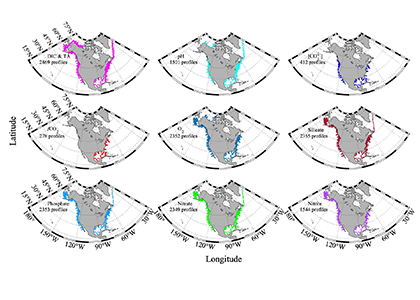
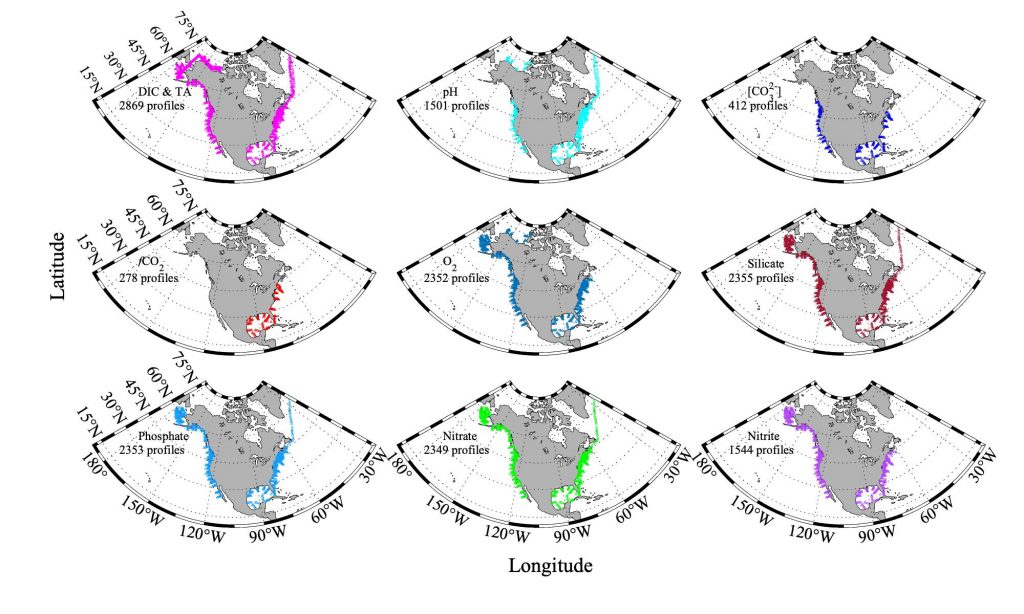
Coastal ecosystems are hotspots for commercial and recreational fisheries, and aquaculture industries that are susceptible to change or economic loss due to ocean acidification. These coastal ecosystems support about 90% of the global fisheries yield and 80% of the known marine fish species, and sustain ecosystem services worth $27.7 Trillion globally (a number larger than the U.S. economy). Despite the importance of these areas and economies, internally-consistent data products for water column carbonate and nutrient chemistry data in the coastal ocean—vital to understand and predict changes in these systems—currently do not exist. A recent study published in Earth Syst. Sci. Data compiled and quality controlled discrete sampling-based data—inorganic carbon, oxygen, and nutrient chemistry, and hydrographic parameters collected from the entire North American ocean margins—to create a data product called the Coastal Ocean Data Analysis Product for North America (CODAP-NA) to fill the gap. This effort will promote future OA research, modeling, and data synthesis in critically important coastal regions to help advance the OA adaptation, mitigation, and planning efforts by North American coastal communities; and provides a foothold for future synthesis efforts in the coastal environment.

Figure caption. Sampling stations of the CODAP-NA data product.


Authors:
Li-Qing Jiang (University of Maryland; NOAA NCEI)
Richard A. Feely (NOAA PMEL)
Rik Wanninkhof (NOAA AOML)
Dana Greeley (NOAA PMEL)
Leticia Barbero (University of Miami; NOAA AOML)
Simone Alin (NOAA PMEL)
Brendan R. Carter (University of Washington; NOAA PMEL)
Denis Pierrot (NOAA AOML)
Charles Featherstone (NOAA AOML)
James Hooper (University of Miami; NOAA AOML)
Chris Melrose (NOAA NEFSC)
Natalie Monacci (University of Alaska Fairbanks)
Jonathan Sharp (University of Washington; NOAA PMEL)
Shawn Shellito (University of New Hampshire)
Yuan-Yuan Xu (University of Miami; NOAA AOML)
Alex Kozyr (University of Maryland; NOAA NCEI)
Robert H. Byrne (University of South Florida)
Wei-Jun Cai (University of Delaware)
Jessica Cross (NOAA PMEL)
Gregory C. Johnson (NOAA PMEL)
Burke Hales (Oregon State University)
Chris Langdon (University of Miami)
Jeremy Mathis (Georgetown University)
Joe Salisbury (University of New Hampshire)
David W. Townsend (University of Maine)

The ephemeral and elusive COVID blip in ocean carbon

Posted by mmaheigan 
· Monday, September 20th, 2021 

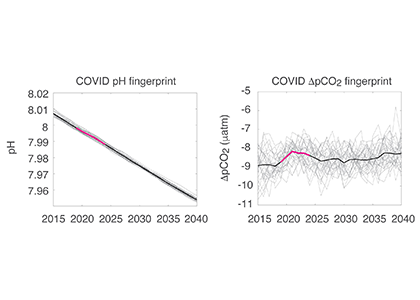
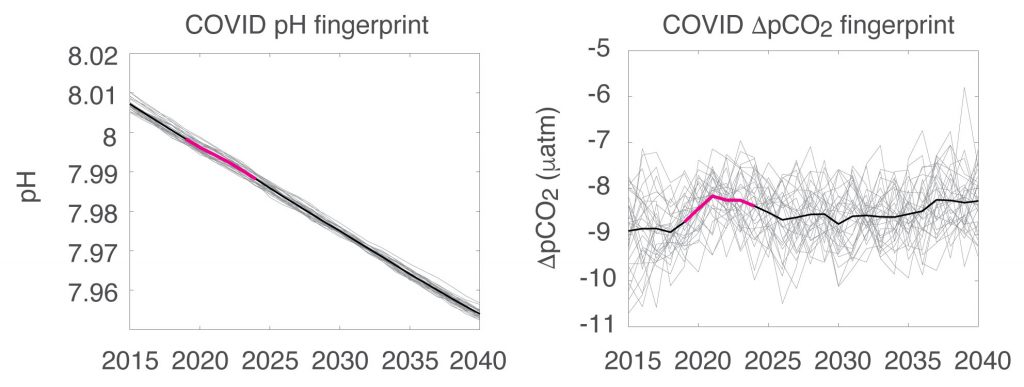
The global pandemic of the last nearly two years has affected all of us on a daily and long-term basis. Our planet is not exempt from these impacts. Can we see a signal of COVID-related CO2 emissions reductions in the ocean? In a recent study, Lovenduski et al. apply detection and attribution analysis to output from an ensemble of COVID-like simulations of an Earth system model to answer this question. While it is nearly impossible to detect a COVID-related change in ocean pH, the model produces a unique fingerprint in air-sea DpCO2 that is attributable to COVID. Challengingly, the large interannual variability in the climate system  makes this fingerprint  difficult to detect at open ocean buoy sites.

This study highlights the challenges associated with detecting statistically meaningful changes in ocean carbon and acidity following CO2 emissions reductions, and reminds the reader that it may be difficult to observe intentional emissions reductions — such as those that we may enact to meet the Paris Climate Agreement – in the ocean carbon system.

Figure caption: The fingerprint (pink line) of COVID-related CO2 emissions reductions in global-mean surface ocean pH and air-sea DpCO2, as estimated by an ensemble of COVID-like simulations in an Earth system model.   While the pH fingerprint is not particularly exciting, the air-sea DpCO2 fingerprint displays a temporary weakening of the ocean carbon sink in 2021 due to COVID emissions reductions.


Authors:
Nikki Lovenduski (University of Colorado Boulder)
Neil Swart (Canadian Centre for Climate Modeling and Analysis)
Adrienne Sutton (NOAA Pacific Marine Environmental Laboratory)
John Fyfe (Canadian Centre for Climate Modeling and Analysis)
Galen McKinley (Columbia University and Lamont Doherty Earth Observatory)
Chris Sabine (University of Hawai’i at Manoa)
Nancy Williams (University of South Florida)

Counterintuitive effects of shoreline armoring on estuarine water clarity

Posted by mmaheigan 
· Wednesday, February 24th, 2021 

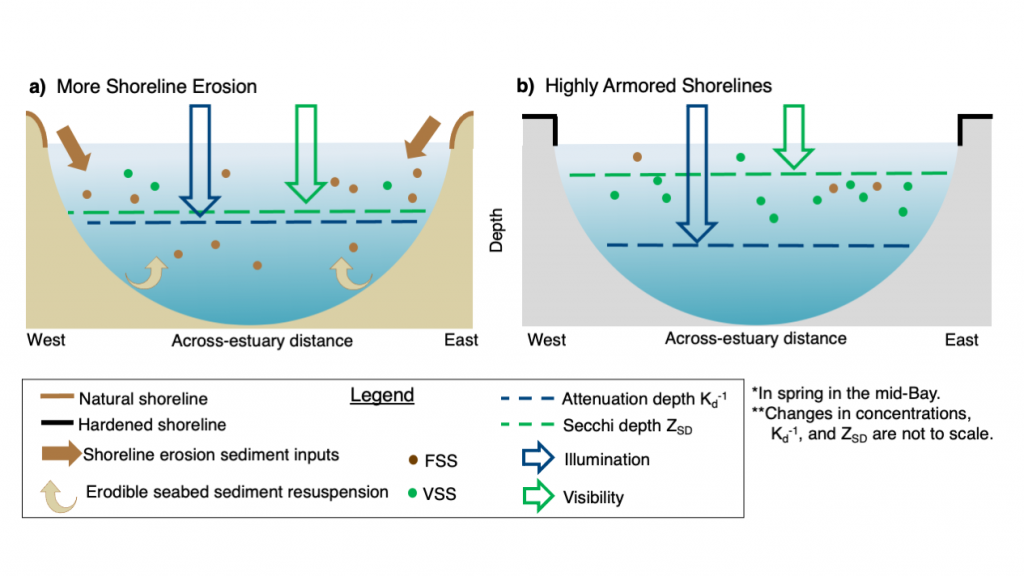
Around the world, human-altered shorelines change sediment inputs to estuaries and coastal waters, altering water clarity, especially in areas of dense human population. The Chesapeake Bay estuary is recovering from historically high nutrient and sediment inputs, but water clarity improvement has been ambiguous. Long-term trends show increasing water clarity in terms of deepening light attenuation depth, yet degrading clarity in terms of shallowing Secchi depth over time. High water clarity is needed to support seagrass meadows, which act as nursery habitats for commercially important fish species such as striped bass. How are these opposing water clarity trends possible?

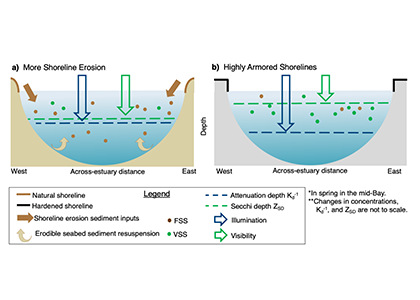
In a recent paper published in Science of the Total Environment, researchers performed experiments with a coupled hydrodynamic-biogeochemical model to test a simulated Chesapeake Bay under realistic conditions, more shoreline erosion, and highly armored shorelines. Comparing the two extreme conditions (Figure 1), there was a striking difference between (a) an estuary experiencing more shoreline erosion and greater resuspension versus (b) a highly armored estuary with decreased resuspension. Reduced erosion yielded improved water clarity in terms of light attenuation depth, but a shallower Secchi depth (reduced visibility). In estuaries, reducing sediment inputs is often proposed as a strategy for improving water quality. This study shows that, under certain conditions in a productive estuary, reduced sediments can have unintended secondary effects on water clarity due to enhanced production of organic particles. This study also highlights the need to consider other sediment sources in addition to rivers, such as seabed resuspension and shoreline erosion, especially at times and locations of low river input.

Figure 1. Schematic of how shoreline armoring causes deepening light attenuation depth (navy) yet shallowing Secchi depth (green) during the spring growing season in the mid-bay central channel.

Authors:
Jessica S. Turner
Pierre St-Laurent
Marjorie A. M. Friedrichs
Carl T. Friedrichs
(all Virginia Institute of Marine Science)


Species loss alters ecosystem function in plankton communities

Posted by mmaheigan 
· Monday, February 8th, 2021 

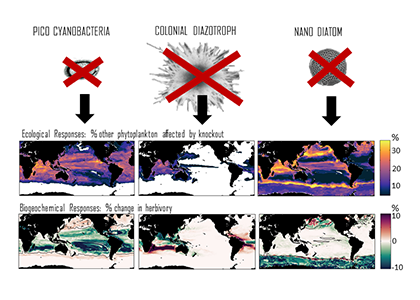
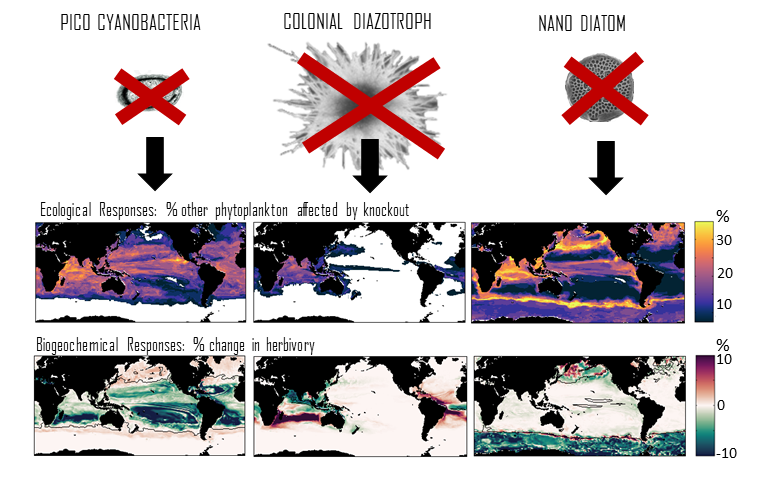
Climate change impacts on the ocean such as warming, altered nutrient supply, and acidification will lead to significant rearrangement of phytoplankton communities, with the potential for some phytoplankton species to become extinct, especially at the regional level. This leads to the question: What are phytoplankton species’ redundancy levels from ecological and biogeochemical standpoints—i.e. will other species be able to fill the functional ecological and/or biogeochemical roles of the extinct species? Authors of a paper published recently in Global Change Biology explored these ideas using a global three-dimensional computer model with diverse planktonic communities, in which single phytoplankton types were partially or fully eliminated. Complex trophic interactions such as decreased abundance of a predator’s predator led to unexpected “ripples” through the community structure and in particular, reductions in carbon transfer to higher trophic levels. The impacts of changes in resource utilization extended to regions beyond where the phytoplankton type went extinct. Redundancy appeared lowest for types on the edges of trait space (e.g., smallest) or those with unique competitive strategies. These are responses that laboratory or field studies may not adequately capture. These results suggest that species losses could compound many of the already anticipated outcomes of changing climate in terms of productivity, trophic transfer, and restructuring of planktonic communities. The authors also suggest that a combination of modeling, field, and laboratory studies will be the best path forward for studying functional redundancy in phytoplankton.

Figure caption: Examples of the modelled ecological and biogeochemical responses to the extinction of different phytoplankton species.Figure caption: Examples of the modelled ecological and biogeochemical responses to the extinction of different phytoplankton species.


Authors:
Stephanie Dutkiewicz (Massachusetts Institute of Technology)
Philip W. Boyd (Institute for Marine and Antarctic Studies, University of Tasmania)
Ulf Riebesell (GEOMAR Helmholtz Centre for Ocean Research Kiel)

Climate-driven pelagification of marine food webs: Implications for marine fish populations

Posted by mmaheigan 
· Friday, January 22nd, 2021 

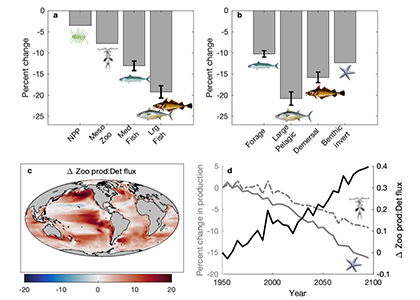
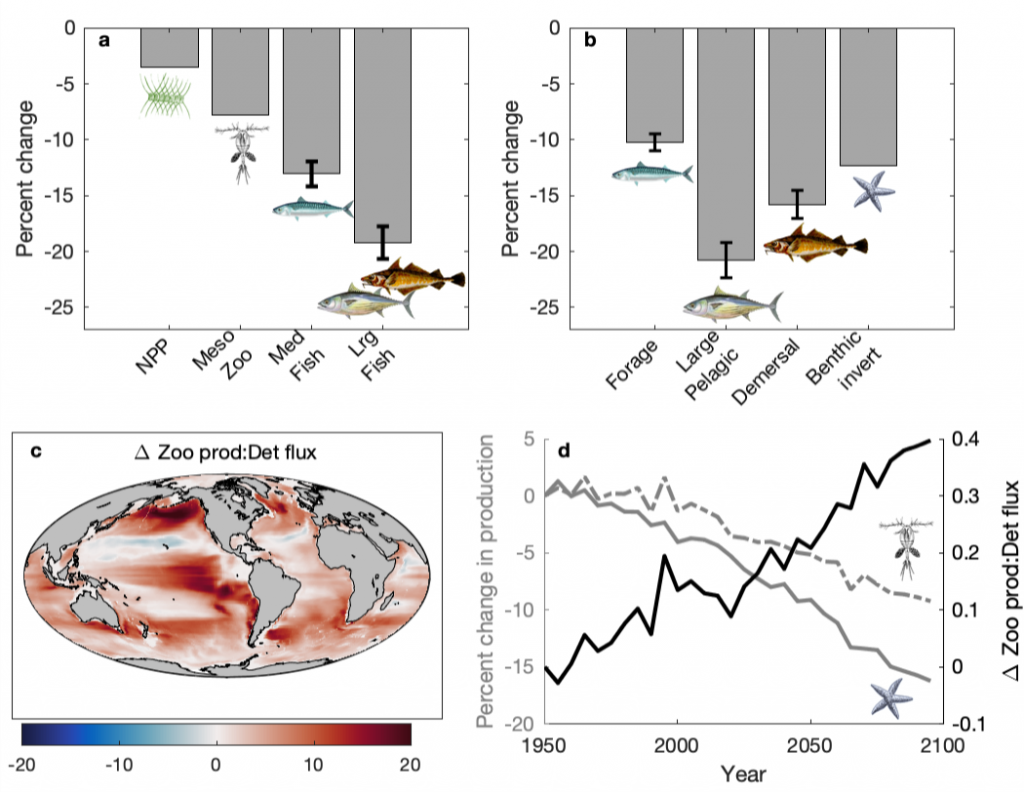
Global warming changes the conditions for all ocean life, with wide-ranging consequences. It is particularly difficult to predict the impact of climate change on fish because fish production is conditioned on both temperature and food resource (zooplankton and benthic organisms) changes. Climate change projections from Earth system models show a negative amplification of changes in global ocean net primary production (NPP), with an approximate doubling of production decreases from net primary producers to mesozooplankton. This “trophic amplification” continues up the marine food web to fishes. A new study published in Frontiers in Marine Science illustrates this amplification clearly when fishes are defined by their maximum body size, which describes their position in the food web (Figure 1a). However, decreases in globally integrated biomass and production were not limited to differences in size alone. Importantly, reduced abundances also varied by fish functional type (Figure 1b).

Figure 1: a) Percent change in net primary production (NPP), mesozooplankton (MesoZ) production, all medium (M) fishes, and all large (L) fishes from Historic (1951-2000) to the RCP 8.5 Projection (2051-2100). b) Percent change in production of forage fish, large pelagic fish, demersal fish, and benthic invertebrates in Projection (2051-2100) from Historic (1951-2000). c) Absolute change in the ratio of zooplankton production to seafloor detrital flux as the difference of the Projection (2051-2100) from the Historic (1951-2000). d) Percent change in zooplankton production (dashed grey), percent change in seafloor detrital flux (solid grey), and absolute change in the ratio of their means during the Historic and Projection time periods relative to 1951.

Despite the “pelagification” of marine food webs caused by unequal decreases in secondary production (Figure 1d) and subsequent increases in pelagic zooplankton production relative to seafloor detritus production (Figure 1c,d), large pelagic fish (e.g., tunas and billfishes) suffered the greatest declines and the highest degree of projection uncertainty. The result was a shift from benthic-based ecosystems historically dominated by large demersal fish (e.g., cods and flounders) towards pelagic-based ones dominated by smaller forage fish (e.g., sardines and herring). Any positive impacts of the pelagification of food resources on large pelagic fish were overwhelmed by the negative impacts of the overall reduction in global productivity, compounded by warming-induced increases in metabolic demands. Both the degree of change in the productivity of large pelagic fish and the magnitude of trophic amplification were sensitive to the temperature dependence of metabolic rates. Thus, better constraints are needed on empirical estimates of the effect of temperature on physiological rates to project the impacts of climate change on fish biomass and marine ecosystem structure.

Ocean fish harvests currently supply ~15% of global protein demand. Reduced primary production will decrease the total amount of fish available to harvest for human food, while the pelagification of ecosystems could require large and expensive structural modifications to fisheries, including gear, location, regional and international management plans, consumer demands, and market values.


Authors:
Colleen M. Petrik (Texas A&M University)
Charles A. Stock (Geophysical Fluid Dynamics Laboratory)
Ken H. Andersen (Technical University of Denmark)
P. Daniël van Denderen (International Council for the Exploration of the Seas)
James R. Watson (Oregon State University)

Water clarity impacts temperature and biogeochemistry in Chesapeake Bay

Posted by mmaheigan 
· Thursday, December 3rd, 2020 

Estuarine water clarity is determined by suspended materials in the water, including colored dissolved organic matter, phytoplankton, sediment, and detritus. These constituents directly affect temperature because when water is opaque, sunlight heats only the shallowest layers near the surface, but when water is clear, sunlight can penetrate deeper, warming the waters below the surface. Despite the importance of accurately predicting temperature variability, many numerical modeling studies do not adequately parameterize this fundamental relationship between water clarity and temperature.

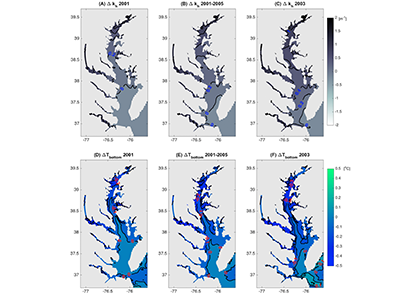
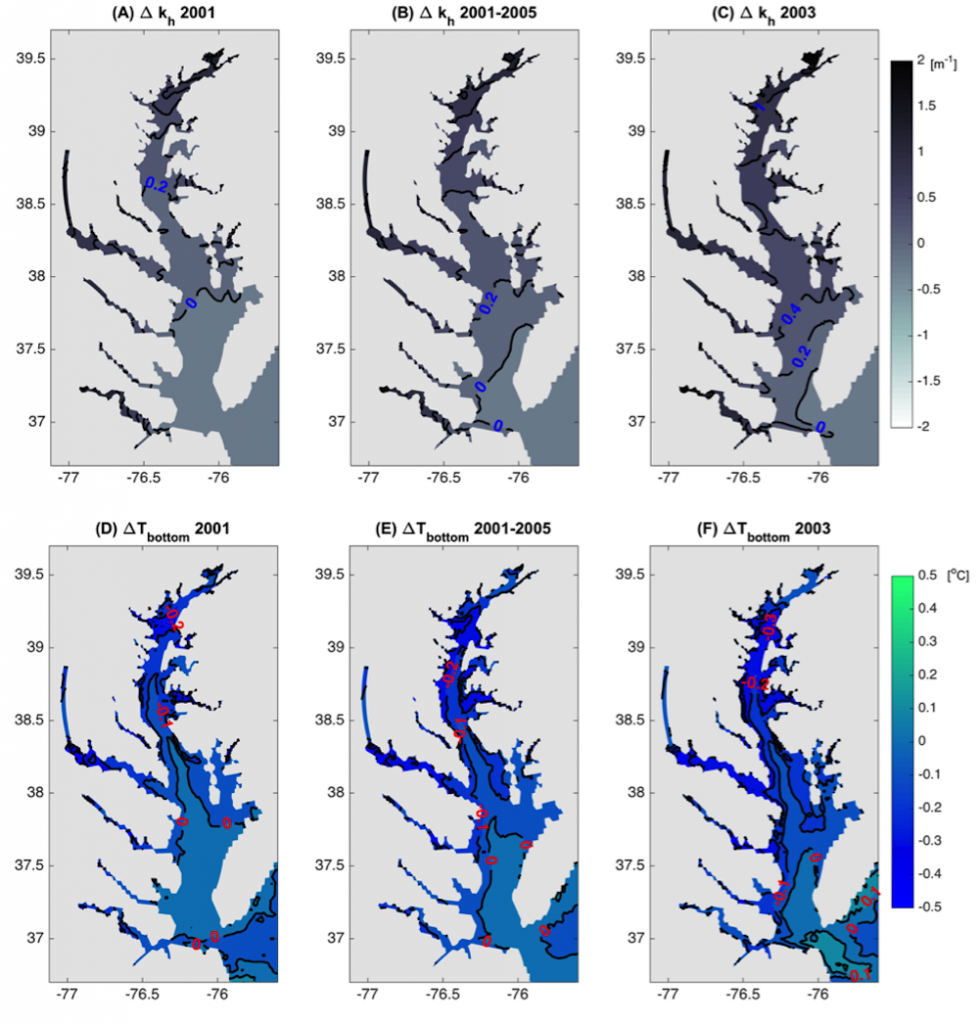
In a recent study published in Estuaries and Coasts, the authors quantified the impact of a more realistic representation of water clarity in a hydrodynamic-biogeochemical model of the Chesapeake Bay by comparing two simulations: (1) water clarity is constant in space and time for the calculation of solar heating vs. (2) water clarity varies with modeled concentrations of light-attenuating materials. In the variable water clarity simulation (2), the water is more opaque, particularly in the northern region of the Bay. During the spring and summer months, the lower water clarity in the northern Bay is associated with warmer surface temperatures and colder bottom temperatures. Warmer surface temperatures encourage phytoplankton growth and nutrient uptake near the head of the Bay, thus fewer nutrients are transported downstream. These conditions are exacerbated during high-river flow years, when differences in temperature, nutrients, phytoplankton, and zooplankton extend further seaward.

Figure 1: Top row: Difference in the light attenuation coefficient for shortwave heating, kh[m-1] (variable minus constant light attenuation simulation). June, July, and August average for (A) 2001, (B) average of 2001-2005, and (C) 2003; difference in bottom temperatures [oC] (variable minus constant). Bottom row: Difference in June, July, and August average bottom temperature for (D) 2001, (E) average of 2001-2005, and (F) 2003. Data for 2001 are representative of low river discharge, and 2003 are representative high river discharge years.

This work demonstrates that a constant light attenuation scheme for heating calculations in coupled hydrodynamic-biogeochemical models underestimates temperature variability, both temporally and spatially. This is an important finding for researchers who use models to predict future temperature variability and associated impacts on biogeochemistry and species habitability.


Authors:
Grace E. Kim (NASA, Goddard Space Flight Center)
Pierre St-Laurent (VIMS, William & Mary)
Marjorie A.M. Friedrichs (VIMS, William & Mary)
Antonio Mannino (NASA, Goddard Space Flight Center)

A new Regional Earth System Model of the Mediterranean Sea biogeochemical dynamics

Posted by mmaheigan 
· Thursday, November 19th, 2020 

The Mediterranean Sea is a semi-enclosed mid-latitude oligotrophic basin with a lower net primary production than the global ocean. A west-east productivity trophic gradient results from the superposition of biogeochemical and physical processes, including the biological pump and associated carbon and nutrient (nitrogen, phosphorus) fluxes, the spatial asymmetric distribution of nutrient sources (rivers, atmospheric deposition, coastal upwelling, etc.), the estuarine inverse circulation associated with the inflow of Atlantic water through the Gibraltar Strait. The complex and highly variable interface between land and sea throughout this basin add a further layer of complexity in the Mediterranean oceanic and atmospheric circulation and on the associated biogeochemistry dynamics, emphasizing the need for high-resolution truly integrated Regional Earth System Models to track and understand fine-scale processes and ecosystem dynamics.

In a recent paper published in the Journal of Advances in Modeling Earth System, the authors introduced a new version of the Regional Earth System model RegCM-ES and evaluated its performance in the Mediterranean region. RegCM-ES fully integrates the regional climate model RegCM4, the land surface scheme CLM4.5 (Community Land Model), the river routing model HD (Hydrological Discharge Model), the ocean model MITgcm (MIT General Circulation model) and the Biogeochemical Flux Model BFM.

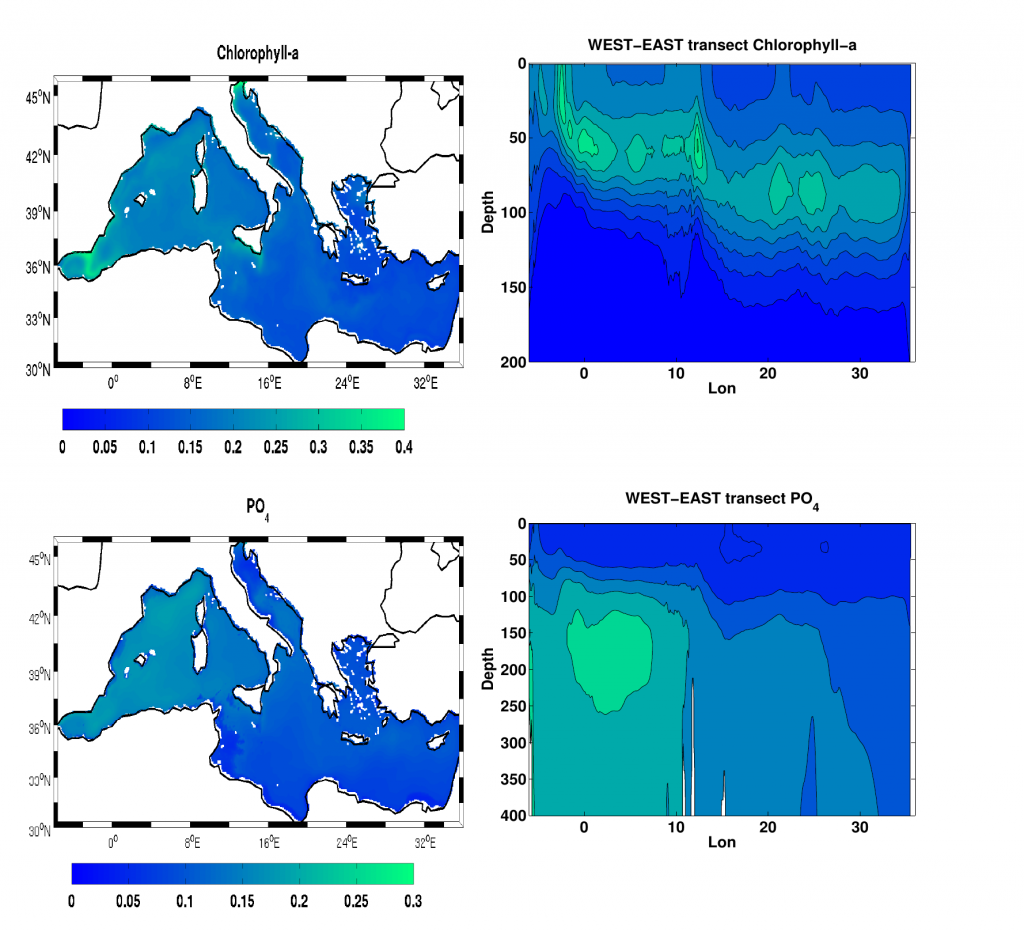
A comparison with available observations has shown that RegCM-ES was able to capture the mean climate of the region and to reproduce horizontal and vertical patterns of chlorophyll-a and PO4 (the limiting nutrient in the basin) (Figure 1). The same comparison revealed a systematic underestimation of simulated dissolved oxygen (which will be fixed by the use of a new parametrization of oxygen solubility), and an overestimation of NO3, possibly due to uncertainties in initial and boundary conditions (mostly traced to river and Dardanelles nutrient discharges) and an overly vigorous vertical mixing simulated by the ocean model in some parts of the Basin.

Figure.1 Distributions of chlorophyll-a mg/m3 (top) and PO4 mmol/m3 (bottom) in the Mediterranean Sea as simulated by RegCM-ES.

Overall, this analysis has demonstrated that RegCM-ES has the capabilities required to become a powerful tool for studying regional dynamics and impacts of climate change on the Mediterranean Sea and other ocean basins around the world.


Authors:
Marco Reale (Abdus Salam International Centre for theoretical physics-ICTP, National Institute of Oceanography and Experimental Geophysics-OGS)
Filippo Giorgi (Abdus Salam International Centre for theoretical physics-ICTP)
Cosimo Solidoro (National Institute of Oceanography and Experimental Geophysics-OGS)
Valeria Di Biagio (National Institute of Oceanography and Experimental Geophysics-OGS)
Fabio Di Sante (Abdus Salam International Centre for theoretical physics-ICTP)
Laura Mariotti (National Institute of Oceanography and Experimental Geophysics-OGS)
Riccardo Farneti (Abdus Salam International Centre for theoretical physics-ICTP)
Gianmaria Sannino (Italian National Agency for New Technologies, Energy and Sustainable Economic Development-ENEA)

Austral summer vertical migration patterns in Antarctic zooplankton

Posted by mmaheigan 
· Thursday, October 15th, 2020 

Sunrise and sunset are the main cues driving zooplankton diel vertical migration (DVM) throughout the world’s oceans. These marine animals balance the trade-off between feeding in surface waters at night and avoiding predation during the day at depth. Near-constant daylight during polar summer was assumed to dampen these daily migrations. In a recent paper published in Deep-Sea Research I, authors assessed austral summer DVM patterns for 15 taxa over a 9-year period. Despite up to 22 hours of sunlight, a diverse array of zooplankton – including copepods, krill, pteropods, and salps – continued DVM.

Figure caption: Mean day (orange) and night (blue) abundance of (A) the salp Salpa thompsoni, (B) the krill species Thysanoessa macrura, (C) the pteropod Limacina helicina, and (D) chaetognaths sampled at discrete depth intervals from 0-500m. Horizontal dashed lines indicate weighted mean depth (WMD). N:D is the night to day abundance ratio for 0-150 m. Error bars indicate one standard error. Sample size n = 12 to 22. Photos by Larry Madin, Miram Gleiber, and Kharis Schrage.

The Palmer Antarctica Long-Term Ecological Research (LTER) Program conducted this study using a MOCNESS (Multiple Opening/Closing Net and Environmental Sensing System) to collect depth-stratified samples west of the Antarctic Peninsula. The depth range of migrations during austral summer varied across taxa and with daylength and phytoplankton biomass and distribution. While most taxa continued some form of DVM, others (e.g., carnivores and detritivores) remained most abundant in the mesopelagic zone, regardless of photoperiod, which likely impacted the attenuation of vertical carbon flux. Given the observed differences in vertical distribution and migration behavior across taxa, ongoing changes in Antarctic zooplankton assemblages will likely impact carbon export pathways. More regional, taxon-specific studies such as this are needed to inform efforts to model zooplankton contributions to the biological carbon pump.


Authors:
John Conroy (VIMS, William & Mary)
Deborah Steinberg (VIMS, William & Mary)
Patricia Thibodeau (VIMS, William & Mary; currently University of Rhode Island)
Oscar Schofield (Rutgers University)

Estuarine sediment resuspension drives non-local impacts on biogeochemistry

Posted by mmaheigan 
· Friday, September 18th, 2020 

Sediment processes, including resuspension and transport, affect water quality in estuaries by altering light attenuation, primary productivity, and organic matter remineralization, which then influence oxygen and nitrogen dynamics. In a recent paper published in Estuaries and Coasts, the authors quantified the degree to which sediment resuspension and transport affected estuarine biogeochemistry by implementing a coupled hydrodynamic-sediment transport-biogeochemical model of the Chesapeake Bay. By comparing summertime model runs that either included or neglected seabed resuspension, the study revealed that resuspension increased light attenuation, especially in the northernmost portion of the Bay, which subsequently shifted primary production downstream (Figure 1). Resuspension also increased remineralization in the central Bay, which experienced higher organic matter concentrations due to the downstream shift in primary productivity. When combined with estuarine circulation, these resuspension-induced shifts caused oxygen to increase and ammonium to increase throughout the Bay in the bottom portion of the water column. Averaged over the channel, resuspension decreased oxygen by ~25% and increased ammonium by ~50% for the bottom water column. Changes due to resuspension were of the same order of magnitude as, and generally exceeded, short-term variations within individual summers, as well as interannual variability between wet and dry years. This work highlights the importance of a localized process like sediment resuspension and its capacity to drive biogeochemical variations on larger spatial scales. Documenting the spatiotemporal footprint of these processes is critical for understanding and predicting the response of estuarine and coastal systems to environmental changes, and for informing management efforts.

Figure 1: Schematic of how resuspension affects biogeochemical processes based on HydroBioSed model estimates for Chesapeake Bay.

Authors:
Julia M. Moriarty (University of Colorado Boulder)
Marjorie A. M. Friedrichs (Virginia Institute of Marine Science)
Courtney K. Harris (Virginia Institute of Marine Science)


Also see the Geobites piece “Muddy waters lead to decreased oxygen in Chesapeake Bay” on this publication, by Hadley McIntosh Marcek

A close-up view of biomass controls in Southern Ocean eddies

Posted by mmaheigan 
· Thursday, August 20th, 2020 

Southern Ocean biological productivity is instrumental in regulating the global carbon cycle. Previous correlative studies associated widespread mesoscale activity with anomalous chlorophyll levels. However, eddies simultaneously modify both the physical and biogeochemical environments via several competing pathways, making it difficult to discern which mechanisms are responsible for the observed biological anomalies within them. Two recently published papers track Southern Ocean eddies in a global, eddy-resolving, 3-D ocean simulation. By closely examining eddy-induced perturbations to phytoplankton populations, the authors are able to explicitly link eddies to co-located biological anomalies through an underlying mechanistic framework.

Figure caption: Simulated Southern Ocean eddies modify phytoplankton division rates in different directions of depending on the polarity of the eddy and background seasonal conditions. During summer anticyclones (top right panel) deliver extra iron from depth via eddy-induced Ekman pumping and fuel faster phytoplankton division rates. During winter (bottom right panel) the extra iron supply is eclipsed by deeper mixed layer depths and elevated light limitation resulting in slower division rates. The opposite occurs in cyclones.

In the first paper, the authors observe that eddies primarily affect phytoplankton division rates by modifying the supply of iron via eddy-induced Ekman pumping. This results in elevated iron and faster phytoplankton division rates in anticyclones throughout most of the year. However, during deep mixing winter periods, exacerbated light stress driven by anomalously deep mixing in anticyclones can dominate elevated iron and drive division rates down. The opposite response occurs in cyclones.

The second paper tracks how eddy-modified division rates combine with eddy-modified loss rates and physical transport to produce anomalous biomass accumulation. The biomass anomaly is highly variable, but can exhibit an intense seasonal cycle, in which cyclones and anticyclones consistently modify biomass in different directions. This cycle is most apparent in the South Pacific sector of the Antarctic Circumpolar Current, a deep mixing region where the largest biomass anomalies are driven by biological mechanisms rather than lateral transport mechanisms such as eddy stirring or propagation.

It is important to remember that the correlation between chlorophyll and eddy activity observable from space can result from a variety of physical and biological mechanisms. Understanding the nuances of how these mechanisms change regionally and seasonally is integral in both scaling up local observations and parameterizing coarser, non-eddy resolving general circulation models with embedded biogeochemistry.

Authors:
Tyler Rohr (Australian Antarctic Partnership Program, previously at MIT/WHOI)
Cheryl Harrison (University of Texas Rio Grande Valley)
Matthew Long (National Center for Atmospheric Research)
Peter Gaube (University of Washington)
Scott Doney (University of Virginia)

« Previous Page
Next Page »

FilterbyKeyword

abundance acidification additionality advection africa air-sea air-sea interactions algae alkalinity allometry ammonium AMO AMOC anoxic Antarctic Antarctica anthro impacts anthropogenic carbon anthropogenic impacts appendicularia aquaculture aquatic continuum aragonite saturation arctic Argo argon arsenic artificial seawater AT Atlantic atmospheric CO2 atmospheric nitrogen deposition authigenic carbonates autonomous platforms AUVs awb bacteria bathypelagic BATS BCG Argo benthic bgc argo bio-go-ship bio-optical bioavailability biogeochemical cycles biogeochemical models biogeochemistry Biological Essential Ocean Variables biological pump biomass biophysics bloom blue carbon bottom water boundary layer buffer capacity C14 CaCO3 calcification calcite carbon carbon-climate feedback carbon-sulfur coupling carbonate carbonate chemistry carbonate system carbon budget carbon cycle carbon dioxide carbon export carbon fluxes carbon sequestration carbon storage Caribbean CCA CCS changing marine chemistry changing marine ecosystems changing marine environments changing ocean chemistry chemical oceanographic data chemical speciation chemoautotroph chesapeake bay chl a chlorophyll circulation clouds CO2 CO3 coastal and estuarine coastal darkening coastal ocean cobalt Coccolithophores commercial community composition competition conservation cooling effect copepod copepods coral reefs cruise CTD currents cyclone daily cycles data data access data assimilation database data management data product data sets Data standards DCM dead zone decadal trends decomposers decomposition deep convection deep ocean deep sea coral denitrification dense water deoxygenation depth diatoms DIC diel migration diffusion dimethylsulfide dinoflagellate dinoflagellates discrete measurements distribution DOC DOM domoic acid DOP dust DVM ecology economics ecosystem management ecosystems eddy Education EEZ Ekman transport emissions ENSO enzyme equatorial current equatorial regions ESM estuarine and coastal carbon fluxes estuary euphotic zone eutrophication evolution export export fluxes export production extreme events faecal pellets fecal pellets filter feeders filtration rates fire fish Fish carbon fisheries fishing floats fluid dynamics fluorescence food webs forage fish forams freshening freshwater frontal zone functional role future oceans gelatinous zooplankton gene transfer geochemistry geoengineering geologic time GEOTRACES glaciers gliders global carbon budget global ocean global ocean models global overturning circulation global warming go-ship grazing greenhouse gas greenhouse gases Greenland ground truthing groundwater Gulf of Maine Gulf of Mexico Gulf Stream gyre harmful algal bloom high latitude human food human impact human well-being hurricane hydrogen hydrothermal hypoxia ice age iceberg ice cores ice cover industrial onset inland waters in situ inverse circulation ions iron iron fertilization iron limitation isotopes jellies katabatic winds kelvin waves krill kuroshio lab vs field land land-ocean continuum larvaceans lateral transport LGM lidar ligands light light attenuation lineage lipids low nutrient machine learning mangroves marine carbon cycle marine heatwave marine particles marine snowfall marshes mCDR mechanisms Mediterranean meltwater mesopelagic mesoscale mesoscale processes metagenome metals methane methods microbes microlayer microorganisms microplankton microscale microzooplankton midwater migration minerals mitigation mixed layer mixed layers mixing mixotrophs mixotrophy model modeling model validation mode water molecular diffusion MPT MRV multi-decade N2 n2o NAAMES NCP nearshore net community production net primary productivity new ocean state new technology Niskin bottle nitrate nitrogen nitrogen cycle nitrogen fixation nitrous oxide north atlantic north pacific North Sea NPP nuclear war nutricline nutrient budget nutrient cycles nutrient cycling nutrient limitation nutrients OA observations ocean-atmosphere ocean acidification ocean acidification data ocean alkalinity enhancement ocean carbon uptake and storage ocean color ocean modeling ocean observatories ocean warming ODZ oligotrophic omics OMZ open ocean optics organic particles oscillation outwelling overturning circulation oxygen pacific paleoceanography PAR parameter optimization parasite particle flux particles partnerships pCO2 PDO peat pelagic PETM pH phenology phosphate phosphorus photosynthesis physical processes physiology phytoplankton PIC piezophilic piezotolerant plankton POC polar polar regions policy pollutants precipitation predation predator-prey predators prediction pressure primary productivity Prochlorococcus productivity prokaryotes proteins pteropods pycnocline python radioisotopes remineralization remote sensing repeat hydrography residence time resource management respiration resuspension rivers rocky shore Rossby waves Ross Sea ROV salinity salt marsh satellite scale seafloor seagrass sea ice sea level rise seasonal seasonal effects seasonality seasonal patterns seasonal trends sea spray seawater collection seaweed secchi sediments sensors sequestration shelf ocean shelf system shells ship-based observations shorelines siderophore silica silicate silicon cycle sinking sinking particles size SOCCOM soil carbon solubility pump southern ocean south pacific spatial covariations speciation SST state estimation stoichiometry subduction submesoscale subpolar subtropical sulfate surf surface surface ocean surface waters Synechococcus technology teleconnections temperate temperature temporal covariations thermocline thermodynamics thermohaline thorium tidal time time-series time of emergence titration top predators total alkalinity trace elements trace metals trait-based transfer efficiency transient features trawling Tris trophic transfer tropical turbulence twilight zone upper ocean upper water column upwelling US CLIVAR validation velocity gradient ventilation vertical flux vertical migration vertical transport warming water clarity water column water mass water quality waves weathering western boundary currents wetlands winter mixing zooplankton

Copyright © 2026 - OCB Project Office, Woods Hole Oceanographic Institution, 266 Woods Hole Rd, MS #25, Woods Hole, MA 02543 USA Phone: 508-289-2838  •  Fax: 508-457-2193  •  Email: ocb_news@us-ocb.org

link to nsflink to noaalink to WHOI

Funding for the Ocean Carbon & Biogeochemistry Project Office is provided by the National Science Foundation (NSF) and the National Aeronautics and Space Administration (NASA). The OCB Project Office is housed at the Woods Hole Oceanographic Institution.